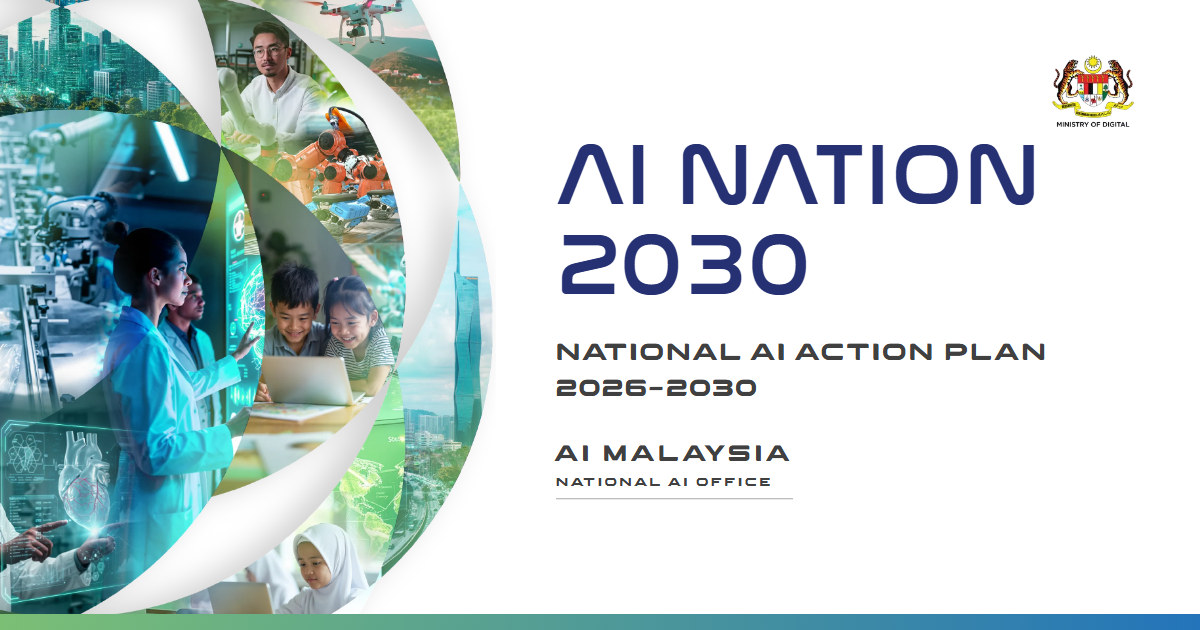
KUALA LUMPUR: The use of artificial intelligence (AI) in diabetic eye screening could help Malaysia save between RM10 million and RM20 million by detecting the disease early and preventing blindness, under the Malaysia Digital 2030 Action Plan: Towards an AI Nation (MD2030).

The Health Ministry’s modelling showed that preventing 67 cases of blindness through AI-assisted screening would exceed the combined costs of cameras, AI software and staff time required to operate the screening programme.
“These are modelled using Markov transition estimates, but they illustrate the potential value of earlier detection in reducing downstream treatment costs and preserving workforce productivity,” the Health Ministry said in a statement.
The Health Ministry is also expanding AI-assisted healthcare applications to support earlier disease detection, with 902 health clinics nationwide targeted to offer AI-assisted lung-disease screening by the end of 2026.
The 2026 National Lung Health Registry (NALURY) dashboard recorded 10,066 screenings and 6,661 chest X-rays, including 3,053 analysed using AI.
“It records 1,812 abnormalities detected, including 1,429 identified through AI analysis. These figures demonstrate how AI-assisted screening is being incorporated into a wider pathway of detection, risk identification and referral rather than operating simply as a standalone image-analysis tool,” it said.
The adoption of AI is also extending to other areas of healthcare, including breast cancer diagnosis, radiotherapy treatment and efforts to reduce doctors’ administrative workload.
At Subang Jaya Medical Centre, an AI-assisted computational pathology solution has been introduced to support Human Epidermal Growth Factor Receptor 2 (HER2) breast-cancer testing, helping pathologists assess the level of HER2 expression in tissue samples.
A multinational study involving more than 1,000 breast-cancer cases across 12 academic centres found that AI assistance improved agreement between pathologists from 64 per cent to 80 per cent and reduced the time taken to review each case by 36 per cent.
Meanwhile, Pantai Hospital Kuala Lumpur introduced the Varian Ethos with HyperSight in June 2026, an AI-powered, image-guided adaptive radiotherapy system that allows clinicians to adjust treatment plans based on patients’ anatomy on the day of treatment.
These applications demonstrate how digital healthcare can contribute not only through new technology and services, but also by supporting productivity, widening access to care and potentially reducing downstream healthcare costs.
Ken Research valued Malaysia’s digital health and telemedicine market at US$1.25 billion in 2025 and projected it to reach US$2.77 billion by 2031, representing annual growth of 14.2 per cent.
Under MD2030, Malaysia is targeting a digital economy contribution of 30 per cent to gross domestic product (GDP) by 2030, compared with 25.5 per cent in 2025.
Through its coordinating role under MD2030, MyDIGITAL Corporation supports the government’s broader digital transformation agenda by connecting policy, government, industry and ecosystem stakeholders.
Under MD2030, expanding meaningful digital adoption across sectors such as healthcare will be important to ensuring Malaysia’s digital transformation contributes not only towards the ambition of increasing the digital economy’s contribution to GDP but also towards stronger essential services and better outcomes for Malaysians. – BERNAMA