By Siti Nurain Ratani
KUALA LUMPUR: Media organisations must stop “fighting” artificial intelligence (AI) and instead adapt to technological changes to ensure the future sustainability of the media industry.
Director-General of the Department of Broadcasting Malaysia (RTM), Ashwad Ismail, said users are no longer obtaining information solely through traditional search platforms, as more people are now turning to AI platforms and social media.
“We are facing a migration of traffic to social media. Based on current data, around 35 to nearly 40 per cent of users are no longer searching for information on Google platforms, but on AI platforms.
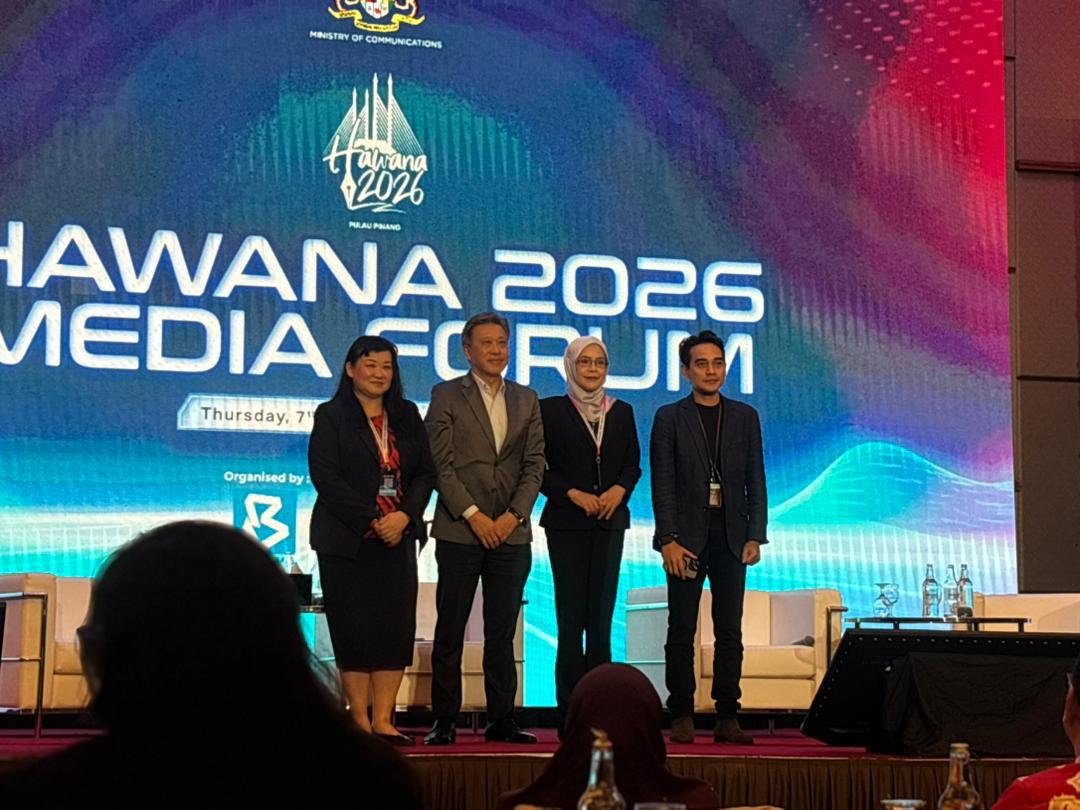
“So, do we want to fight technology? Personally, I would say no. This is like David fighting Goliath. We need to collaborate with them (AI), find solutions and work together across sectors,” he said while speaking as a panellist during the first session of the HAWANA 2026 Media Forum here today (May 7).
Also serving as panellists were Datin Paduka Esther Ng and Farrah Naz Abdul Karim, while Datuk Seri Wong Chun Wai acted as moderator.
The forum discussed the topic ‘Media Sustainability in Facing Crisis: Revenue Challenges and Realities’.
Ashwad said media organisations, especially smaller entities, need to be more creative in generating revenue and should not depend solely on random slot-based content.
He said the revenue-generation philosophy he promotes is “pro-people, pro-business and pro-nation building”, which opens wider opportunities for cross-industry collaboration.
“With this approach, there are many overlaps that can help us move across sectors, not just within the media industry,” he added.
He also touched on cultural changes within media organisations, in which top management now needs to play a more active role in revenue generation and marketing.
Meanwhile, Farrah Naz Abdul Karim said the media industry has faced various challenges for more than a decade, but the changes occurring over the past three years have been far more rapid and demanding.
“We are already used to challenges, but now we need to look within ourselves at what can be done to address these issues,” she added.
She said the media must continue delivering what audiences want, including quality journalism and courageous reporting.
“They want good journalism, so we need to invest in good journalism. They want issues exposed, but journalists must also be empowered to do so without restrictions,” she added.
At the same time, she stressed that media organisations must be cautious to ensure business innovation does not compromise newsroom integrity.
According to her, the line separating editorial and advertising functions must remain clear to prevent financial influence over editorial policies.
“Integrity is not only about corruption, but also about newsroom integrity. We cannot allow money to influence editorial policy because that is a very dangerous zone,” she said.
She added that although print newspaper sales are declining, most media organisations have seen an increase in digital users, especially during the COVID-19 pandemic.
According to her, the experience proved that media organisations can still survive if they have strong journalistic and operational foundations.
“If our foundation and fundamentals are strong, I think we will be okay. We went through COVID-19 and managed to survive,” she said.