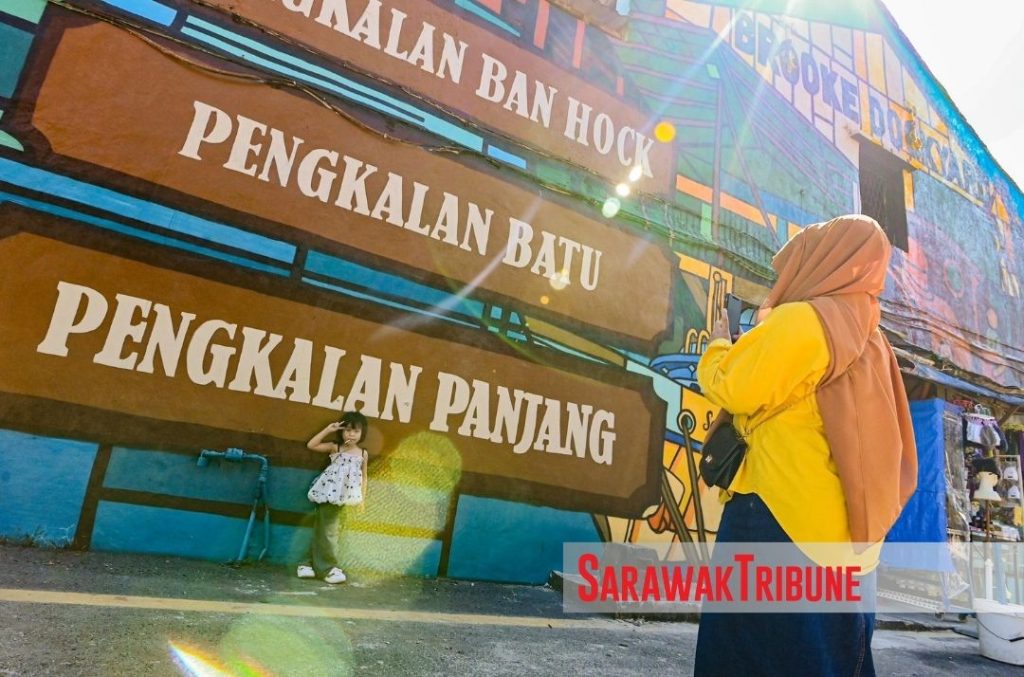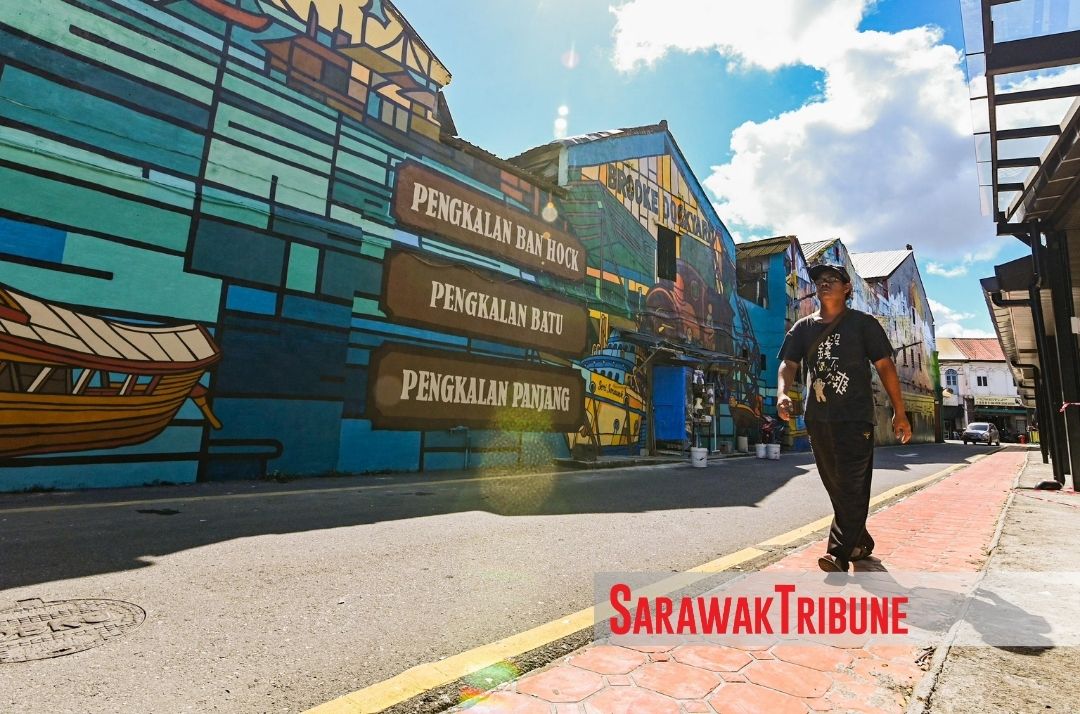
KUCHING: Dewan Bandaraya Kuching Utara (DBKU) is enhancing the city’s image as a clean, beautiful and sustainable city through a large-scale mural project depicting 35 years of the city’s history from 1990.
The mural, which is themed around the development of the Kuching Waterfront, highlights the area’s evolution across different eras and serves as a tribute to locations that have since disappeared, in recognition of past efforts that laid the foundation for the city’s progress today.
The artwork was produced by internationally recognised mural artist Kong Chak Kiong, also known as Jagung, from Sibu, and is expected to be fully completed in February.
Visitors have described the mural as a fresh attraction that adds colour and character to the city, while also strengthening heritage storytelling through public art.
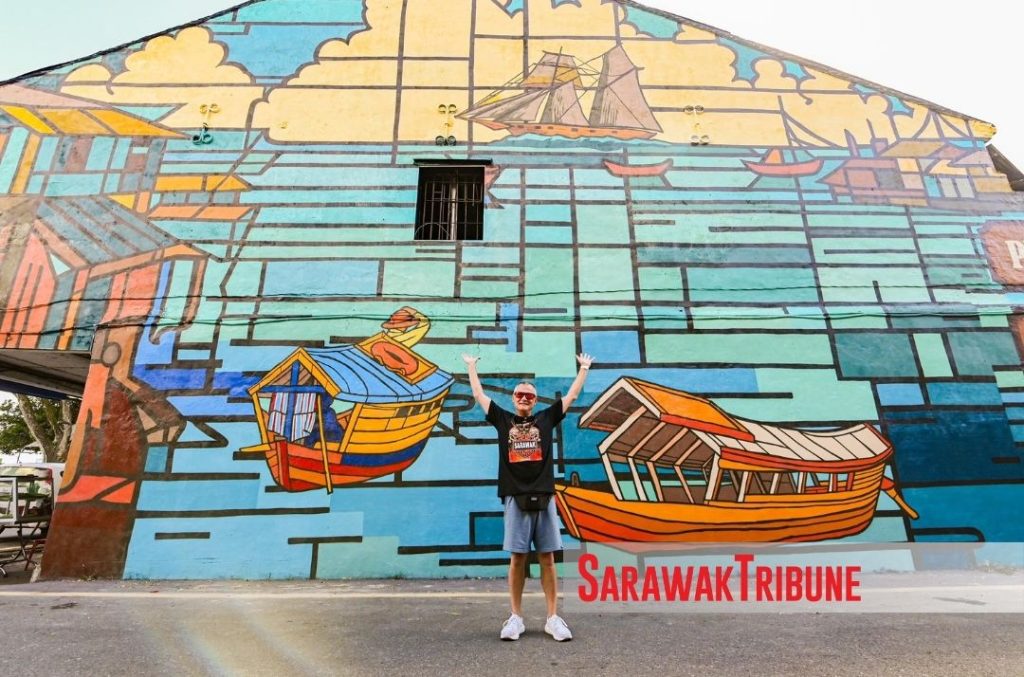
Visitor Daniel Hough, 51, from South Australia, said he had been exploring Kuching on foot and intentionally seeking out murals around the city during his stay.
“I really enjoy the street art, and how different it felt from my own work back home, where I paint houses for a living.
He said he had been watching the mural’s progress even before it was completed and returned again simply to see the final result.
“I was watching them working the other day on their big lift, and I was drawn first by the colours and visuals before paying attention to the deeper story.
“The visual is everything. The visual, the colours. I love the colours that they use here,” he said, noting that Kuching, especially at night, feels bright and vibrant.
“I really enjoy the street art, as the mural transformed what would otherwise be a dull wall into something visually striking.
“For an old building, that could be just a boring wall, it looks fantastic,” he said.
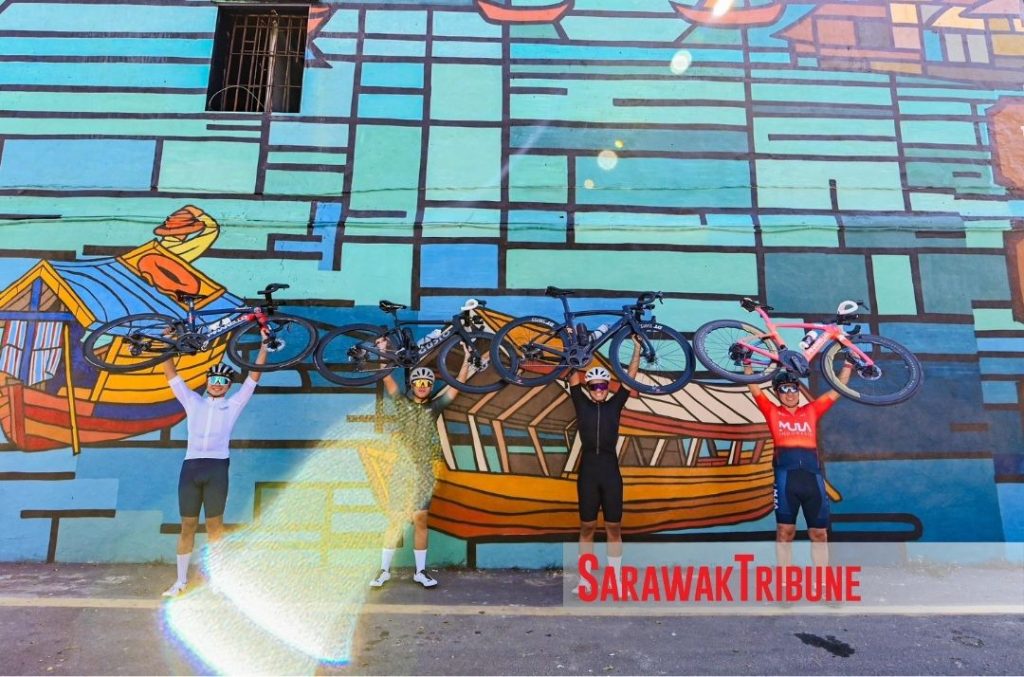
Local cyclist Gary Tay, a former SUKMA cycling champion, said the mural left him feeling proud of Sarawak’s growing embrace of public art.
“I’m very proud Sarawak has a mural like this that represents the history around Kuching, especially the mural’s boats, which portray the river culture that remains central to Sarawak life.
He also said murals add cheer and energy to the city, and thanked the state for supporting projects that transform dull building walls into something meaningful.
“It’s really beautiful, with striking colours. When I cycle past here, I also take photos: it is a nice view. I think it will also become a tourist attraction where visitors will stop to take pictures as a keepsake,” he said.
While visitors admire the artwork’s colours and scale, younger Sarawakians are also reading it as something deeper: a heritage lesson painted in public view.

Student Muhammad Ilham Farhan, 23, said the mural clearly portrays Sarawak’s identity, particularly through the depiction of boats and sampans, which remain relevant to river communities today.
“My first impression was that this mural is very beautiful and clearly shows Sarawak’s identity, which is synonymous with boats and sampans, as seen at the Waterfront, as the boats featured in the artwork represent some of the earliest forms of transportation in Sarawak and remain closely linked to the daily lives of river communities.
He stressed that the mural does not merely preserve history as something distant.
“It is not just something that stays as history, but it is still used and remains relevant in daily life,” he said.
“A mural of this nature brings added value to public spaces by helping younger generations and visitors understand Sarawak’s heritage and way of life more meaningfully.
“Murals like this not only beautify the area, but also help the younger generation and tourists understand Sarawak’s heritage and the way of life of the Sarawak community, and can bring the community back to the past like a time capsule, allowing tourists from within and outside to understand memories from the old days,” he said.