BY JACINTHA JOLENE & ALEXANDRA LORNA
KUCHING: Sarawak is stepping into a new era with the launch of the Integrated Silicon Longhouse, a flagship initiative under the Sarawak Semiconductor Roadmap 2030.
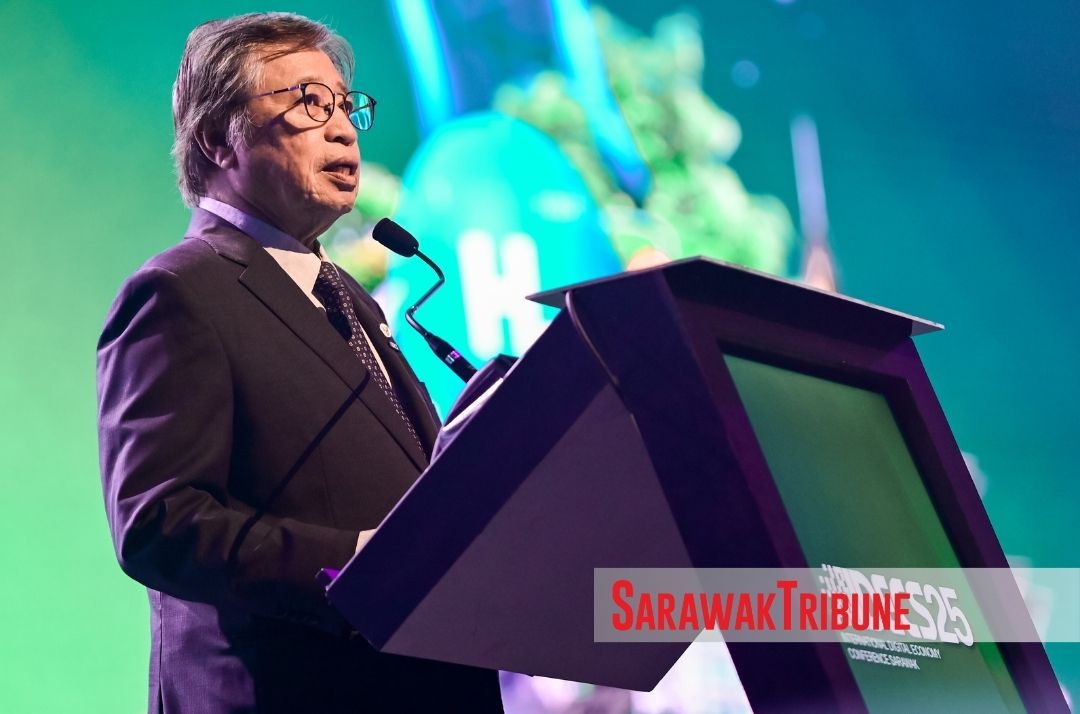
Premier Datuk Patinggi Tan Sri Abang Johari Tun Openg stated that the Integrated Silicon Longhouse is designed to foster a connected and collaborative semiconductor ecosystem.
It seeks to unite government, industry, academia, and international partners under one roof.
“Just as the longhouse symbolises shared purpose and collective progress, the Integrated Silicon Longhouse embodies Sarawak’s ambition to evolve from a resource-based economy into a knowledge-driven, technology-enabled region.
“Through this initiative, Sarawak will strengthen its standing in the global semiconductor value chain – spanning chip design and fabrication, talent development, and research innovation.
“Backed by our clean renewable energy, advanced digital infrastructure, and firm policy commitments, the Integrated Silicon Longhouse will serve as the foundation for sustainable and inclusive high-tech growth,” he said.
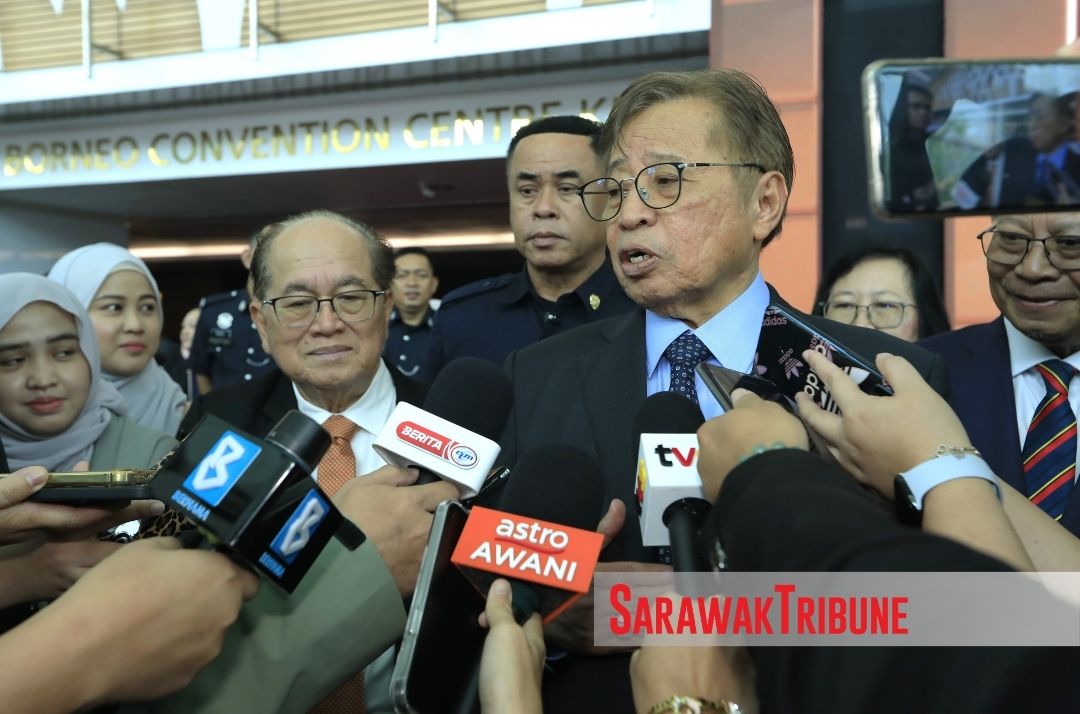
The Premier delivered these remarks in his keynote address at the opening of the 8th International Digital Economy Conference Sarawak (IDECS25), held at the Borneo Convention Centre Kuching (BCCK) today.
Abang Johari noted that the initiative builds upon recent technological milestones within Sarawak’s burgeoning semiconductor sector.
These include Keteq AI’s edge-AI power conversion chip and the Gallium Nitride (GaN) chip developed by SMD Semiconductor – both signalling a strategic shift from a resource-driven to a knowledge-based economy.
He highlighted that Keteq AI – the world’s first AI-powered real-time power converter – together with the locally developed GaN chip, proves that Sarawakian talent is capable of innovating at a world-class level.
“These breakthroughs are not merely products; they are evidence that Sarawak can design the future, not just consume it.
“They will power smart grids, enable clean energy systems, drive electric vehicles, and energise data centres – all while reducing energy loss and lowering carbon emissions,” he added.
Abang Johari further elaborated that the Sarawak Semiconductor Roadmap 2030 sets out a comprehensive plan to develop a complete semiconductor ecosystem – encompassing research, design, manufacturing, and applications.
“It seeks to position Sarawak as a regional semiconductor gateway, tapping into Asia’s growing demand for electric vehicles, artificial intelligence, cloud computing, renewable energy, aerospace, and consumer electronics,” he said.
He projected that the semiconductor industry will contribute RM30 billion to Sarawak’s Gross Domestic Product (GDP) and create 3,000 high-skilled jobs by 2030 – aligning with the state’s Post-COVID-19 Development Strategy (PCDS) 2030 target of RM282 billion in GDP.
The Premier also reaffirmed the state government’s commitment to attracting investors, forging global partnerships, and nurturing local talent to drive innovation.
“Every chip we develop, every partnership we forge, brings Sarawak closer to becoming Asia’s silicon nerve centre – where technology sovereignty is led by Sarawak, for the world,” he concluded.