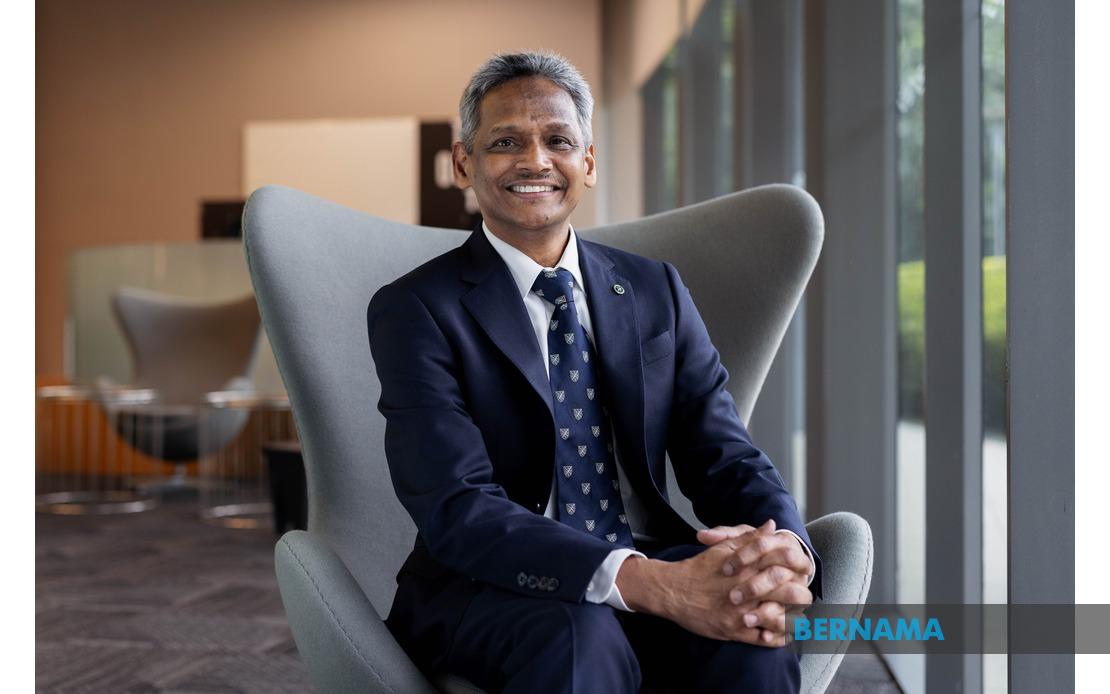
KUCHING: Sarawak is undergoing a strategic shift away from its traditional reliance on oil, gas and timber, with increasing investment in renewable energy, digital industries and high-value manufacturing, says Dr Nivakan Sritharan of Swinburne University of Technology Sarawak.
He said the state’s transformation reflects years of policy reform, infrastructure development, and targeted spending aimed at building a more resilient and future-ready economy.
“This evolution has been driven by deliberate state planning, strong infrastructure investment, and a commitment to digital and green transformation,” he told Sarawak Tribune in conjunction with Sarawak Day.
Sarawak has made significant inroads into new sectors — including manufacturing, services, renewable energy and the digital economy — supported by industrial hubs like Samalaju and Bintulu, which have drawn both local and foreign investors.
“In the first nine months of 2024 alone, Sarawak approved RM13.4 billion in investments, cementing its place as one of Malaysia’s top destinations,” he said.
Nivakan said Sarawak has emerged as a national and regional renewable energy leader, particularly in hydropower, which now accounts for 70 per cent of its electricity generation — well ahead of its 2030 target of 60 per cent.
“This leap enabled the state to cut carbon emissions by 73 per cent between 2010 and 2022, and laid the foundation for a hydrogen-based green economy,” he said.
Projects such as floating solar farms, mini-hydro plants and electric vehicles are part of Sarawak’s effort to build a complete hydrogen ecosystem, aligning economic ambition with global climate targets.
Digital transformation, he added, is another key pillar of growth. Through initiatives like the International Digital Economy Conference Sarawak (IDECS), the state is embedding digitalisation across agriculture, education, and public services, while also advancing data monetisation strategies to remain competitive.
“Sarawak is building a data-driven economy that supports innovation and raises productivity,” Nivakan said.
Economic indicators reflect this momentum. Sarawak’s GDP grew 1.2 per cent in 2023, led by the services sector. Its GDP per capita now stands at RM72,411 — well above the national average — and revenue is projected to exceed RM14 billion in 2024, buoyed by the state sales tax on petroleum products and crude palm oil.
Still, structural challenges persist.
“The rural-urban divide remains significant in infrastructure, income and access to services,” he said.
To address this, Sarawak has allocated RM13.5 billion through nine Regional Development Agencies (RDAs) to promote equitable development. The state is also investing RM376.7 million under Budget 2025 to modernise agriculture and improve rural incomes.
Nivakan noted that uneven digital access continues to hamper inclusion, especially in remote areas. However, Sarawak aims to achieve 93.6 per cent internet coverage by 2025 through expanded telecoms infrastructure.
Meanwhile, workforce development must keep pace. While investments have been made in upskilling, he said more targeted training is needed to match industry demand in high-tech and service-oriented sectors.
Looking ahead, Nivakan urged further economic diversification into biotechnology, aerospace, downstream manufacturing and sustainable tourism — areas he said offer long-term resilience and broader job creation.
“Digitalisation must go deeper — with more investment in automation, digital literacy, and startup development. Empowering MSMEs and young entrepreneurs with digital tools will unlock innovation and inclusion,” he said.
He also called for continued focus on green energy, noting that the goal of 15GW renewable capacity by 2035 requires international partnerships and private investment.
“Exploring carbon capture, utilisation and storage (CCUS) and carbon trading could open up new revenue streams while furthering environmental objectives.”
Future-ready skills, especially in AI, data science, and green technologies, must be a priority, he said. He welcomed the Free Tertiary Education Sarawak (FTES) scheme — set to begin in 2026 — which will cover tuition fees for Sarawakians at four state universities.
Closer coordination between government, academia and industry is also vital to producing a globally competitive workforce.
To support trade and logistics, Nivakan highlighted the need for megaprojects like a new international airport and the upcoming deep-sea port at Tanjung Embang — modelled after Japan’s Kobe Port.
“Public-private collaboration will be key to driving reforms, fostering innovation, and delivering on the Sarawak Maju Makmur 2030 agenda,” he said.
“Sarawak’s transformation since self-governance has been bold and strategic. Staying committed to inclusive, diversified and sustainable growth will ensure long-term prosperity — not just for the economy, but for all Sarawakians.”