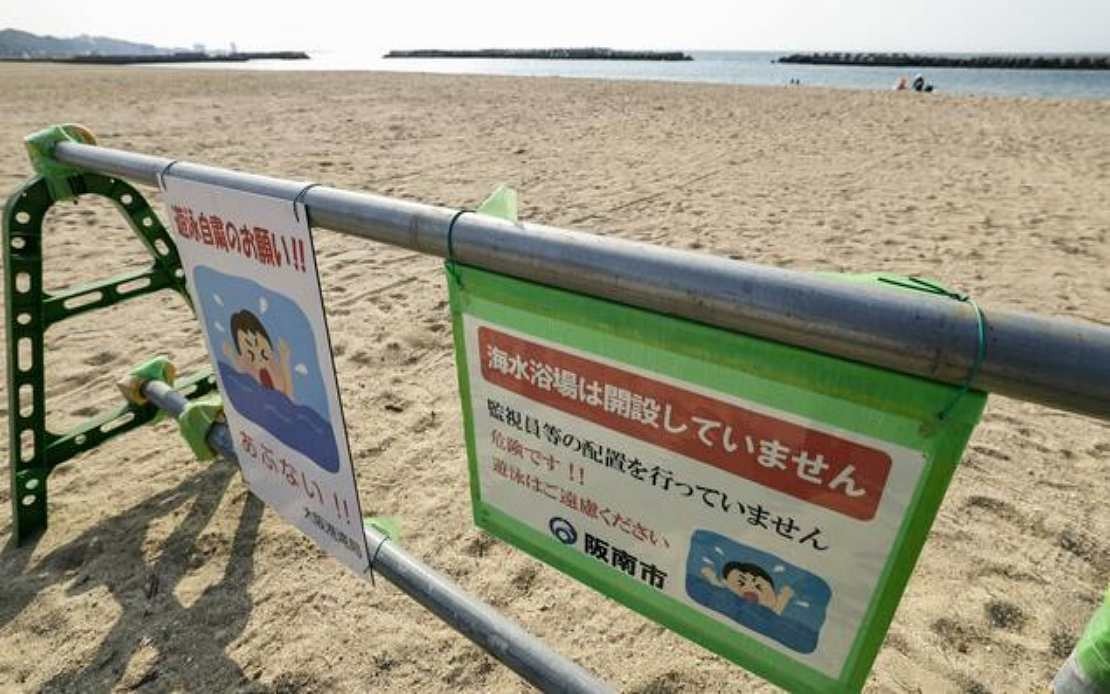
TOKYO, July 20 (Bernama-Kyodo) — The number of approved swimming beaches open during the summer in Japan has fallen by around 30 per cent over the past three decades, a study by a travel association shows, as municipalities are increasingly choosing not to operate them due to fewer visitors amid the scorching heat and shoreline retreat.
According to the Japan Travel and Tourism Association, the number of such beaches totalled 1,379 in 1993 and remained steady in the 1,300s until the early 2000s before declining. The number fell below 1,000 for the first time in 2022 due to the COVID-19 pandemic and stood at 969 in 2024, Kyodo News reported.
Japan has been experiencing scorching summers in recent years, prompting people to refrain from going to the beach to avoid sunburn and heatstroke.
Under Japanese legislation, local governments and beach management associations formed by beach-hut operators must apply each year to prefectural governments for approval to open swimming beaches.
The association’s figures are based on data it collected from prefectures and municipalities. As it did not analyse the causes for the decline, Kyodo News conducted interviews to ascertain why fewer beaches are being opened.
Among reasons cited by local authorities are a shortage of lifeguards and poor profitability for operators amid a decrease in beachgoers due to the avoidance of sunburn and the diversification of indoor leisure activities.
In Kanagawa Prefecture near Tokyo, for example, the association that bears part of the operating costs for the Miura Kaigan swimming beach ran into financial difficulties and decided not to open in 2024.
The Hakotsukuri swimming beach in Osaka Prefecture in western Japan also did not open in 2024.
In some cases, such as the Otake Kaigan Hokota swimming beach in Ibaraki Prefecture, northeast of Tokyo, shoreline retreat was a factor, with sand no longer carried by rivers to coastlines due to extraction for construction since Japan’s high-growth era in the mid-1950s to early 1970s.
Changes in currents due to the construction of breakwaters were also a contributing factor.
Local authorities advise against swimming at non-designated beaches as there are no lifeguards or supervisors on duty.
— BERNAMA-KYODO