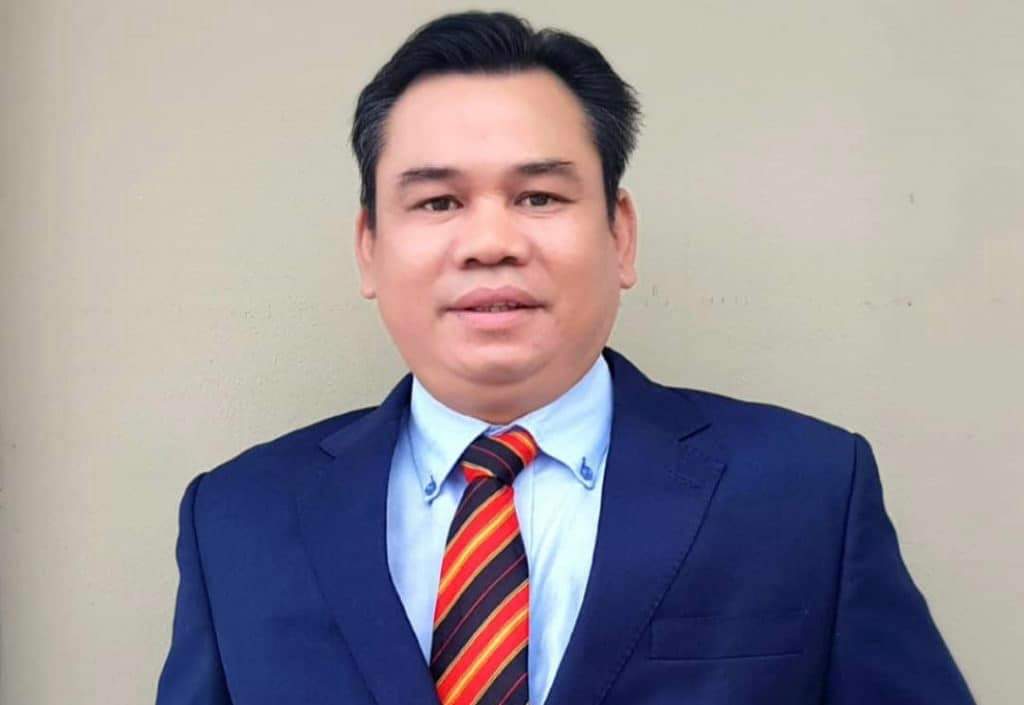
KUCHING: The chairman of Kapit District Council (KDC), Andy Lawrence, has called for Sabah and Sarawak to hold at least 35 per cent of seats in the Malaysian Parliament, citing decades of uneven development between East Malaysia and Peninsular Malaysia.
Lawrence, who is also Parti Rakyat Sarawak (PRS) Bukit Goram Division’s chairman, argued that the principle of “one person, one vote” is no longer fully applicable in the Malaysian context, particularly for Sabah and Sarawak.
He noted that the principle assumes citizens have roughly equal access to infrastructure, education, healthcare and employment, a standard that East Malaysian States have long been denied.
He highlighted that federal policies and planning historically prioritised Peninsular Malaysia, especially urban areas, leaving rural Sabah and Sarawak behind and forcing many young people to migrate to cities, which contributed to overcrowding in urban centres while villages and longhouses thinned out.
“Some argue that allocating one-third of parliamentary seats to Sabah and Sarawak would violate the ‘one person, one vote’ principle.
“That argument may sound neat in theory, but it ignores our history, geography, and lived reality,” Lawrence said in a statement today.
Lawrence also referenced the Federal Constitution, noting the Thirteenth Schedule, Part I, paragraph 2(c), read together with Articles 116 and 117, which support protections for East Malaysian representation.
He pointed out that Sabah, Sarawak and Singapore were originally allocated 55 out of 159 parliamentary seats to ensure East Malaysia and Singapore held slightly more than one-third of parliamentary strength, and prevent unilateral domination by Malaya, but after Singapore’s exit in 1965, he said, this protection was never fully restored.
He proposed a new seat allocation of 40 for Sabah, 49 for Sarawak, while Peninsular Malaysia would retain 166 seats, bringing the total number of parliamentary seats to 255.
“This adjustment is necessary to ensure fair representation for Sabah and Sarawak in line with our unique history and development needs,” Lawrence said.