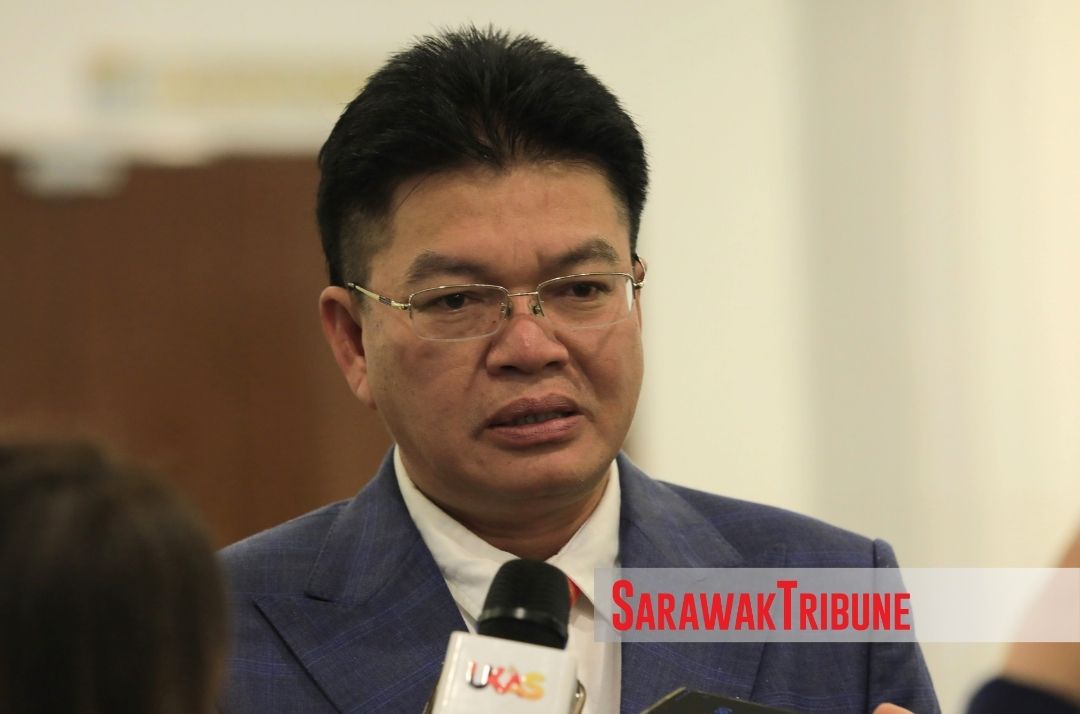
OPAR assemblyman Billy Sujang has called for a stronger, more enforceable Sustainable Resources and Waste Management Bill 2025, cautioning that Sarawak faces escalating waste volumes, overstretched landfills, and deepening inequality in urban and rural waste services.
While debating the Bill, he said national studies show that urban residents in Peninsular Malaysia generate about 0.83kg of waste per person per day, compared to 0.73kg in rural areas.
“The rates in Sabah and Sarawak are slightly lower, at 0.61kg and 0.60kg respectively, but the national picture remains alarming.
“Malaysia disposes of more than 39,000 tonnes of municipal solid waste every day.
“In Sarawak alone, councils collected over 718,000 tonnes destined for landfills.”
He added that only about 66 per cent of rural households nationwide have formal waste-collection services, forcing many to resort to open dumping, river disposal and burning.
“This poses serious risks to the environment and public health, and rural communities must be protected through stronger provisions.
“Urban centres have become waste factories due to lifestyle and consumption patterns. Rural areas, despite lower per-capita waste, are ticking time bombs because of poor service coverage.”
He warned that landfills cannot sustain current growth, noting that 82.5 per cent of the country’s waste still ends up in landfills while recycling rates remain low.
“Local councils already spend nearly 30 per cent of their annual revenue on waste management.
“The Bill must enforce binding targets for reducing waste, mandatory segregation at source, full collection coverage in rural areas, and stronger accountability measures.
“It is politically indefensible that rural households receive weaker service but are bound by the same laws. Equity means equal service delivered in reality, not just on paper.”
Billy also called for improved infrastructure, transparent annual reporting of waste data, stronger enforcement against illegal dumping, and incentives for innovation such as waste-to-energy projects and rural composting.
“If this Bill is watered down, we will regret it for decades.
“But if we enforce it strongly, Sarawak can move towards a sustainable and equitable future.”