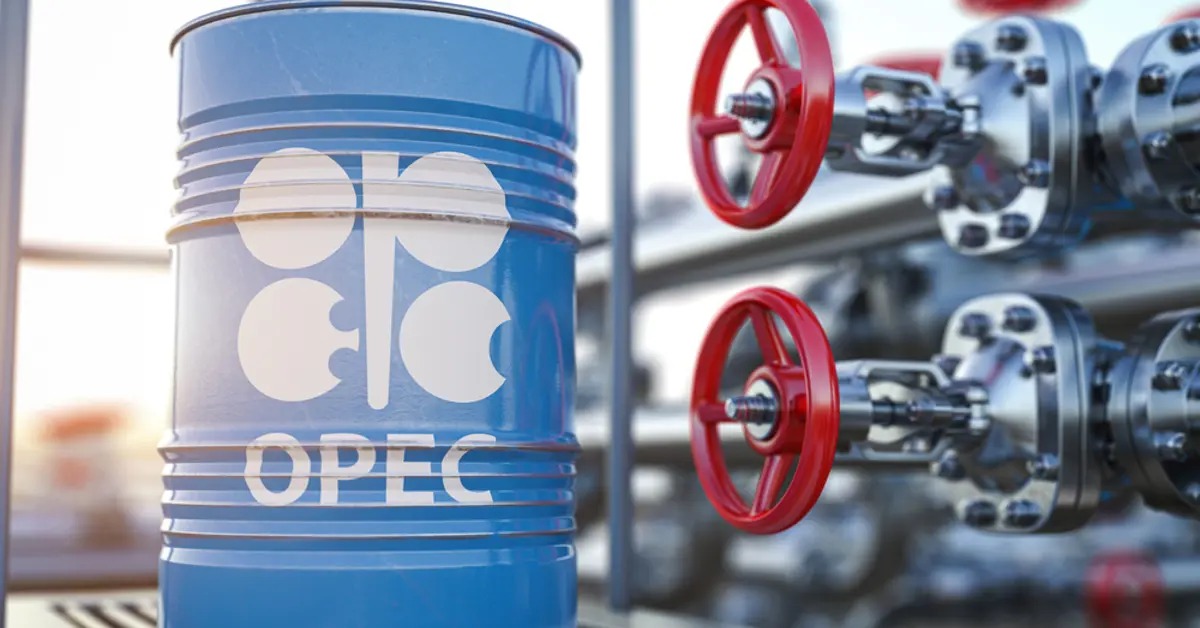
ISTANBUL, Turkiye: Crude oil production in the Organisation of Petroleum-Exporting Countries (OPEC) recorded its steepest monthly decline in at least four decades in March, as the war in West Asia sharply disrupted exports from key member states, Anadolu Ajansi reported, citing a Bloomberg survey.
OPEC’s output fell by 7.56 million barrels per day, or about 25 per cent, to 22 million per day in March, the survey showed.
The decline came as the war involving a US-Israeli alliance and OPEC member Iran shuttered the Strait of Hormuz, forcing Saudi Arabia, the United Arab Emirates (UAE), and Iraq to scale back production.
Survey data going back to 1989 showed the March decline was the largest monthly drop in at least four decades, although the group made deeper cuts in a two-month period in 2020, when global fuel demand collapsed during the coronavirus pandemic.
In barrel terms, the decline would also exceed losses seen during the 1973 Arab oil embargo, according to Bloomberg.
The supply shock pushed crude prices sharply higher, with Brent futures climbing to nearly USD120 (approx. RM518.96) per barrel in London last month.
Brent was trading near USD110 (RM439.11) on Tuesday, while rising prices for jet fuel, diesel and gasoline continued to increase pressure on consumers.
Among OPEC members, Iraq posted the largest decline, with production falling by 2.76 million barrels per day to 1.63 million barrels per day.
Saudi Arabia followed, with output dropping by 2.07 million barrels per day to 8.36 million barrels per day, while production in the UAE fell by 1.44 million barrels per day to 2.16 million barrels per day.
The survey said Saudi Arabia and the UAE were able to partly limit losses by diverting some exports through alternative pipelines that bypass the Strait of Hormuz.
Iran’s military said last weekend that Iraq was exempt from restrictions on transit through the strategic waterway, but tanker-tracking data showed no sign of a significant return in shipping traffic.
Traffic through the strait has started to recover slowly but remains far below pre-war levels.
The report also said Russia, one of the leading members of the wider OPEC+ alliance, has faced additional disruptions after Ukrainian drone attacks on oil export terminals on the Baltic Sea.
Before the war, eight major OPEC+ producers had been gradually restoring oil production that had been cut in previous years.
On April 5, they agreed to a symbolic increase in supply for May but warned it would take time to restart facilities damaged in the conflict. – BERNAMA-ANADOLU