In the ever-evolving world of sports, trends come and go – but every now and then, a game emerges that captures not just competition, but community. Enter padel, a fast-rising racquet sport that blends the thrill of tennis with the accessibility of squash. Already a global phenomenon with millions of players in Europe and beyond, padel is now making its way into Malaysia, offering not only a new way to stay active but also a vibrant social experience.
Where Fitness Meets Friendship
A NEW sport is taking off in Malaysia – padel. Its latest facility, POP Padel, features a fully sheltered court equipped with tournament-grade amenities, spectator seating, an on-site restaurant, F&B options, and a dedicated recovery zone. Recently launched at Bamboo Hills, Kuala Lumpur, it marks the introduction of padel to Malaysia.
A racquet sport, padel is not just a physical activity but also a social experience among friends. It’s fun, easy to learn, and fast becoming the next big social sport in Malaysia.
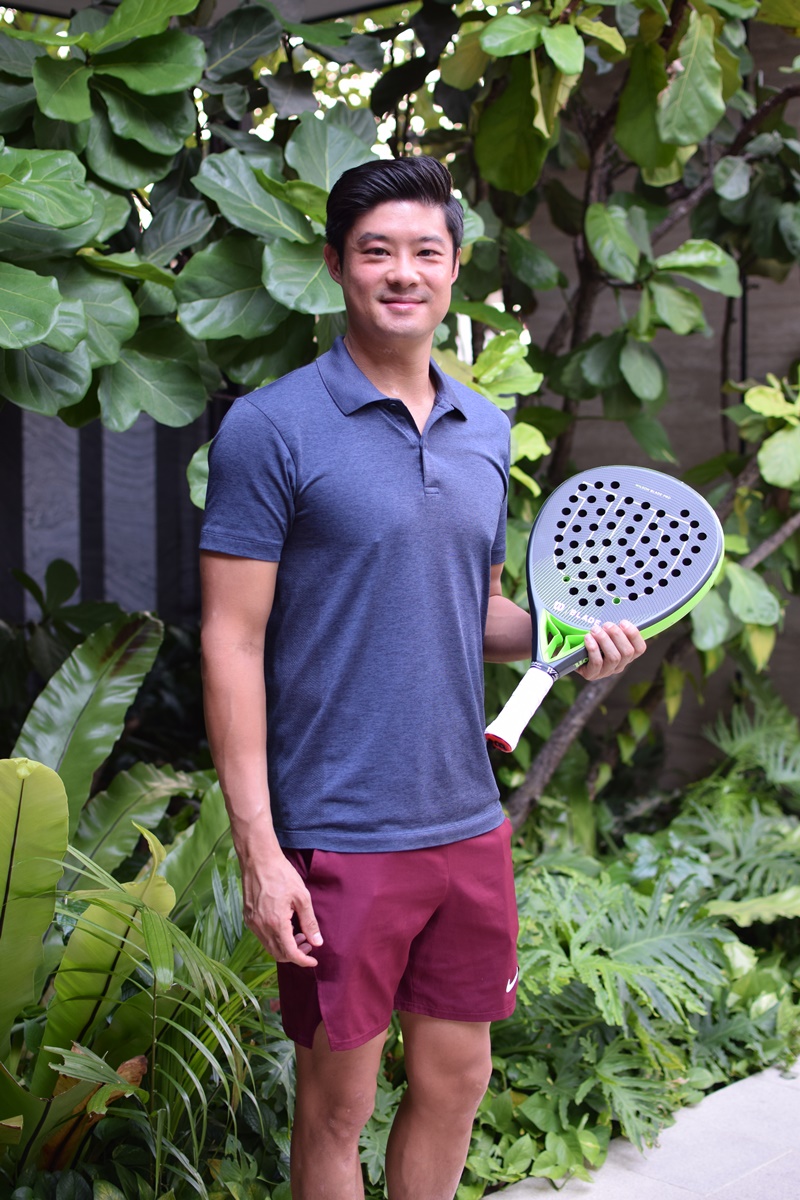
Sharing more about the sport, POP Padel’s founder, Davy Sanh, first discovered the sport in December 2022 while he was on holiday in Bali, Indonesia.
“At that time, I felt that padel wasn’t just about playing; it was about the social side of it. The atmosphere, the vibes, the drinks, the people – there’s something special about coming together as a community to play. That’s when I realised this was what was missing in Singapore,” he said.
After opening his first club in Singapore a year later, Davy set his sights on Malaysia. Of Cambodian and Vietnamese heritage but raised in France, Davy was an avid tennis player growing up. At the age of 14, he was ranked among the 30 best players in the country.
However, adulthood brought new priorities – bills and commitments.
“After school, I started working and didn’t have much time for the sport. I had to find a career that makes more sense, at least from an economic standpoint,” he shared.
Tennis then became a hobby, but the competitive market made it difficult to turn passion into profit. Still, his love for racquet sports remained strong, but it gave him no returns in terms of time investment.
“With the right opportunities, my transition from tennis to padel came naturally. Padel had something more to offer than just a game – it brought a sense of community. It’s funny because I’ve always loved organising social gatherings, and that’s where my passion truly lies – in both the sport and the concept behind it,” said the 39-year-old.


Padel’s growth in Southeast Asia
Originating from Spanish-speaking countries, padel has the largest following in Spain, followed by Italy and Argentina. Having grown rapidly across Europe and North America, its introduction to Southeast Asia – though still in its early stages – is gaining momentum as more courts and communities embrace the sport.
Davy’s passion project, Padelistas, a padel club he founded in Singapore, grew swiftly, raising awareness of the sport.
Some members have since then gone out to create their individual communities – “and it all starts off with a WhatsApp group chat to booking padel courts to play together with”.
Now, the journey continues in Malaysia, with POP Padel becoming the country’s pioneer padel court. Sharing his vision, Davy hopes Malaysians will take up the sport as part of an active, social lifestyle.
Unlike many racquet sports, padel does not require complex strategies, making it easy for beginners to pick up while still offering excitement for seasoned players.
“My vision came during the COVID-19 lockdown, when I realised how vital it was to socialise and lead a healthier life. I hope Malaysians will find happiness through positive, active living,” he said.
According to Davy, padel will be added to the Olympic Games in 2032. With the sport still new, he believes this offers equal opportunities for all players to learn and excel – and possibly for Malaysians to compete for medals in the future.


What makes padel stand out
Malaysians have always enjoyed racquet sports – from tennis and badminton to pickleball – so the introduction of padel has been a natural fit for the community.
When asked what makes padel different from other racquet sports, Davy explained that the design of the paddle and ball are distinct, as is the court itself.
“Padel is played exclusively in doubles, which I love. It’s always two versus two, and that makes every game more enjoyable because you’re sharing the court with others,” he said.
Another key difference, Davy added, is the cost.
“It’s more expensive to play padel because most equipment is imported from Spain. The paddles use specialised materials, and the courts require advanced infrastructure. You need a large, sheltered space with a ceiling at least 10 metres high,” he explained.
Despite the higher cost, the padel community continues to grow, driven by its fun, inclusive nature. Whether it is bouncing a ball or bonding over a friendly match, padel brings people together through fun, fitness and friendship.