As the world races toward sustainability, IDECS 2025 highlights how Sarawak’s green energy leadership and digital innovation are converging to create a cleaner, smarter, and more connected future.
Integrating tech for a greener Sarawak
IN the 21st century, a nation’s progress is increasingly defined by how well it embraces the digital economy amid rapid technological change. Yet true advancement cannot come at the expense of sustainability.
With that in mind, this year’s International Digital Economy Conference Sarawak (IDECS) 2025 adopts the theme ‘AI & Green Evolution: Growth, Challenges, and Community Resilience’. The conference explores how disruptive technologies can accelerate a sustainable future while driving inclusive and resilient economic growth for all.
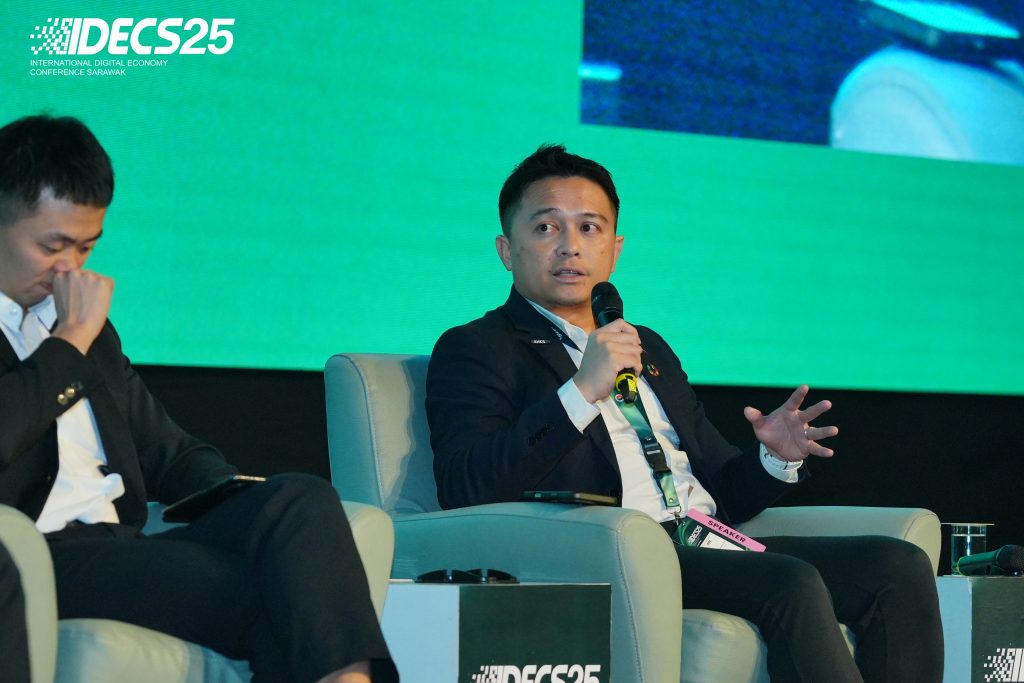
Regarding the theme, a panel session under ‘The Future’ discussed ‘Converging Clean Energy, Mobility Platforms & AI Logistics’ with Univers Senior Manager, Net Zero Centre of Excellence, Qi Hang Chen; Solarvest Holdings Bhd Executive Director and Group CSO, Leon Liew; and Sarawak Energy Head, Group CEO Office, Abang Mohammad Hudini.
Sarawak Digital Economy Corporation (SDEC) Head of Research and Product Development, Dr Khairul Hafiz Sharkawi, served as the moderator.
The discussion shed light on how the Sarawak digitalisation initiative is not just about deploying technologies but deploying the right technology for the right problem. The session also highlighted how a city of the future is designed to be sustainable, integrating all components of clean energy, smart mobility, and intelligent logistics.
Each panellist brought a different perspective, with Qi sharing his global expertise on using AI and data in decarbonisation efforts, Liew on his experience deploying solar technology, and Hudini on building a clean energy foundation focused on power generation and distribution in Sarawak.

Integration of clean energy mobility
There is an optimistic chance for Sarawak to deploy green energy, as the state already has one of the highest percentages of green energy penetration in the grid in Southeast Asia. With this advantage, Liew said there is a compelling drive for a green economy.
Furthermore, the price of solar has dropped by more than 95 per cent over the last 10 years.
“What used to cost more than USD100 per watt is now less than 10 cents per watt. So, with the low cost of green generation and already abundant green energy in Sarawak, I see electric mobility coming in a big way in the next three to five years,” said Liew.
In advancing a greener industrial sector, replacing diesel in trucks with solar and battery systems has proven cost-effective. For example, Liew shared that filling a truck with diesel can cost about RM1 per kilowatt-hour of energy, whereas using electricity costs less and eliminates pollution entirely.
Moving toward smarter decarbonisation
Carbon specialist Qi highlighted that most companies are moving toward smarter decarbonisation by reporting their emissions year to year, ensuring accountability for carbon usage from direct operational and business activities.
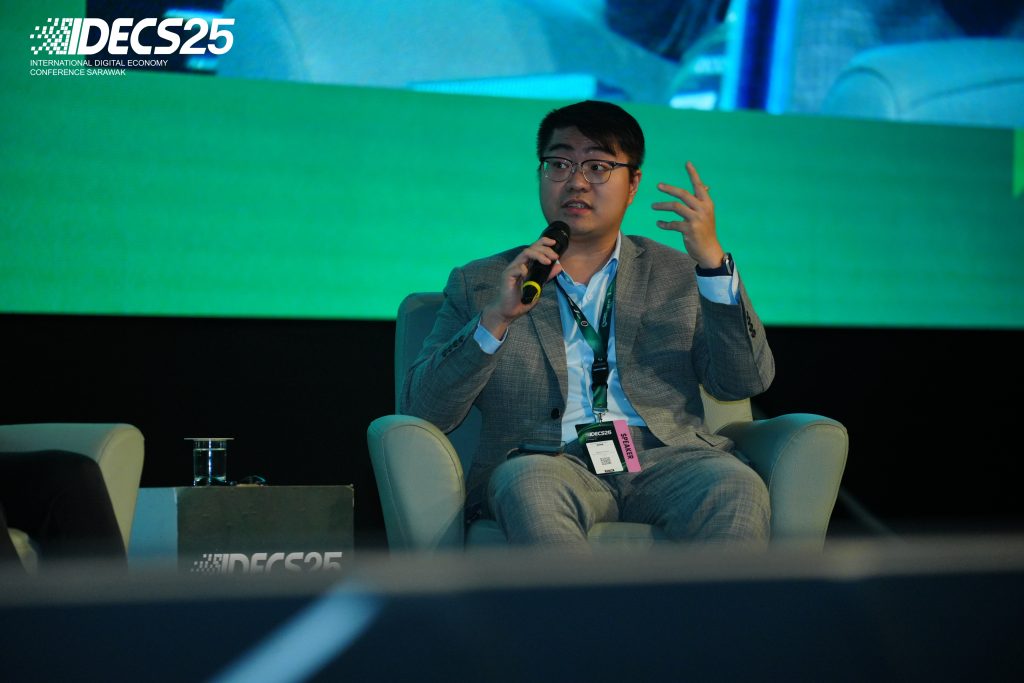
With more companies recognising the consequences, Qi added that this trend is especially evident in the logistics and transport sector, where businesses are adopting product-level carbon accounting.
“So, looking at the actual life-cycle total carbon impact – from picking up one unit of goods, warehousing it, to distributing it to downstream customers – this entire life-cycle accounting provides a more comprehensive view of environmental impact and accountability,” he said.
For his company, a global leader in AI for energy, Univers, offers support for digital transformation.
“In logistics and transport, for example, we work with the largest port operator group in the world. Our case study shows how we help them intelligently manage upstream energy generation, integrate with the grid, and optimise their battery system midstream,” Qi added.
By using predictive analytics to determine when to dispatch and store energy, and by understanding grid stability and pricing, Univers also helps transport and logistics companies optimise downstream energy consumption. This technology enables smart carbon reporting aligned with global standards.
Sarawak’s smart energy and power distribution
As Malaysia’s largest producer of renewable energy, Sarawak holds a natural advantage in driving its green energy ambitions toward 2030. Sarawak Energy’s Hudini revealed that 60 per cent of the region’s energy comes from hydropower, with solar gradually integrating into the system.
“We have renewable energy that is clean, affordable, and reliable, which is the main ingredient for developing this sector further. Clean energy also comes together with the grid itself, which we must modernise,” said Hudini.
Sarawak Energy is working to modernise substations, transmission lines, and integration with future renewable energy sources.
“By 2030, we may need to accommodate up to 1.5 gigawatts of solar, which is a significant amount of intermittent power entering the grid.
“To support this intermittent power, we need a modernised grid capable of managing distributed energy sources, not just hydro, which is mainly stable. We prefer hydro for stability, but with solar development, the grid must be ready to integrate all renewable sources,” he added.

Breaking Industry Silos: Toward Real Integration
Despite progress in green innovation and digital transformation, the energy, solar hardware, and AI sectors still largely operate in silos. While each sector benefits regional development, parallel advancement without integration can create bottlenecks.
Hudini opined that smart solutions are no longer a luxury but a necessity.
“In Sarawak, with the Samalaju development, we can pilot the Kuching outer-wing grid to see how different integrated solutions can work together.”
He is optimistic about organisational collaboration to achieve a greener Sarawak.

Liew added that vehicle-to-grid innovation holds significant potential.
“If we have 1 million electric vehicles in Sarawak, each with 100 kilowatt-hours of battery, that’s equivalent to about 100 gigawatt-hours of energy storage. Sarawak’s residential consumption is less than 2 gigawatt-hours, giving 50 hours of storage potential.”
“This means if generation is offline, cars could power the Sarawak community for 20 hours. There is huge storage potential to optimise the grid,” Liew said.
From a software perspective, Qi noted that cross-industry integration is challenging.
“Adopting software faces barriers due to reliance on legacy systems. It is crucial to visualise a positive business case and work with innovative solution providers like Solarvest to demonstrate that an integrated energy and transport hub is both necessary and commercially viable,” he said.
Throughout the panel session, the key takeaway was that integration isn’t just about connecting systems, it’s about aligning mindsets, policies, and business models. For Sarawak, the next frontier of the green energy transition isn’t building more; it’s connecting better.