KUCHING: The federal government’s proposed ‘pay-per-use’ housing fee model may sound fair, but in Sarawak, it runs into a legal brick wall.
Sarawak Housing and Real Estate Developers’ Association (SHEDA) adviser Datuk Sim Kiang Chiok said while the idea sounds attractive, it has no legal standing under the Sarawak Strata Management Ordinance (SMO) 2019 and its 2022 Regulations.
“As a Sarawak-based developer, I welcome any proposal that seeks to improve equity and cost-efficiency in housing management. The ‘pay-per-use’ concept appears attractive on paper, especially to residents who seldom use shared facilities and wish to pay only for what they consume.
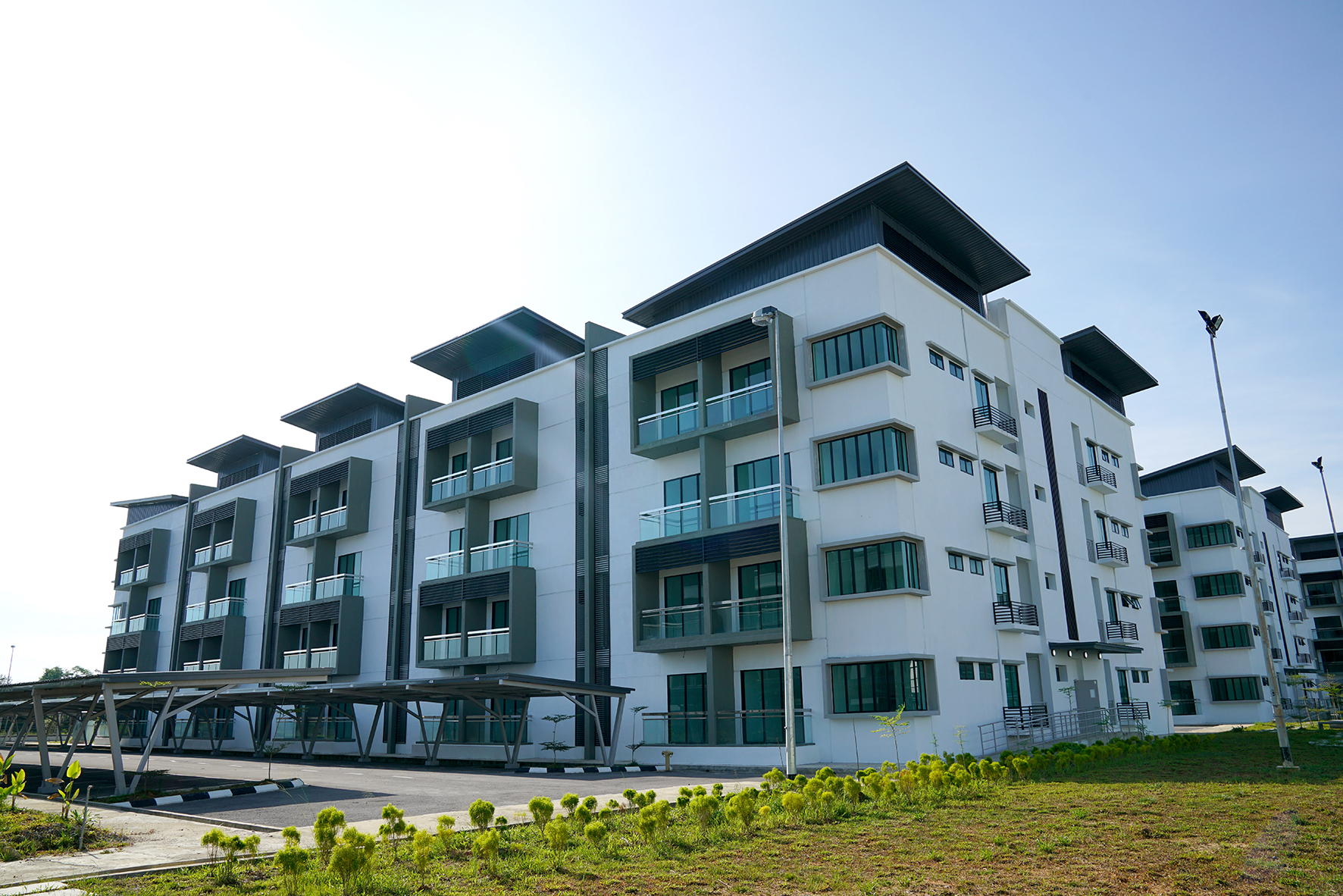
“However, it is important to clarify that housing is a state matter in Sarawak, and the SMO 2019, which governs strata-titled developments, currently mandates that all maintenance and sinking fund contributions be calculated based on share units, not on usage.
“The proposed model therefore has no legal standing in Sarawak unless the law is amended,” he told Sarawak Tribune.
He was responding to a news report on the Housing and Local Government Ministry studying a ‘pay-per-use’ system for housing maintenance fees, aimed at future public and private housing projects.
Its minister Nga Kor Ming said his ministry plans to implement the model in upcoming developments as part of its housing reform agenda.
He said the proposed system would allow residents to use access cards to track usage of shared facilities, with fees charged accordingly.
The model, he added, was featured in the Rumah Bakat Madani initiative in Penang, which includes shared amenities such as an infinity pool, playgrounds and gyms.
He said the initiative aims to raise housing standards and promote fairer access to amenities, while also encouraging sustainable urban development and broader industry participation in modular construction methods.

Sim held the view that the concept may influence future thinking within the Ministry of Public Health, Housing and Local Government in the state, but its practical viability would depend heavily on legal reforms, stakeholder buy-in, and technological readiness.
He opined that it may be suitable for new urban developments with advanced access systems, but not for typical affordable housing or existing strata schemes.
From a developer’s point of view, he outlined several advantages and challenges of implementing the model.
On advantages, he said it offers perceived fairness, cost control for low users, and marketing appeal for premium projects.
As for the challenges, he cited legal limitations, higher design and technological complexity, increased management burden and the risk of weakening community responsibility.
“While the concept is appealing, implementation under the current law is not permitted, and its introduction would require systemic change and policy alignment,” he said.
He said the model is much more feasible in new developments, particularly in high-rise condos, lifestyle apartments, or integrated projects where the necessary digital infrastructure can be built in from day one.
“In existing strata schemes, however, adaptation would be very difficult. Retrofitting older buildings with access control and usage metering systems would be costly and disruptive,” he said.
More importantly, Sim pointed out that under SMO 2019, Joint Management Bodies and Management Corporations are legally bound to collect maintenance charges based on share units.
“They cannot adopt a pay-per-use model without an amendment to the Ordinance, new subsidiary legislation or Commissioner’s Directions, or a statutory framework that permits voluntary service-based charging outside the standard maintenance account,” he said.
He said developers might trial the idea in new projects as a commercial feature, but it would not be compliant for existing schemes unless the legal structure is changed.
He added that the idea could improve perceived affordability, especially for cost-sensitive buyers who may feel burdened by fixed maintenance charges for facilities they rarely use.
“For example, families or elderly residents may prefer to opt out of paying for gyms, pools or clubhouses,” he said.
However, he foresees that this could also create uncertainty in monthly costs and potentially give buyers the impression that core amenities are being locked behind a paywall, which could negatively affect their sense of community or investment value.
“In lower- to middle-income housing, especially, the risk is that essential maintenance gets underfunded, leading to deterioration of shared spaces. Developers would need to balance flexibility with sustainability,” he said.
Sim said developers in Sarawak may be open to pilot programmes in specific new developments, particularly in urban strata condominiums, high-rise rental apartments, and co-living or serviced apartment schemes.
But this support, he said, would depend on several safeguards, including legal clarity through amendment to SMO 2019 or new regulations, transparent guidelines for metering and billing, secure digital systems, and explicit buyer or tenant consent.
He also stressed that core maintenance of essential services such as security, lifts and cleaning should not be optional.
“Usage-based charges should be applied only to non-essential or luxury facilities.”
He added that if the building is not sold as strata-titled but is fully owned and rented out, such as a purpose-built rental block, then pay-per-use models are entirely legal and practical.
“Since the SMO 2019 only applies to strata-titled properties, a landlord is free to implement usage-based charges for common facilities through tenancy agreements.
“This model is already used in co-living, student housing, and serviced apartments, where tenants may pay extra for certain services or facility access.
“The landlord has full control over how charges are structured, provided terms are transparent and agreed upon in writing.”
Sim said the federal proposal opens up important policy debates on affordability and fairness in shared facilities management, but in Sarawak, the current legal framework does not permit such a model in strata-titled schemes.
“Developers, regulators, and residents will need to work together, potentially through pilot studies, legal reform, and public consultation, to explore whether such a model can be realistically and fairly introduced in future developments.
“In the meantime, the model may only be applied in rental-based or privately managed properties outside the scope of the SMO,” he said.