KUCHING: Petroliam Nasional Bhd’s (PETRONAS’) business model must be reoriented to ensure better management of gas resources and sufficient supply for future development of the industry.
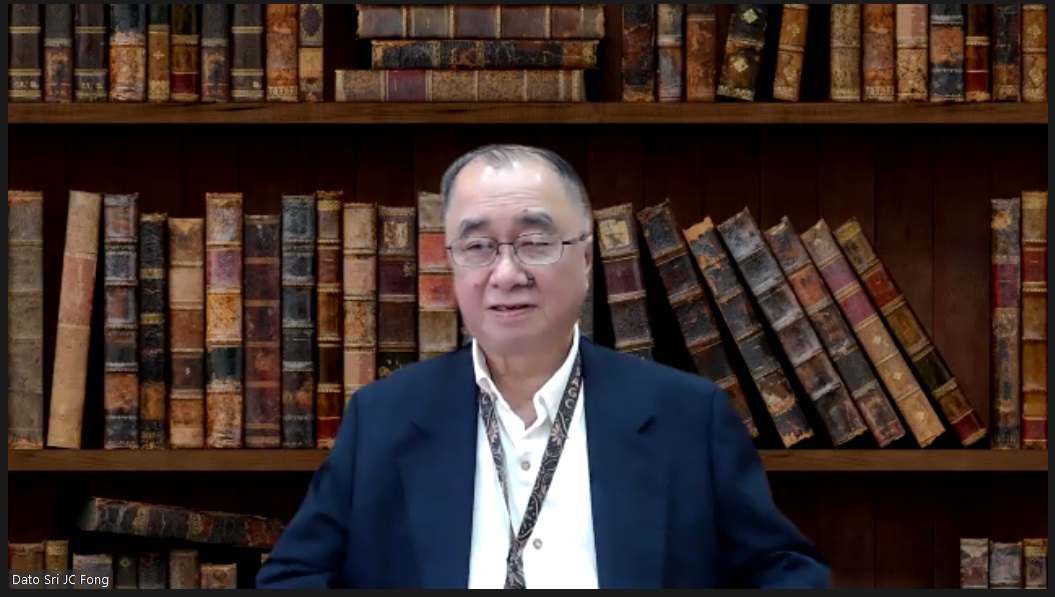
State Legal Counsel Datuk Seri JC Fong said Sarawak, which holds the majority of Malaysia’s gas reserves, continues to face constraints under the current structure.
He stressed that retaining more gas locally was essential to implement the state’s roadmap and to support both industrial growth and household use.
“We are not trying to amass power. We have been engaging PETRONAS for some time, but they are not willing to change their business model.
“We do not intend to kill off PETRONAS. We want to collaborate with them, but if they do not wish to, the state government will have to decide on the next course of action,” he said in his talk entitled ‘62 Years after MA63: The Emergence of a Progressive and Prosperous Sarawak’.
He was speaking at the forum ‘Future Economy of Sarawak: Oil & Gas Economy, e-Invoicing, GST versus SST’ held at Swinburne University of Technology Sarawak today.
The former state attorney-general said PETRONAS had resisted the appointment of Petroleum Sarawak Bhd (PETROS) as Sarawak’s single gas aggregator, leading to a dispute now before the courts.
He explained that the role of PETROS was to regulate the allocation, supply and sale of gas to all industries, including liquefied natural gas (LNG) plants, while also expanding Sarawak’s distribution network for long-term development.
“PETRONAS has resisted the appointment of a single gas aggregator for Sarawak, and the dispute is still ongoing.
“It involves constitutional and legal issues which are now in the process of being resolved in court,” he added.
On the same note, Fong said Sarawak was working to boost production by tapping stranded gas reserves with high carbon dioxide (CO₂) content through carbon capture and storage (CCS) technology.
He noted that legislation had been enacted for the development of offshore storage areas, with more than 13.7 million hectares identified as geologically suitable for carbon storage.
“PETROS has selected three international partners through a bidding process to develop storage sites, and is in discussion with PETRONAS to take the lead in studying and developing gas reserves in the waters of western Sarawak, which represent the future of the gas industry.
“We want to develop the gas fields in the waters off western Sarawak and also work with Indonesia to develop their fields located side by side with ours,” he said.