EVERY October, Malaysia and the world observe Pink October or Breast Cancer Awareness Month, a campaign that has been raising awareness about breast cancer since 1985. The month serves as a reminder of the importance of early detection, timely treatment, and community support.
In Sarawak, the campaign is especially important as medical professionals, non-governmental organisations (NGOs) and communities work together to educate the public on the risks of breast cancer, screening options, and preventive measures.
According to the Summary of Malaysia National Cancer Registry Report 2017-2021 by the National Cancer Institute under the Ministry of Health, breast cancer is still the most common cancer among women. Cases have increased compared to previous years, especially from aged 40 onwards, with the highest rates seen in women aged 55 to 74.
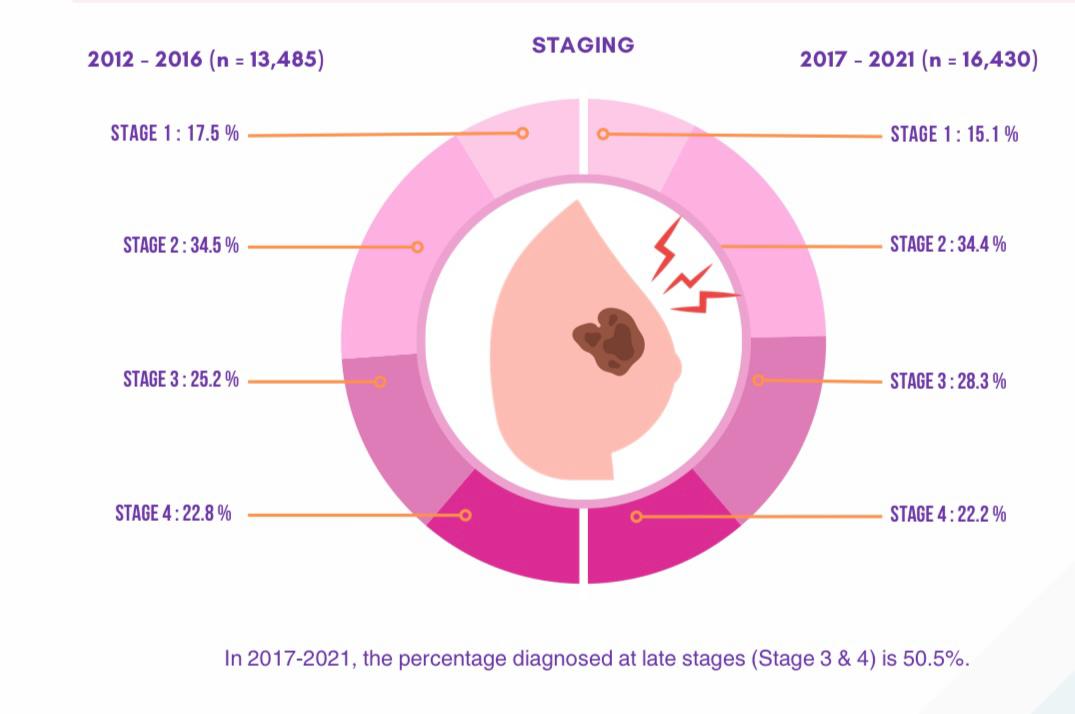
Equally concerning is that more than half of breast cancer cases are still detected at late stages. From 2017 to 2021, only 15.1 per cent were diagnosed at Stage 1, while 50.5 per cent were discovered at Stages 3 and 4, where treatment becomes more complex and chances of survival are lower.
These figures highlight the urgent need for earlier screening, greater awareness, and stronger community support.
In an interview with Sarawak Tribune, Dr Adibah Ali, General, Breast and Endocrine Surgeon and Resident Consultant at Timberland Medical Centre, Kuching, answers key questions about the current situation of breast cancer, the latest treatment options, how early detection can save lives, and practical advice on prevention and supporting patients.
Why is October observed as Breast Cancer Awareness Month, and what does it mean for Malaysians, especially Sarawakians?
Breast Cancer Awareness Month has been observed every year in October since 1985, initially introduced by the American Cancer Society. This campaign is highly significant because, during this month, many activities are organised to raise awareness and knowledge among the general public, especially in Sarawak, about breast cancer.
These include information on the early symptoms of breast cancer as well as methods of early detection and screening.
What is the current situation of breast cancer in Malaysia and among Sarawakians, and has awareness improved or do gaps still remain?
Breast cancer remains the most common cancer among women globally, in Malaysia, and also in Sarawak. Awareness levels have improved compared to the past, as shown by the increasing number of breast cancer cases reported each year.
However, gaps still remain, as many patients continue to present at stage 3 and 4, unlike in more developed countries where cases are often detected earlier.
What are the main risk factors that women and men should be aware of?
The main risk factors that women and men should be aware of include increasing age, particularly after 40, and a family history of breast cancer. Genetic factors, such as BRCA1 and BRCA2 mutations, also increase the risk. An unhealthy lifestyle, including lack of exercise, obesity, and alcohol consumption, can contribute as well.
Women who have never been pregnant or who have late pregnancies are at higher risk. Although the percentage is small, men can also develop breast cancer. Additionally, the use of oestrogen hormones without medical supervision may increase the risk.
How important is early detection in improving the chances of successful treatment?
It is extremely important. If cancer is detected at an early stage, such as pre-cancer (Stage 0) or when the tumour is still small, less than two centimetres (Stage 1), the chances of cure and successful treatment can reach more than 90 per cent.
Early-stage cancer can be detected through mammogram screening and regular monthly self-examinations. However, if detected late, treatment becomes more difficult and complex, and the chances of recovery drop to 22 per cent at Stage 4.
What is the difference between breast self-examination, clinical examination, and mammogram?
Breast self-examination involves a woman checking her own breasts every month, usually after menstruation, to look for any unusual changes.
Clinical examination is performed by a doctor or trained nurse to detect abnormalities that may not be easily noticed during self-checks.
A mammogram is a specialised X-ray screening used to identify early changes in breast tissue and is generally recommended for women aged 40 and above.
Many people feel afraid or embarrassed about having a mammogram. So, what is your view and how can these concerns be addressed?
Many people remain fearful of undergoing mammogram screening due to concerns about pain or anxiety over receiving abnormal results. Therefore, various initiatives have been introduced to educate the public on the importance of mammograms in detecting breast cancer before symptoms appear.
These include free subsidies offered by the National Population and Family Development Board (LPPKN) for mammogram screening at selected private hospitals, as well as continuous education through health talks conducted by doctors and NGOs.

– Photo: National Cancer Institute
What are the latest treatment methods available at medical centres such as Timberland Medical Centre?
At Timberland Medical Centre, patients have access not only to the latest treatments but also to advanced screening and diagnostic methods. These include 3D mammograms with specialised software that provides more sensitive contrast to detect early-stage cancer, as well as Vacuum-Assisted Breast Biopsy (VABB) for more effective stereotactic tissue sampling.
Treatment options depend on the stage of the disease and may include surgery, including oncoplastic and reconstructive procedures, chemotherapy, hormone therapy, and targeted therapy. Advances in medical technology now make treatments more precise, less invasive, and more effective in achieving better outcomes.
From a lifestyle perspective, what preventive measures can be practised to reduce the risk of breast cancer?
From a lifestyle perspective, several preventive measures can help reduce the risk of breast cancer. Maintaining a healthy body weight is important, as is exercising for at least 30 minutes, five times a week.
Practising a balanced diet rich in vegetables and fruits can also help lower risk. It is advisable to avoid alcohol and smoking, and women are encouraged to breastfeed if possible.
How can families and communities provide emotional and social support to breast cancer patients?
Moral and emotional support from family members is extremely important. This includes accompanying patients during treatment and offering positive encouragement to help them stay strong in facing the challenges of treatment.
Within the Sarawak community, there are also several NGOs made up of cancer survivors, such as the Society for Cancer Advocacy and Awareness Kuching (SCAN), the Pink Ribbon Group, and the Sarawak Breast Cancer Support Group (SBCSG).
These organisations are very active in collaborating with medical teams in both private and government hospitals to organise awareness activities.
What is your message to the public in conjunction with Pink October this year?
Awareness of breast cancer should not be limited to the month of October but must continue throughout the year.
Everyone has an important role to play in supporting efforts to increase knowledge about breast cancer, so that more cases can be detected at the early stage rather than the late stage.