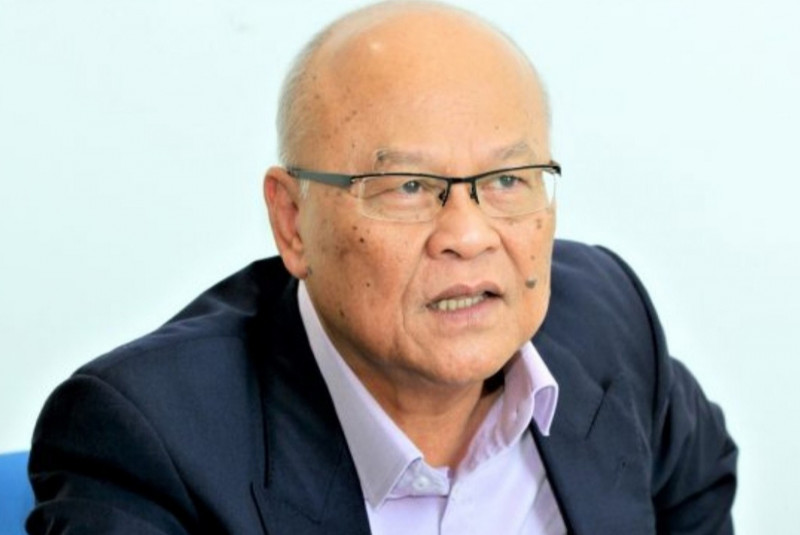
KUCHING: The Sarawak government’s plan to increase the State Legislative Assembly (DUN) seats has been described as a timely move to improve political representation and public service delivery.
Political pundit Associate Professor Dr Novel Lyndon said this is particularly in light of the state’s growing population and vast geography.
He added the proposal is a “wise decision” aimed at ensuring fairer distribution of economic allocations and better representation for Sarawakians across urban and rural regions.
“Increasing the number of elected representatives will help ensure that voices from every corner of Sarawak, especially remote and interior regions, are effectively heard,” he told Sarawak Tribune when contacted today (July 7).
Dr Novel said the seat expansion is necessary following the implementation of Undi18 (Refers to the constitutional amendment that lowered Malaysia’s voting age from 21 to 18) and automatic voter registration, which have significantly increased the voter base.
“More seats mean more representatives for the growing population. Urban and rural voices can be better heard, especially in areas where constituencies are currently too large to manage efficiently,” he added.
He added smaller constituencies would also lead to more focused development, improved access to elected representatives, and faster response to local issues — particularly in areas like Baram, Kapit, and Belaga, where geographical challenges hinder effective service delivery.
Dr Novel also said the move signals a broader political shift, reinforcing Sarawak’s autonomy under the Malaysia Agreement 1963 (MA63).
“Expanding the DUN is a way to assert Sarawak’s rights as an equal partner in the federation.
“It may also strengthen our negotiating power with the federal government,” he said.
According to him, increasing seats in rapidly urbanising areas such as Kuching, Miri, and Bintulu would correct existing imbalances and help create a more democratic political environment by reflecting actual population distribution.
“This can make elections more competitive and democratic,” he said.
Dr Novel further stressed that the seat increase is necessary to prepare Sarawak for future governance challenges as it continues to grow economically, especially with large-scale initiatives like the green energy corridor and coastal highway underway.
“In geographically large or sparsely populated areas, one representative is often responsible for communities spread across great distances.
“This can result in limited access, under-representation, and weaker political responsiveness,” he said.