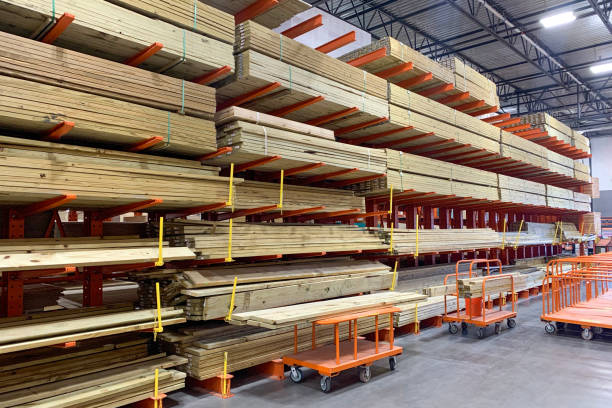
KUCHING: Malaysia’s plywood exports to Japan have jumped by nearly 50 per cent to 68,700 cubic metres (cu m) in July 2025 from 46,200 cu m in the previous month of June (+22,500 cu m), and this was the monthly highest recorded this year.
The big gains made by Malaysia was apparently at the expense of its key competitor, Indonesia, which saw its exports to Japan fell to 44,700 cu m in July from 52,300 cu m in June, according to Japan’s Finance Ministry data quoted by International Tropical Timber Organisation (ITTO) Tropical Timber Market Report (September 1-15).
“In July, Malaysia and Indonesia were the top suppliers of plywood to Japan, as in previous months. The volume of July 2025 imports from Malaysia was almost 50 per cent above the volume reported for July 2024 (49,800 cu m), and year-on-year, there was a 37 per cent increase.
“July imports from Indonesia were down slightly month-on-month and little changed from the volume reported for July 2024.
“Imports of plywood from China in July (9,200 cu m) were at around the same level in June (9,800 cu m) but year-on-year, there was a 25 per cent decline in arrivals,” said the report.
From Vietnam, Japan raised the imports to 14,400 cu m in July from 11,800 cu m in June.
In July this year, arrivals of HS441210-39 category plywood stood at 137,732 cu m against 121,000 cu m in June or up 14 per cent, and an increase of seven per cent year-on-year.
During the January-June 2025 (6m2025) period, Japan recorded a modest three per cent increase in plywood imports. While shipments from the key supplying nations, Malaysia, Indonesia and Vietnam, did not fluctuate much as compared to 6m2024, imports from China fell by 25 per cent year-on-year.
In 6m2025, Indonesia overtook Malaysia as the largest plywood supplier to Japan, with shipments totalling 295,600 cu m as compared to Malaysia’s 288,800 cu m.
In 6m2024, Malaysia was the No 1 supplier to Japan, with shipments of 288,200 cu m, marginally higher than Indonesia’s 288,000 cu m.
But Malaysia gained back its dominating position and market share in Japan this year following the strong export number in July, bringing the total exports to 357,500 cu m in the first seven months. Indonesia slipped into the second spot with total exports of 340,000 cu m in the January-July 2025 period.
And according to Japan Lumber Reports (JLR), prices for Japan’s imported tropical plywood from Malaysia and Indonesia are trending firm, driven by reduced log supply from inland areas and rising raw material costs.
“In Sarawak, Malaysia, a major supplier raised prices by about US$10, C&F (cost & freight) per cu m in July 2025. As a result, prices for 12 mm coated formwork plywood are US$600-US$610 per cu m; standard formwork plywood US$500-US$510 per cu m; and structural plywood US$510-US$520 per cu m. The Malaysian ringgit has strengthened against the US dollar since early April, keeping production costs high.
JLR said in Sarawak, due to heavy rains and flooding that occurred in early February and localised inundation, this had caused a slowdown in the production at local plywood factories. As a result, domestic inventory shortages were anticipated between March-May.
However, local manufacturers continued production using work-in-progress stock, and shipments arrived in Japan despite some delays, limiting the shortage of certain items, such as South Sea (tropical) structural plywood.
“Indonesian standard plywood is priced at around US$970 per cu m for 2.4mm thickness; US$880 per cu m for 3.7mm, and US$850 per cu m for 5.2mm. Both natural tropical wood plywood and falcata combo plywood face rising production costs, prompting firm pricing from suppliers,” said JLR, its bimonthly report is reproduced by ITTO.
JLR said in Japan, demand for domestic softwood plywood remains weak, largely due to sluggish new housing starts.
However, shipments improved from late July to early August as buyers stocked up ahead of the Obon holiday.
“With manufacturers maintaining a firm stance on price hikes, some buyers moved to secure inventory, anticipating price stability. As of late August, though, shipment activity has slowed again.”
Major manufacturers aimed to raise prices in August for 12mm 3X6 domestic structural softwood plywood to 1,150yen-1,200yen per sheet, delivered. However, due to weak demand, prices remained mostly flat, with central Tokyo rates holding at 1,090yen-1,100 yen per sheet.
In 6m2025, Japan’s total plywood supply was 2,336,000 cu m, up 3.1 per cent from 6m2024.And the increase was attributed mainly to a 6.2 per cent increase in domestic production to 1,304,000 cu m year-on-year. Imported plywood was 1,032,000 cu m, down 0.6 per cent from 6m2024.
“The new housing which starts from January to June 2025 is 7.5 per cent less than the same period last year. Due to the price increases by plywood manufacturers starting in January, demand-side purchasing interest in softwood structural plywood appears to have improved compared to last year’s prolonged downturn.
“Production of domestic structural softwood plywood in the first half of this year is 6.7 per cent more than the same period last year. Shipment is 8.9 per cent more than the same period last year.
“Although market activity was sluggish in June, the monthly performance was the lowest in the first half of the year — yet still reached the 180,000 cu m range. Considering that the monthly average in the first half of last year was approximately 178,000 cu m, the overall situation has recovered.”
JLR added: “There was an increase in Indonesian plywood by 0.9 per cent from first half of last year. Malaysian plywood is 1.6 per cent less than the same period last year. Due to the Trump (US trade) tariffs, exchange rates remained volatile, and importers continued to focus on procuring only the necessary designated sources.”