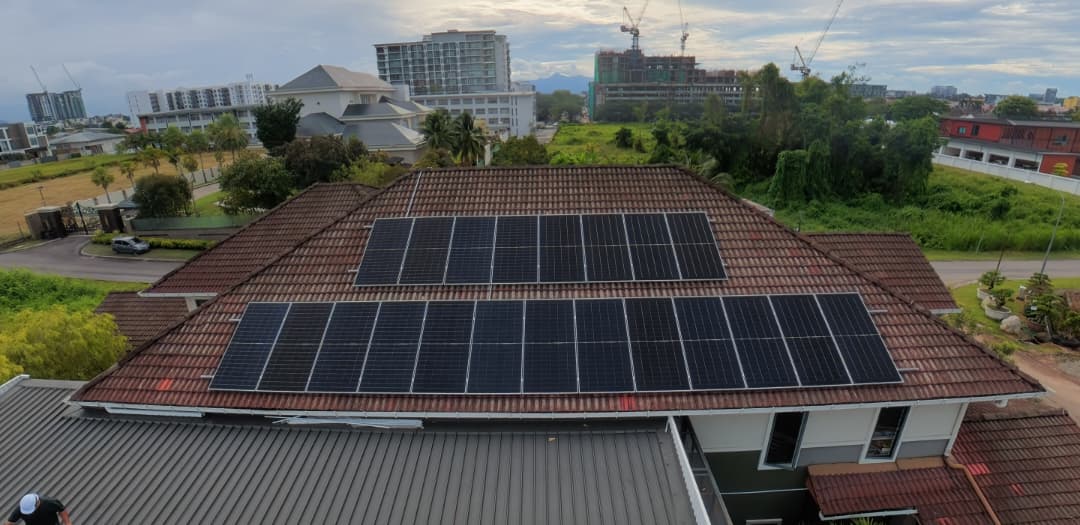
KUCHING: More Sarawak homeowners are turning to rooftop solar as subsidies lower installation costs under Sarawak Energy’s Net Energy Metering (NEM) scheme.
Sarawak Energy has received about 800 applications under the scheme as of May 25, reflecting growing interest in residential rooftop solar across the state.
Under the NEM programme, owners of solar photovoltaic (PV) systems receive credits for excess electricity exported to the grid, allowing electricity generated during the day to offset power consumed from the grid.
The subsidy carries a total allocation of RM10.24 million and is offered on a first-come, firstserved basis, subject to available network quota.
Eligible domestic customers installing rooftop solar on landed residential properties can receive subsidies ranging from RM8,000 to RM12,000, depending on system size.
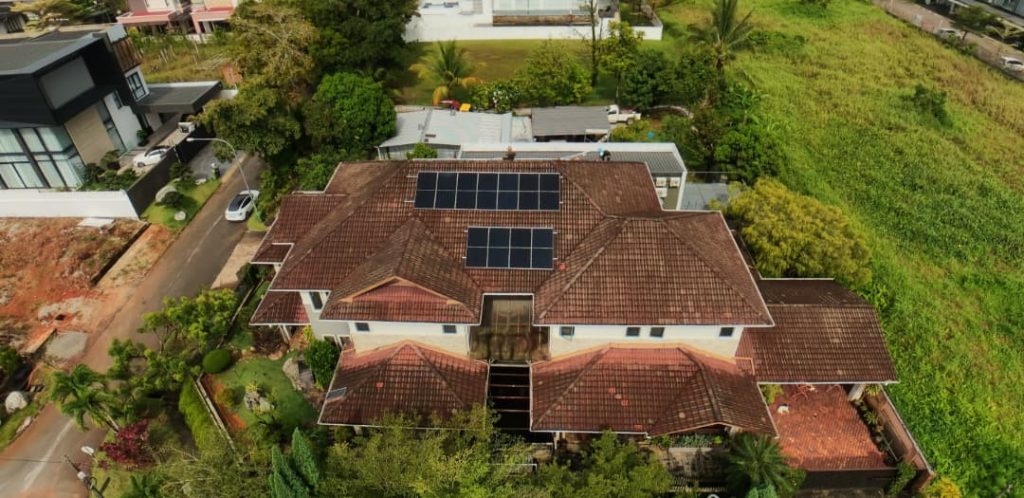
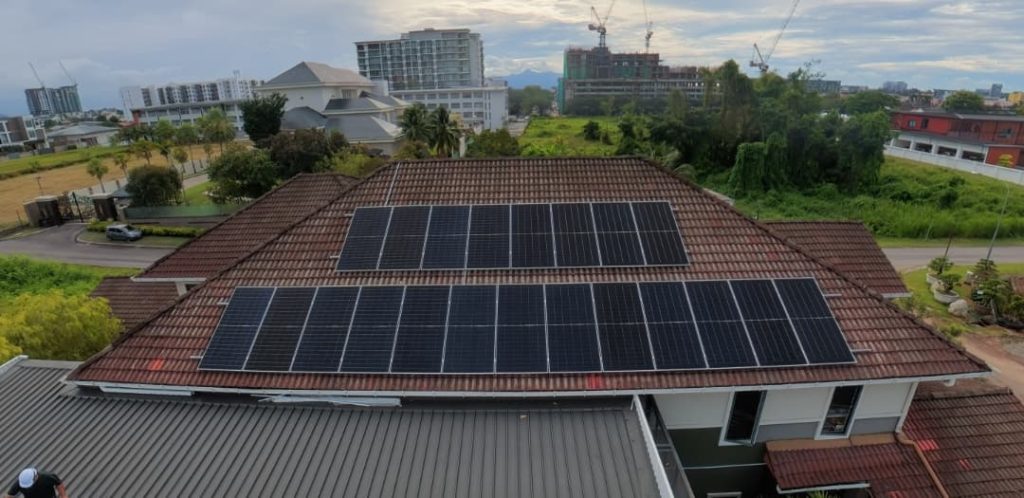
Sarawak Energy’s NEM subsidy provides RM8,000 for systems from 2kWac to 3.5kWac, RM10,000 for systems above 3.5kWac to 6kWac, and RM12,000 for systems above 6kWac up to 50kWac.
Applications must be submitted through an appointed Sarawak Energy or SESCO registered contractor on behalf of the customer.
For Pavilion Paragon advisor Oscar Wong, the subsidy is the biggest factor driving interest in rooftop solar this year.
“I believe it is mostly due to the subsidy given this year.
The subsidy is RM8,000 to RM12,000,” he told Sarawak Tribune.
Wong said the process typically begins with homeowners submitting their electricity bills for assessment before a suitable system is designed and submitted to Sarawak Energy Berhad (SEB) for approval.
He said Pavilion Paragon had handled about nine residential rooftop solar projects this year, with several already installed while the rest were either awaiting approval or still in progress.
However, he stressed that rooftop solar is not automatically suitable for every household.
“The financial case depended heavily on monthly electricity usage because the system must be designed based on actual consumption.
“For households with monthly electricity bills below RM200 or RM300, the payback period could be long because the upfront cost remained substantial even after subsidy.”
Wong gave the example of a system costing about RM25,000.
After an RM8,000 subsidy, homeowners would still need to pay around RM17,000 upfront.
If monthly savings are only RM100 to RM150, he said the investment could take seven to eight years to recover.
“For bills below RM200 plus, it is already quite cheap.
The system after subsidy still costs more than RM10,000.
“Maybe the monthly reduction from solar is only RM150. You may need a minimum of seven to eight years or more to recover the investment,” he said.
For households with higher electricity usage, Wong said the return period could be significantly shorter.
“Households with monthly electricity bills above RM300 could see a return on investment of about four to five years, depending on usage and system design.”
He said households with monthly electricity bills of about RM1,000 could potentially reduce their electricity costs by RM600 to RM700 each month, shortening the payback period to around three to four years.
“If your bill is about RM300 plus and above, the return on investment is about four or five years minimum.
“If your house bill is about RM1,000, and the system reduces it by about RM600 to RM700, your return on investment will be about three to four years plus,” he said.
Wong cautioned homeowners against increasing their electricity consumption simply to justify installing a larger solar system.
“The system design must be based on actual electricity consumption, while SESCO checks whether the inverter capacity is suitable for the household.”
Sarawak Energy’s NEM requirements also state that applicants must install solar PV systems capable of generating no more than 75 per cent of the household’s average electricity consumption over the previous three months.
“They will check whether our inverter is just enough for this household.
You cannot over-design it because if you did, they will reject the application,” he said.
He said any future system upgrade would require a fresh assessment, as a larger inverter may also require additional solar panels and sufficient roof space.
“You need to consider whether you really have that much bill.
Do not try to push your usage just to get the solar system up,” he said.
Besides electricity usage, Wong said the condition and layout of the roof are equally important before installation.
Older houses may still qualify if their roof structure and trusses remain in good condition.
“If your house is old, we would need to inspect whether your roof and truss are in good condition.
“If the roof is quite rusty, or the roof tiles are quite thin, I will let the owner know and advise them to repair or change their roof tiles before proceeding with the installation of the solar panels.
“This is because some of the roofs’ designs or materials may be outdated and this risks the incompatibility of installing the solar panels,” he said.
Roof orientation and shading also influence system performance.
Wong said panels are preferably installed on the main rooftop because shade affecting one panel could reduce the output of the entire connected string.

“If there is a little bit of shading, it will affect one whole string.
“I will check the sun’s direction.
If the roof direction means the output may not come out at 100 per cent, I will inform the owner,” he said.
He added that Pavilion Paragon also checks whether a house uses a single-phase or three-phase electrical system, as this affects system selection and pricing.
According to Wong, a singlephase installation generally costs between RM20,000 and RM30,000, while a three-phase system ranges from RM30,000 to RM60,000.
The final quotation depends on electricity usage, roof capacity and site conditions.
“For example, if your usage is 1,000kWh, I may quote the system at more than RM20,000.
“I will show you first and see whether you are okay with the pricing.
There will be a plus and minus because that is before the site visit,” he said.
Although based in Kuching, Wong said rooftop solar installations are available throughout Sarawak, with additional logistics charges for more distant locations.
“If you want it in Limbang or Lawas, or any place you want me to go, I can go.
“Of course, I will charge logistics. But the installation is the same,” he said.
For new homes, he said contractors usually require at least three months of electricity usage records before recommending a system.
He added that developerinstalled solar systems could fall under different categories depending on the project requirements.
From assessment to installation, Wong said the entire process generally takes two to three months.
After Sarawak Energy approves the application, materials are ordered before installation begins.
“After getting approval from SEB, we will start to buy the material.
“It depends on whether there is stock or not.
Some stock may need to wait for two months or one month plus. If there is existing stock, it can be very fast,” he said.
To ease customers’ concerns, Wong said Pavilion Paragon uses a staged payment structure instead of collecting the full amount upfront.
The company collects 10 per cent for design, followed by 70 per cent after approval to purchase materials, 10 per cent after installation and the remaining 10 per cent after testing and commissioning.
“Some people do not want to pay the whole lump sum.
They are also worried.
“They worry that after they pay, the things get delayed.
So I do it step by step.
It is good for the customer also,” he said.
However, Wong said homeowners must still prepare the full installation cost because the subsidy is reimbursed only after the PV meter has been installed and the necessary agreement signed with Sarawak Energy.
“After the meter change and PV meter installation, SEB will ask you to sign the contract.
“After everything is signed and installed, they will bank the subsidy you’re eligible for in about two weeks.
“In addition to this, customers also need to ensure that electricity account and land title details are in order, as subsidy payment must go to the rightful owner,” he said.
He said Pavilion Paragon handles most of the paperwork, although customers must personally sign certain documents at Sarawak Energy.
“I will inform the clients that they have to go to SEB’s office to sign.
This is because I cannot take out the form for the clients to sign.
Only that part they have to do themselves.
The rest, I can do for the clients,” he said.
On maintenance, Wong said the company provides free inspections during the first year, including checks on wiring and panel condition.
“From the second year, servicing is chargeable.
However, our company may group several customers together to reduce the cost paid by the clients.
“For one house, it will be around RM300, with a minimum of three customers agreeing to do maintenance together,” he said.
He added that homeowners may clean panels installed on lower roofs themselves, but work on higher rooftops should be left to qualified personnel.
“If it is on the higher roof, it is not advisable to do it yourself.
You have to give it to a competent person. Safety comes first,” he said.
According to Wong, rooftop solar has become more attractive because installation costs have fallen, more suppliers have entered the market and government subsidies have improved affordability.
Previously, he said, relatively low electricity tariffs and fewer suppliers made rooftop solar less appealing in Sarawak.
“At that time, not many wanted to go for rooftop solar because there was no subsidy.
The pricing was high and there were not many suppliers.
“But now, because there are more competitors and suppliers, the pricing has gone down, depending on the market.
With the subsidy, it is good to apply,” he said.
Wong added that greater use of electrical appliances, electric vehicles and growing public awareness of energy efficiency have also encouraged more homeowners to explore rooftop solar.
He noted that solar panels generally carry power warranties of between 25 and 30 years if properly maintained.
Still, he said installing rooftop solar remains a significant financial commitment, with most households needing to spend between RM20,000 and RM40,000 upfront before recovering the investment over several years.
“I still advise them that it is good. But it still depends on their own thinking. I cannot force them to hop in the trend and get the solar rooftop,” he said.