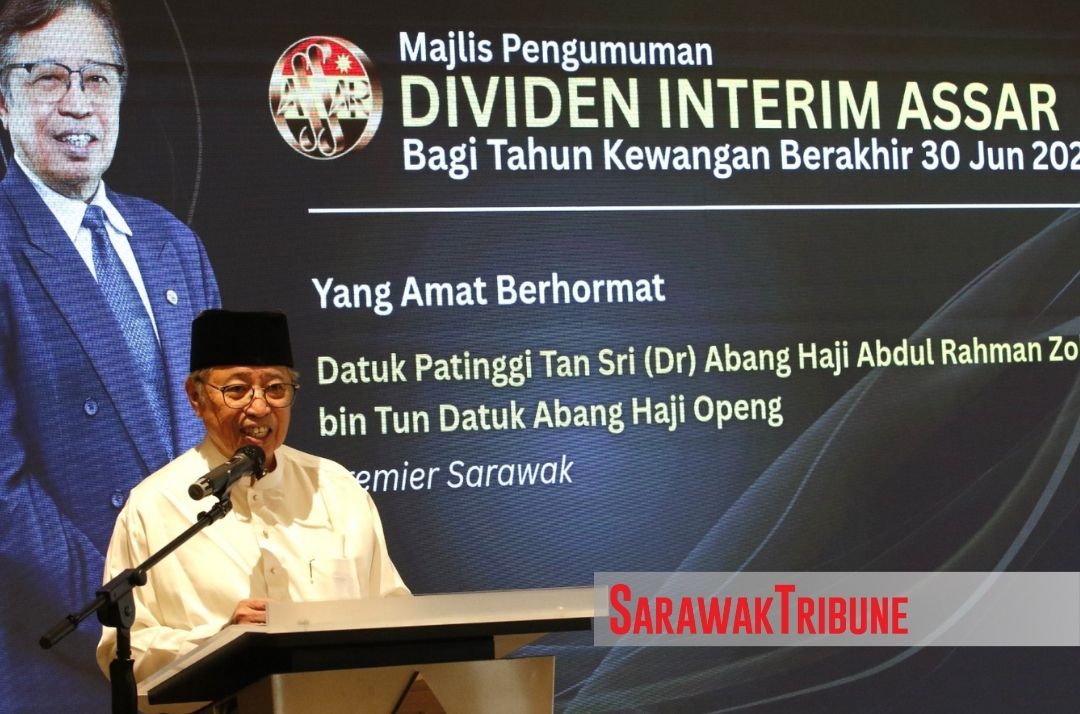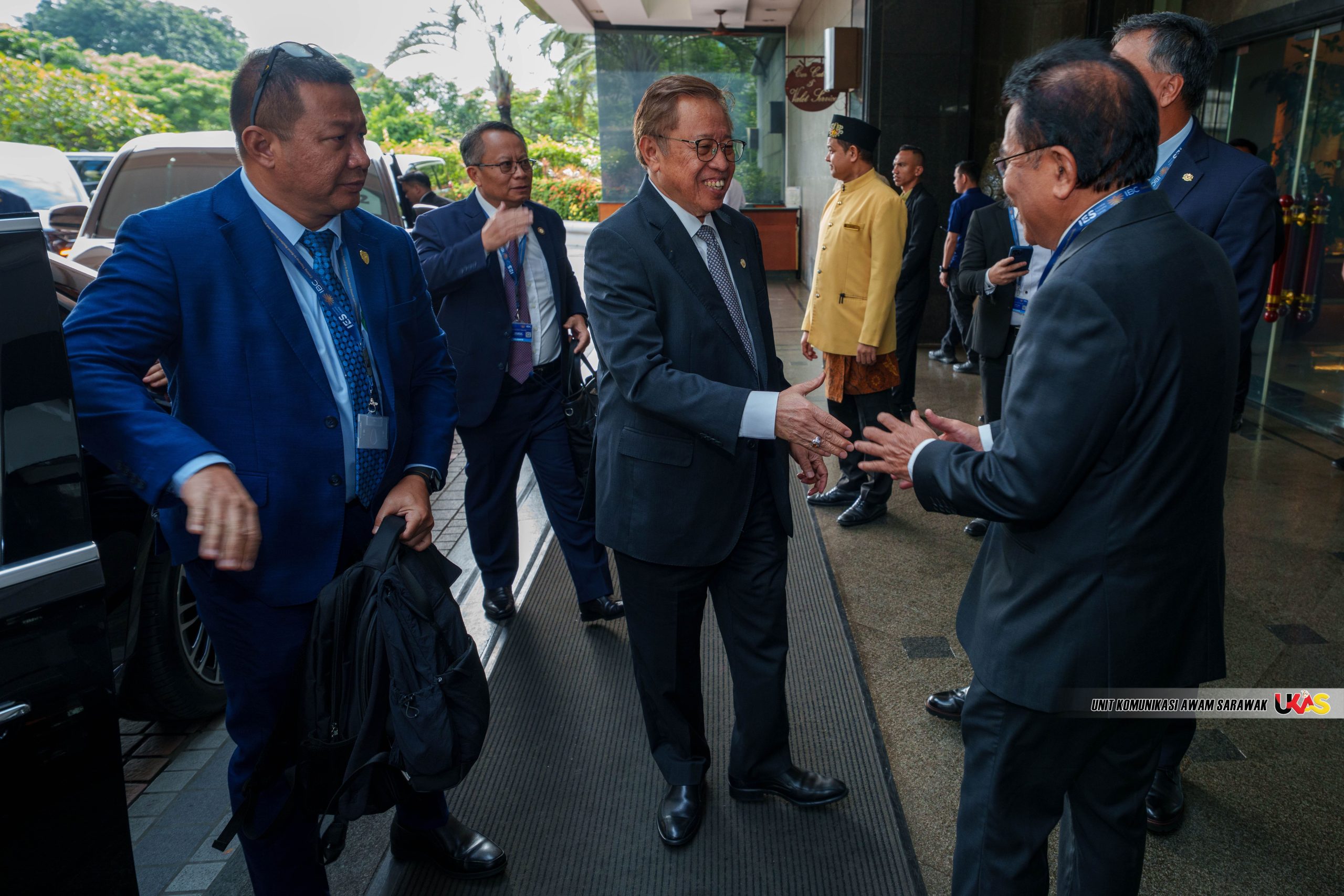
JAKARTA: The Kijing International Seaport in Kalimantan could play a significant complementary role to Sarawak’s ports, creating opportunities for more efficient long-haul connectivity to East Asia, the Middle East and Europe, said Premier Datuk Patinggi Tan Sri Abang Johari Tun Openg.
He said the deep-sea gateway, which is the largest seaport in Kalimantan, has the potential to complement port developments in Sarawak and strengthen regional logistics and trade connectivity across Borneo.
Abang Johari said Sarawak is investing heavily in infrastructure, utilities and telecommunications as the foundation for regional growth, while also upgrading its transport and logistics networks to support rising industrial demand.
“We are improving our integrated land transport system, developing a new international airport and a new deep seaport to support growing industrial demand,” he said in his keynote address at the Indonesia Economic Summit (IES) 2026 themed “Ideas from Borneo: Investing in the Next Engine of Growth” held here Tuesday (Feb 3).
On air connectivity, Abang Johari said the return of direct flights between Kuching and Pontianak represents more than the restoration of an air route, as it signals the renewal of connectivity across Borneo.
“It facilitates the movement of people, ideas and enterprise, while supporting trade, tourism, education and business collaboration,” he said, adding that Sarawak has also established AirBorneo to strengthen regional air links and expand direct connections from the island to other parts of the world.
On energy, Abang Johari said Borneo has attracted growing global attention in recent years, particularly for its renewable energy potential, with Sarawak contributing through close cooperation with Indonesia.
He said this includes a joint hydropower development project in North Kalimantan with Indonesian partners, demonstrating how Borneo can advance clean energy through practical cross-border collaboration.
“Just two weeks ago, the Sabah Chief Minister and I launched the Sarawak–Sabah Power Grid Interconnection,” he said, describing it as an important step towards a future Borneo Power Grid and a longer-term vision of the ASEAN Power Grid to strengthen cross-border energy connectivity.
Abang Johari said these initiatives reflect how Borneo can work together for mutual benefit, underpinned by a spirit of co-creation where neighbouring regions shape economic value by building on their respective strengths.
“For us, renewable energy underpins reliable power supply and our climate responsibility, while also serving as a strategic enabler of broader economic transformation,” he said, adding that this is why Sarawak places strong emphasis on building a new economy.
He said the global landscape is undergoing a fundamental transformation, where sustainability and high-tech innovation have become the defining benchmarks of success, and Sarawak is actively shaping new pathways for sustainable and high-value growth.
According to him, Sarawak’s development strategy is anchored on three pillars, beginning with advancing clean energy and new industrial pathways through the Green Hydrogen Economy.
“Through the Sarawak Hydrogen Roadmap and the establishment of the Sarawak Hydrogen Hub in Bintulu, we are positioning Sarawak as a premier clean energy production centre aligned with the National Energy Transition Roadmap,” he said.
The second pillar, he said, focuses on climate solutions and responsible carbon management, with Sarawak’s geological formations enabling it to emerge as a regional carbon capture, utilisation and storage (CCUS) hub.
By repurposing depleted hydrocarbon reservoirs, he said PETROS is driving Malaysia’s first large-scale carbon injection under the Kasawari CCS Project, supported by strategic partnerships with Japan and Singapore.
“This further positions Sarawak as a global model in carbon management and a key partner in the international energy transition,” he said.
Abang Johari said the third pillar centres on digital, artificial intelligence and advanced manufacturing capabilities, driven by the “Silicon Longhouse” strategy.
Through collaboration with industry partners, he said Sarawak is strengthening its role in compound semiconductors and advanced chip design to support critical sectors such as electric vehicles and artificial intelligence.
“Through this, ‘Designed in Sarawak’ reflects our contribution to innovation within the global green economy,” he added.