SARIKEI: Sarawak’s stronger financial position has provided the state with greater capacity to undertake development and channel the benefits back to the people.
Premier Datuk Patinggi Tan Sri Abang Johari Tun Openg said Sarawak’s revenue stood at around RM6 billion to RM7 billion when he first took over as Chief Minister, compared to RM14.2 billion now.
He attributed the state’s financial strength to the understanding and cooperation between the people and the government.
“I am not saying this to praise Sarawak or blow our own trumpet. What I want to say is that the strength we have today is because of the understanding between the people and the government,” he said.
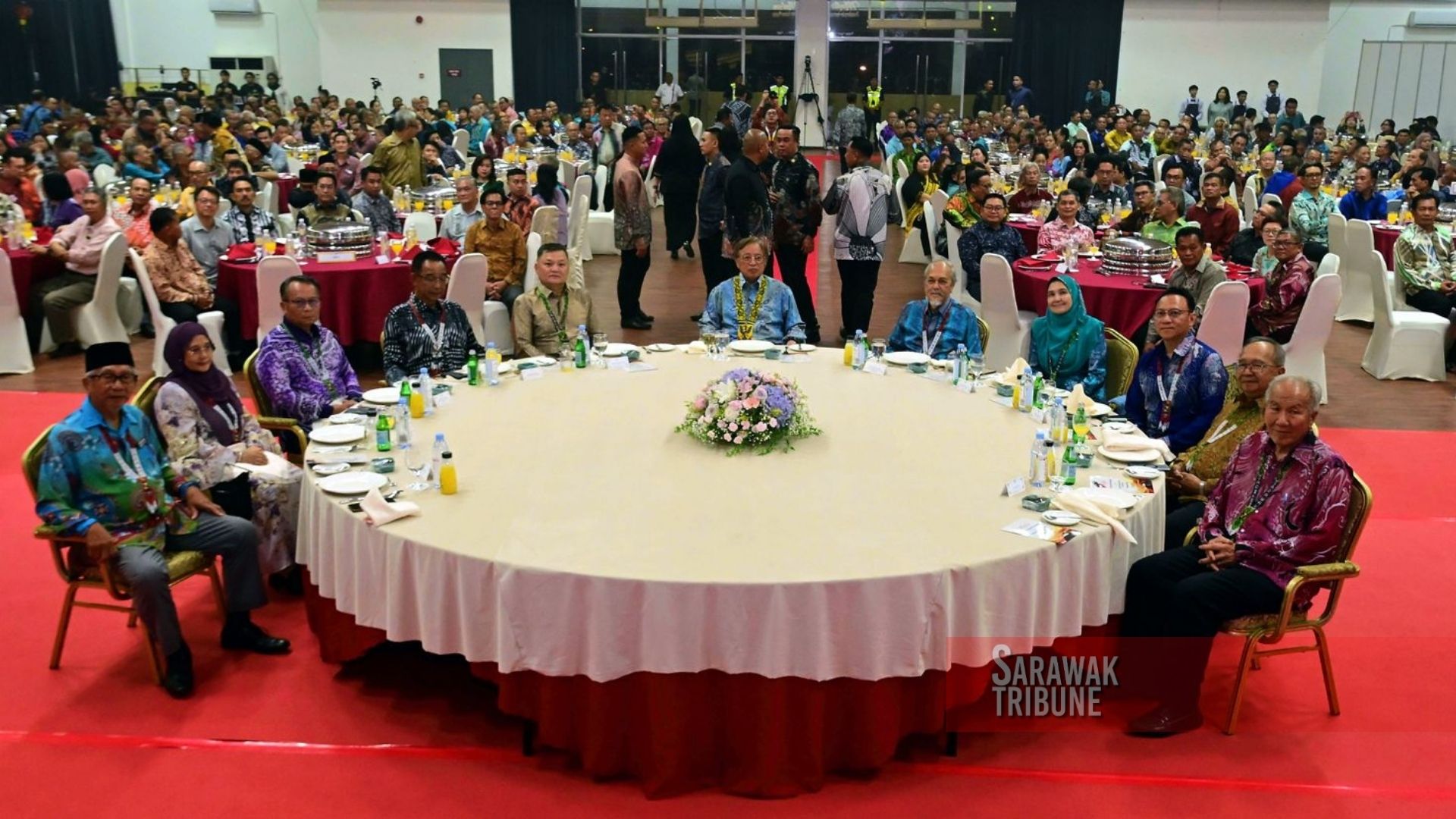
He said this when speaking at the ‘Majlis Makan Malam Pemimpin Bersama Ketua Kaum dan Masyarakat Bahagian Sarikei’ event on Friday (Aug 7) night.
Abang Johari said a stronger economy and higher revenue gave the state government greater capacity to fund development needed by the people.
He pointed to major infrastructure projects, particularly bridges, as examples of investments that could improve connectivity and subsequently generate greater economic activity.
Among the major infrastructure projects he highlighted were the Batang Lassa and Batang Lupar bridges, which cost almost RM600 million and about RM848 million respectively.
He said improved connectivity would bring communities closer together while opening up larger markets for local products and stimulating economic activities.
“When our bridges were completed, connectivity improved and the economy grew. Even local products can reach wider markets because the market becomes bigger,” he said.
Abang Johari also cited the recent increase in allowances for community leaders as an example of how the state’s improved financial position could translate into benefits for the people.
He said when the request for higher allowances was presented to him, he considered it against Sarawak’s revenue position.
“When I received the application, I calculated our revenue and, alhamdulillah, I thought, what is wrong with sharing it with the people?” he said.
Abang Johari also pointed to Sarawak’s position as the largest shareholder in Affin Bank as another reflection of the state’s economic progress.
He recalled how Sarawak previously had several banks associated with the state, including Wah Tat Bank, Hock Hua Bank and Bank Utama, which eventually ceased to exist.
“When our economy became stronger, alhamdulillah, we were able to acquire the largest shareholding in Affin Bank, and today we are the largest shareholder,” he said.
Looking towards 2030, Abang Johari said Sarawak’s ambition should not stop at achieving high-income status for the state, but must ultimately translate into higher incomes for its people.
He said Sarawak had already attained high-income status, but stressed that raising the income of Sarawakians remained an important part of the state’s aspirations towards 2030.
“By 2030, our target is not only for Sarawak to be a high-income economy because we have already achieved that. The income of our people must also be high,” he added.