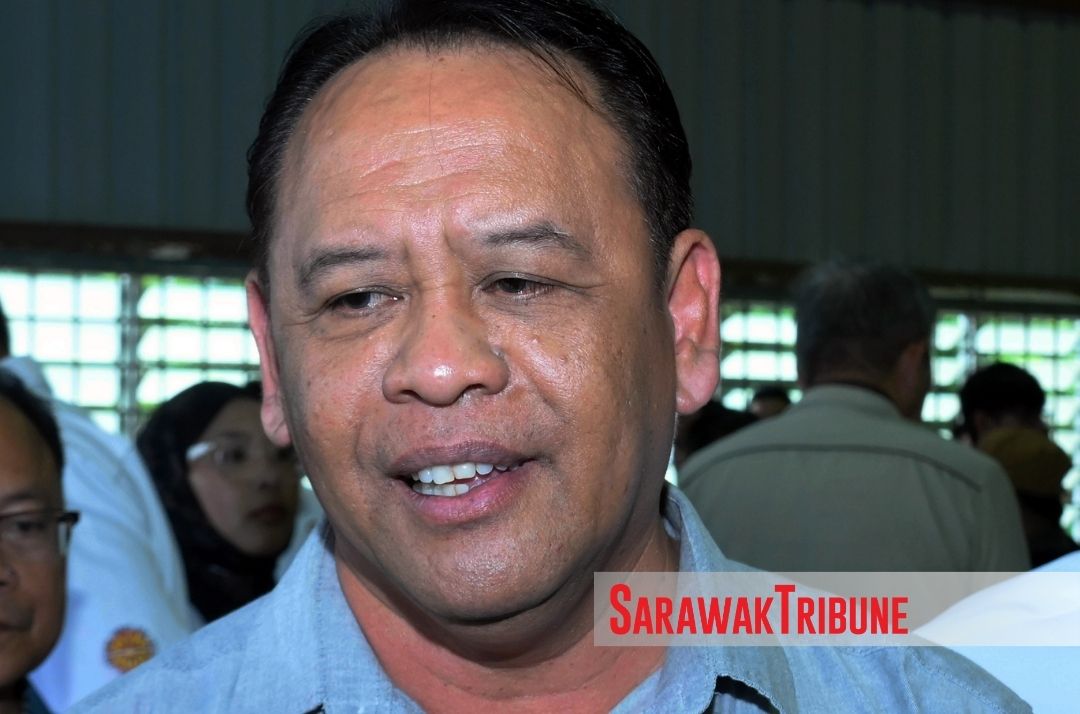
KUCHING: Riverine and marine transport activities in Sarawak will inevitably come under pressure if the global oil crisis triggered by the worsening Iran-Israel conflict continues.
Deputy Minister for Transport (Riverine and Marine), Datuk Henry Harry Jinep, said a prolonged conflict in the Middle East would not only drive up global fuel prices but also place additional strain on Malaysia and Sarawak’s economy, especially in areas that depend heavily on waterways for the movement of people and goods.
“If the crisis continues for a long period, it will definitely affect the economy and transportation sector, including riverine and marine activities in Sarawak.
“It will be very chaotic, even though the crisis has not happened in Malaysia yet. But the moment the fuel supply reduced, the moment the supply stop, all of us will be affected.
“Even those on the roads, those who are dependent on fuel, would also be affected. It will disrupt the movement and activities of everyone if there is no fuel,” he told reporters after attended the Mass Prayer Service at St Henry Church, Apar Singgai, near here today.
Harry noted that extensive reliance on diesel-powered express boats, longboats, cargo vessels and fishing craft means any sustained increase in fuel prices would quickly translate into higher operating costs.
He noted that transport operators serving interior and coastal communities would be among the first to feel the impact, as many already operate on tight margins while covering long distances.
“With fuel costs rising, operators may have to review fares, reduce trip frequency or absorb losses, and that will eventually affect the people, especially those in rural and remote areas,” he said.
Sarawak’s vast geography and river-based settlements make water transport a lifeline for many communities, particularly in places where road access remains limited or where rivers remain the fastest route for travel and delivery of essential supplies.
Any disruption, Harry said, could affect the movement of passengers, food supplies, daily necessities, construction materials and other goods into the interior.
He added that the impact would not be confined to riverine transport alone but also to land and air transport if the crisis prolonged.
“If Iran continues to block the straits of Hormuz, definitely there will be no supply of oil. Anyway, this is a world stage kind of issues, we don’t want to touch it.
“But what will happen to us if there is insufficient oil? We too will be affected, as higher logistics costs could spill over into broader economic activity, pushing up the cost of living and affecting small traders, fishermen and businesses that rely on regular movement along the state’s roads, rivers and coastal waters.
“So far, it has not happened in Sarawak, we are still okay. But until when can we stand? Hopefully, this crisis will not continue until the people suffer looking for petrol to get their daily needs,” he said
Harry supported the federal government’s recent announcement to limit the subsidy quota for Malaysians, saying it was a good way to control petrol supply so that every people can have it.
He believes that by limiting the quota, the petrol supply can be shared with everybody.
He expressed hope that tensions in the Middle East would ease soon to prevent further shocks to the global oil market.
“At the end of the day, what happens abroad can still affect us here, especially when it involves oil prices and transport costs,” he added.