KUCHING: Public misgivings over perceived lack of action on complaints can now be taken up with the Independent Police Conduct Commission (IPCC).
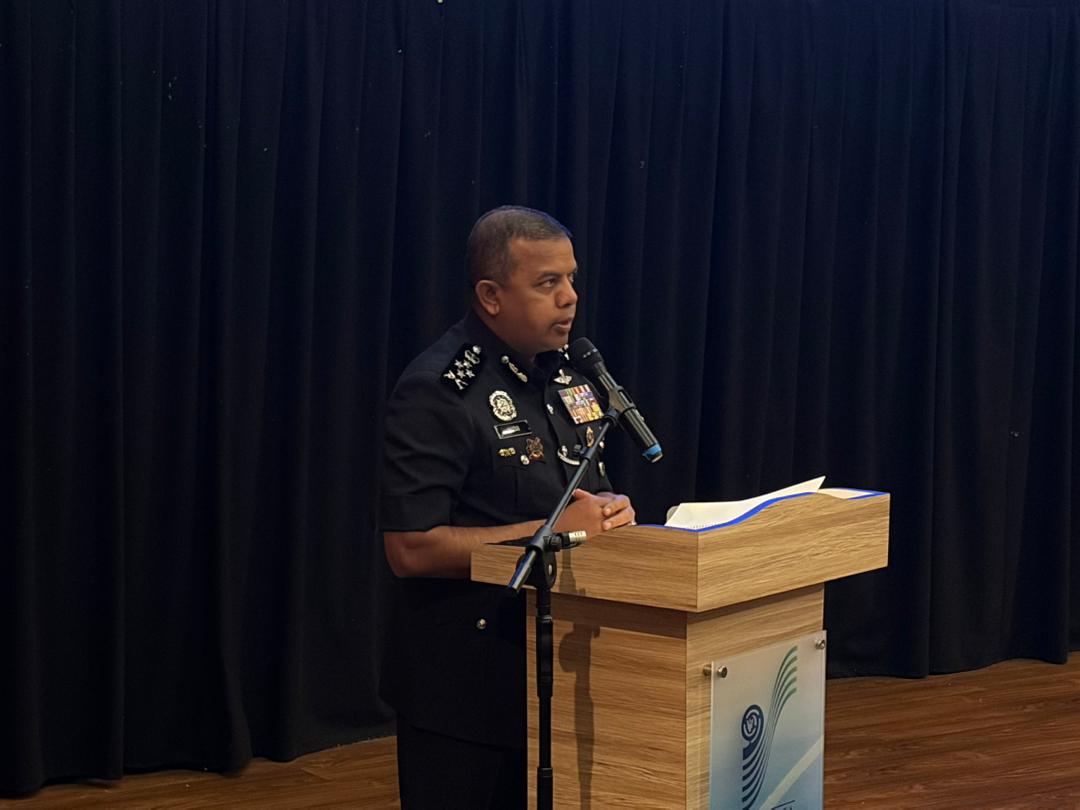
In stating this Deputy Inspector-General of Police Tan Sri Ayob Khan Mydin Pitchay, said several cases have already resulted in action being taken following independent review processes.
“Previously, complaints were primarily handled internally within enforcement structures, but the introduction of IPCC now provides an independent avenue for review and investigation.
“Now there is an option. If the public is not confident with internal channels, they can go to IPCC. They can lodge complaints online, and investigations will be carried out,” he said.
Ayob Khan gave the assurance after launching the Integrity Book at Pustaka Negeri Sarawak Auditorium here, Saturday.
He reiterated that strict action will be taken against any wrongdoing once reports are lodged through proper channels, including the IPCC.
He stressed that integrity enforcement must be firm, consistent, and free from double standards, particularly in cases involving officers of the law.
Responding to concerns raised regarding alleged internal protection or ‘cover-ups’ in cases involving officers, including online gambling-related offences, he acknowledged public perceptions but stressed that mechanisms for accountability are now stronger.
He noted that such perceptions often arise when cases involve enforcement personnel, but reiterated that the system now allows for external oversight and public reporting.
“If there are attempts to cover up misconduct, there will be no compromise. Action will be taken once reports are made,” said Ayob Khan.
The event was also attended by Women, Childhood and Community Well-being Development Minister Datuk Seri Fatimah Abdullah, Batu Kitang state assemblyman Datuk Lo Khere Chiang, the icon behind the book, Dato Mohd Yusoff Jaafar, the author of the book, Leonard Sabu and other guests.
Ayob Khan stressed that accountability mechanisms exist and must be fully utilised, to reaffirm the police force’s commitment to integrity, transparency, and firm enforcement of the law, while encouraging the public to utilise independent oversight bodies such as the IPCC to report misconduct without fear or hesitation.
He emphasised that Malaysia’s progress in combating corruption depends on strict enforcement without favouritism, regardless of rank or position.
“There must be firmness. It does not matter whether it involves policy makers, politicians, enforcement agencies or any other institutions. Without strict action, there will be no change,” he said.
He also stressed that integrity cannot rely solely on enforcement systems, but must begin from the earliest stages of society, starting from the home, followed by schools, universities, and the wider community.
“Even if we have technology and innovation, without strong character and integrity, the problem will repeat,” he said.
He added that combating corruption requires long-term cultural and behavioural change, supported by firm enforcement and the rejection of double standards.
While acknowledging that progress in addressing corruption remains gradual, he maintained that consistency, firmness, and public cooperation are essential to ensuring meaningful change.
“Only with firmness, fairness, and courage can we properly address integrity issues in the country,” he said.