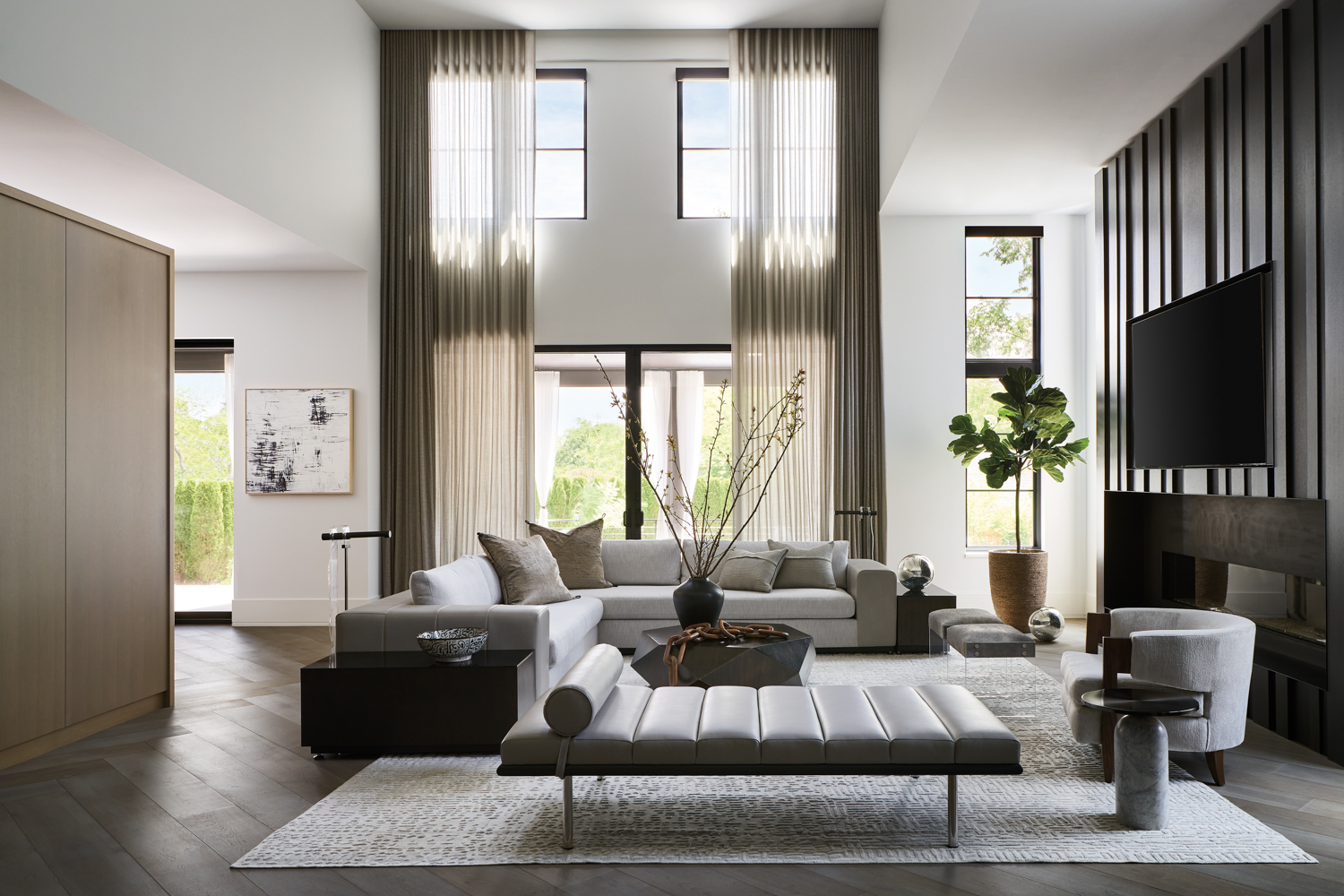
Quiet Luxury is the latest trend reshaping interiors – a style that whispers refinement through subtle textures, muted tones, and timeless design. Drawing inspiration from the ancient Arabic courtyard, it shows how true elegance lies not in display, but in comfort, atmosphere and understated sophistication.
By Khaled Shawky Elbarbary
Understated design with timeless appeal
AH, luxury! A word that, for most of us, conjures images of gold-plated toilets, chandeliers the size of small cars, and perhaps a butler named Jeeves who silently judges your choice of pyjamas. But hold your horses, my friends, for a new beast has emerged from the gilded cages of the elite: Quiet Luxury.
It’s the kind of luxury that doesn’t scream, doesn’t shout, doesn’t even politely clear its throat. It whispers. It’s the sort of elegance that makes you wonder if you’re too loud simply by existing in its presence. And frankly, it’s rather amusing.
Imagine, if you will, a room. Not one bursting with ostentatious displays of wealth, but a space where every fabric feels like a cloud spun by angels, every piece of wood whispers tales of ancient forests, and every surface gleams with a subtle, almost shy sheen.
This, my dear readers, is Quiet Luxury. It’s the art of spending a fortune to make it look as though you haven’t spent a fortune. It’s the ultimate humble brag – the architectural equivalent of a knowing wink. And for a man like me, who appreciates a good paradox, it’s a goldmine of observational humour.
So, how does one achieve this elusive ‘Quiet Luxury’ without resorting to the vulgarity of visible brand names or, heaven forbid, actual gold leaf? It’s all about the subtle art of deception, my friends. It’s about materials that cost more than your first-born, but look as unassuming as a well-worn linen shirt.
Think cashmere throws that could double as clouds, natural stone that whispers tales of geological epochs, and wood so rich it practically has its own trust fund. The idea is to invest in quality, not flash. It’s a philosophy that says: ‘I’m so wealthy, I don’t need to prove it to you. My sofa just feels expensive, and that’s all that matters.’
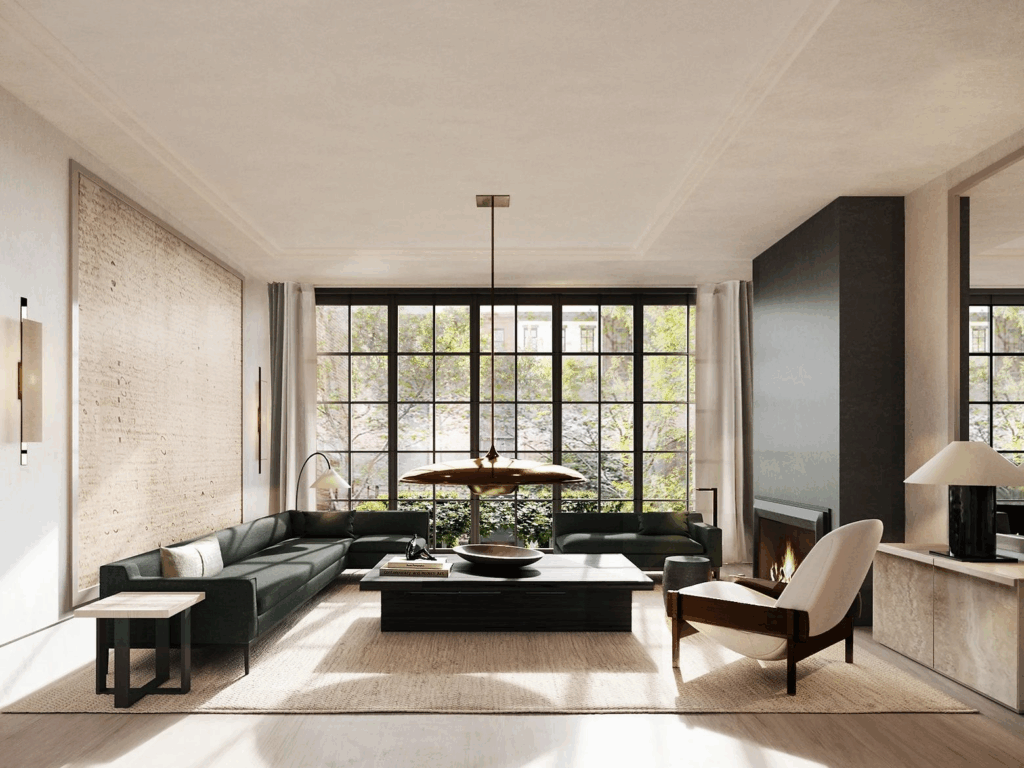
The colour palette, naturally, is as muted as a librarian’s whisper. We’re talking neutrals, my dears – greys, beiges, off-whites that make you question whether you’ve accidentally walked into a very expensive hospital. The goal is a calming atmosphere, a sanctuary from the cacophony of the outside world. No jarring colours, no sudden bursts of personality. Just serene, understated elegance that says, ‘I have excellent taste, and probably a very large inheritance.’
It’s about creating a space that feels exclusive and intimate, without being so vulgar as to actually say it’s exclusive and intimate. The true luxury, you see, is the unspoken understanding that you’re in the presence of something truly, deeply, subtly expensive.
Now, you might be wondering: what does all this hushed opulence have to do with the ancient Arabic house? Ah, my astute reader, this is where the plot thickens – like a good Egyptian lentil soup.
Before the advent of air conditioning – that glorious, humming box of modern miracles – our ancestors in the scorching deserts of Arabia had to be rather clever about keeping cool. And clever they were. They didn’t need fancy thermostats or energy-guzzling machines. They had the courtyard.
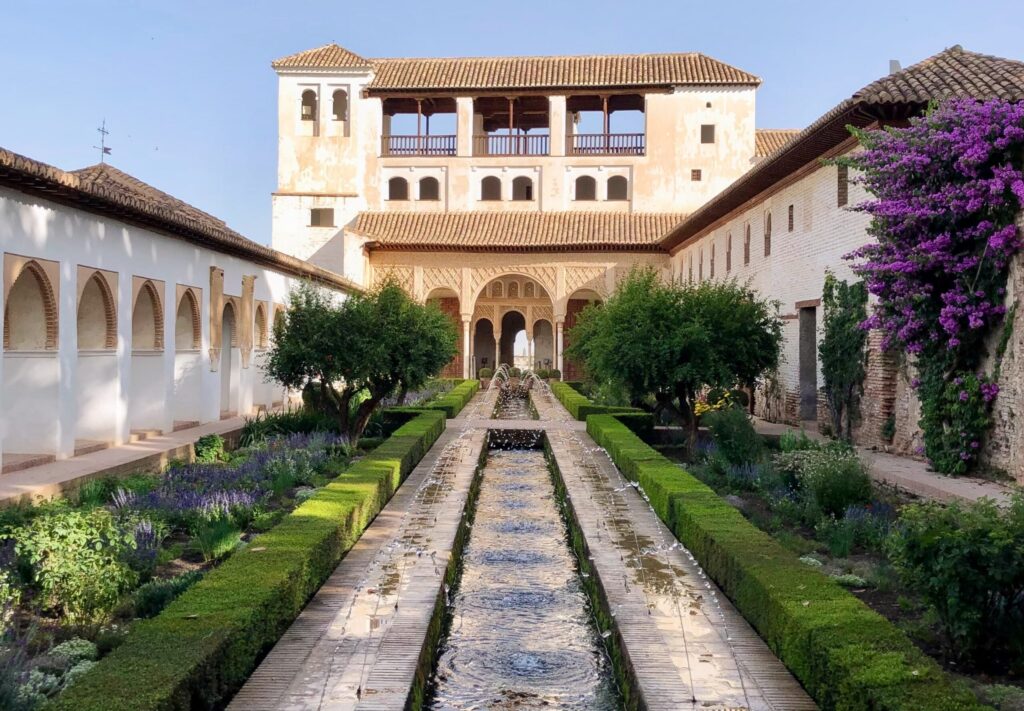
The courtyard, my friends, was the beating heart of the Arabic home: an open-air sanctuary, a private oasis shielded from the harsh sun and the prying eyes of the outside world. But it wasn’t just aesthetic (though it was certainly beautiful, often adorned with lush greenery, trickling fountains and intricate tilework that would make a modern interior designer weep with envy). It was a masterclass in passive cooling – a testament to ancient wisdom that puts our modern follies to shame.
Picture it: the sun beating down on the outer walls, while inside, shaded courtyards cooled by fountains created a microclimate. Cooler, denser air would sink into the courtyard, pushing the hotter air upwards and out through strategically placed vents and wind-catchers.
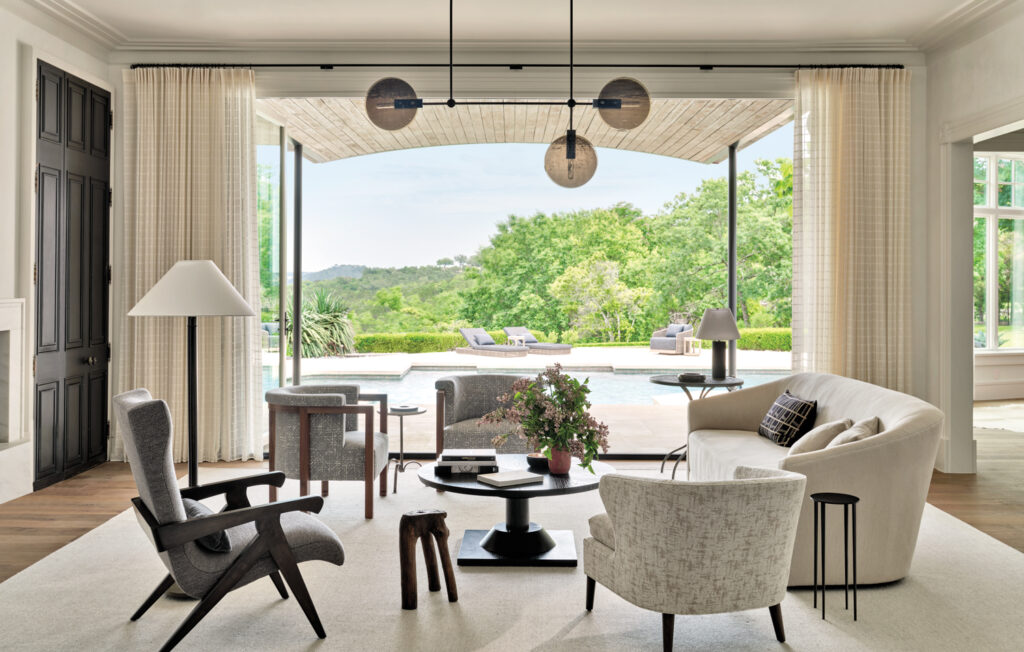
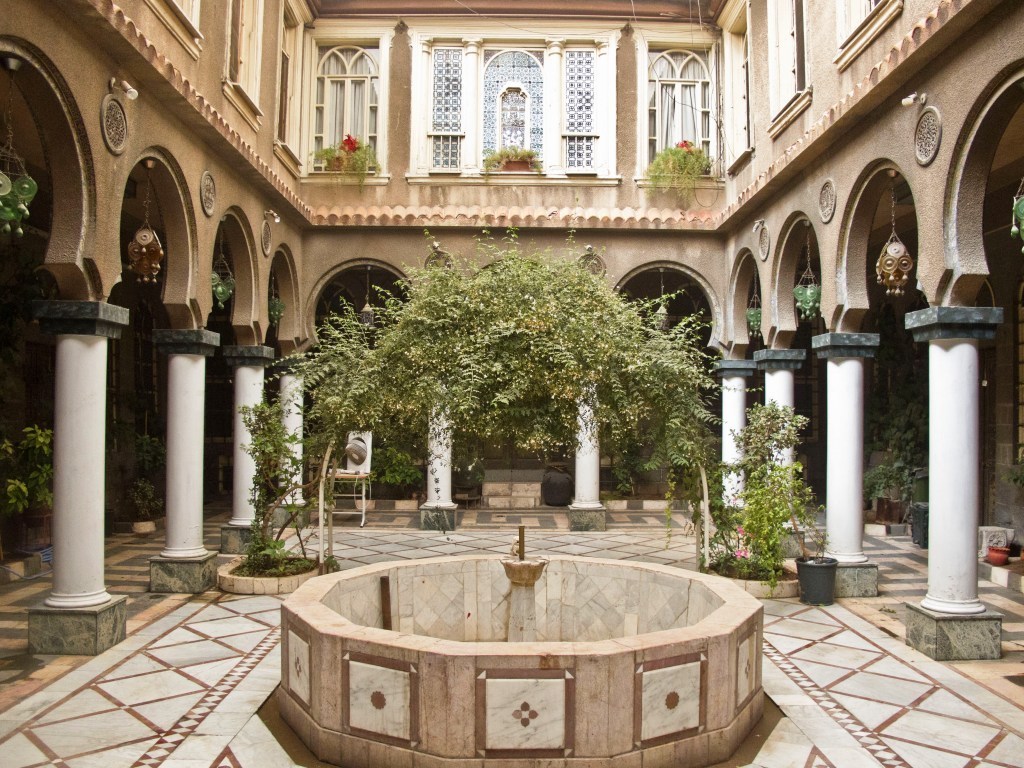
This natural circulation was a symphony of physics and design, keeping interiors remarkably cool even on the most sweltering days. It was luxury, yes – but a quiet, functional luxury, born not of ostentation, but of necessity and ingenuity. No need for a butler named Jeeves when your house itself is keeping you comfortable.
Beyond the ingenious ventilation, the courtyard was also a canvas for beauty. The walls facing it were often more elaborately decorated than the exterior – a private display of wealth and artistry meant for family and close guests. Intricate mashrabiya screens, carved wooden balconies, and vibrant tile mosaics transformed functional spaces into breathtaking works of art.
The sound of water from a central fountain, the scent of jasmine, the dappled light filtering through trees – it was a sensory experience designed for tranquillity and contemplation. This was luxury, but a deeply personal, almost spiritual luxury, far removed from the vulgar displays of modern extravagance.
So, what can today’s purveyors of Quiet Luxury learn from these ancient masters? It’s not about replicating architectural forms – we can’t all have a fountain in our living rooms, however enjoyable the trickling water might be.
It’s about the philosophy. True luxury isn’t about what you can show off, but what you can feel. It’s about the quality of light, the flow of air, the texture of materials – the subtle harmony of a space that works with you, not against you.
It’s about creating an environment that is effortlessly comfortable, deeply personal, and quietly sophisticated. A home that whispers, ‘I am a sanctuary,’ rather than shouting, ‘Look at my expensive things!’ And in a world obsessed with shouting, a whisper, my friends, is the loudest statement of all.