
The second part of this two-part series explores why digital literacy goes beyond knowing how to use technology, highlighting the importance of critical thinking, healthy boundaries and parental guidance in helping children navigate an increasingly AI-driven world.
From Screen Users to Digital Thinkers
In a world where information and technology are expanding at an unprecedented pace, children are growing up at the centre of the digital age. With much of how they learn, communicate and discover the world now shaped by technology, digital literacy is no longer an optional skill but an essential one that should be developed from a young age.
Literacy is no longer confined to the ability to read and write. Digital literacy also means knowing how to access, understand, evaluate and use information responsibly in an increasingly digital world.

Teacher and co-founder of The Learning Curve, Kenneth Chai, said digital literacy is not necessarily determined by age, but by a person’s understanding of the digital environment.
“My eight-year-old can recognise an advertisement on the internet almost immediately, while my father may not necessarily recognise that something is advertising or trying to influence him,” Chai said, giving an example.
For Chai, this highlights why digital literacy goes beyond simply knowing how to operate a device.
“It is about understanding the digital environment around us; who is trying to influence us, what information we can trust, how technology works, and how we can use it to solve problems rather than simply consume content,” he added.
But digital technology is not something we can avoid or shield ourselves from. With our growing dependence on the digital world, it has become an integral part of our lives — and our children’s lives — shaping how they learn, communicate, work and eventually make decisions.
“We are entering a generation where AI-generated content, AI-assisted work and digital environments will simply be normal. Like it or not, our children will grow up surrounded by these technologies,” said Chai.
He believes that if children cannot understand and navigate the digital world they live in, they may eventually become a different kind of illiterate.
Knowing does not mean understanding
As an educator, Chai has seen many children who are skilled at using technology, but that does not necessarily mean they understand it.
A child might know how to use TikTok, YouTube or ChatGPT, for instance, but may not understand what lies beyond simply operating these platforms.
“Do they understand why certain content is appearing in front of them? Do they know when something is an advertisement, misinformation or AI-generated content? Do they understand what happens to their data?” he asked.
This is particularly important as children are exposed to an overwhelming amount of information online.
“The challenge is no longer finding information. We have almost unlimited information available to us. The challenge is knowing what to trust, what to question and what needs further investigation,” he said.
With the rise of artificial intelligence, the ability to question and verify information has become even more crucial. Children will increasingly encounter AI-generated content, misinformation and what is now commonly referred to as “AI slop”.

Chai believes they should be taught to look beyond what is presented to them and ask: “Who created this? Why was it created? Where did this information come from? Can I verify it somewhere else?”
The goal, he stressed, is not to make children distrust everything, but to encourage them to think critically.
This ability to think critically also extends to how children use technology itself.
“Technology can either make children think less or help them think better. It depends entirely on how we design and use it,” Chai said.
He pointed to artificial intelligence as an example, noting that the same technology that allows a student to finish homework in minutes can also analyse examination papers, identify weak areas, create visual explanations and develop personalised study plans.
“The technology itself is not the problem. The question is: are we teaching children to use it to finish their homework faster, or to solve problems and learn better?”
To Chai, any cutting-edge technology is a double-edged sword, which means it is the adults’ responsibility to teach children how to use it wisely.
Digital literacy starts young
Digital literacy needs to be taught as early as possible, particularly as children are already exposed to technology from a very young age.
However, Chai stressed that early digital literacy does not mean giving young children unlimited access to devices.
He said unrestricted access can be harmful and that children need clear boundaries around their use of digital devices.
“Today, many children have unlimited data, unlimited screen time and unrestricted access to the internet. But constraints are actually where problem-solving begins,” said Chai.
“It can start with conversations: What is this advertisement? Who made this video? Should we trust this information? Why is this game trying to get us to buy something?” he added.
Every child, however, is different, growing up in environments shaped by their parents, siblings and surroundings.
Chai said his own children have been exposed to technology from a young age, but are also aware of their restrictions, screen time and available resources.
“Most importantly, I try to stay involved. I don’t think there is a universal formula. What matters is intentional exposure, appropriate boundaries and active parental involvement,” he said.
With proper guidance, children can become digitally literate from a young age.
“Give a child limited resources and watch them plan. Give them a budget and let them decide what they want to spend it on. Give them boundaries and let them learn how to work within those boundaries,” he added.
Technology should be treated in much the same way. Instead of unlimited access, Chai advocates intentional access.
Rather than allowing technology to give children every answer immediately, parents and educators should create experiences that require them to think, plan and make decisions.
“Sometimes constraints can become a form of parenting currency. Children learn that access, resources and privileges come with responsibility,” he said.
For parents, setting boundaries does not mean having to become technology experts. Chai believes the most important thing is involvement — talking to children about what they are doing online, asking about the tools they use and, where possible, learning alongside them.
“Ask them to show you what they are using. Ask them why they like it. Ask them to teach you. Have conversations,” he said.
He also cautioned against creating a divide where children feel their parents cannot understand the technology they use.
While parents may not always be familiar with every new platform or tool, Chai said curiosity and openness can help keep the conversation going.
“I may not understand every new technology they use in the future — and honestly, they may eventually know more about certain technologies than I do. But I never want them to feel that they cannot talk to me about it,” he added.
For Chai, keeping that conversation open is just as important as setting boundaries. Ultimately, children need to develop their own judgement and learn to make responsible decisions both online and offline.
Preparing children for a digital world
Daunting and filled with potential dangers, the digital world can nevertheless transform the way children learn and prepare for the future.
The technology we use today may become obsolete by the time children enter the workforce, and they may find themselves using entirely different tools.
Chai said children should therefore be taught not just how to use a particular app, but how to understand, evaluate and adapt to new technologies.
To do so, they need skills in critical thinking, information literacy, AI literacy, digital security and privacy awareness.
“Not to forget creativity, communication and problem-solving. Hence, I personally encourage parents not to simply prohibit AI.
“In fact, we often encourage parents to explore LLMs and AI tools with their children. It is better for children to learn now under guidance and supervision than to be completely overwhelmed by these technologies in the future.”
However, careful implementation is still needed in a world where possibilities exist at every turn.
Used in a controlled environment, technology can be life-changing. “Used poorly, they can also create dependency, misinformation and inequality,” he said.
At The Learning Curve, Chai and his team are working to build a parenting community that encourages more conversations about digital literacy.
They have also created Spark, an AI learning platform designed as a two-way learning tool where AI does not replace teachers and parents, but works alongside them.
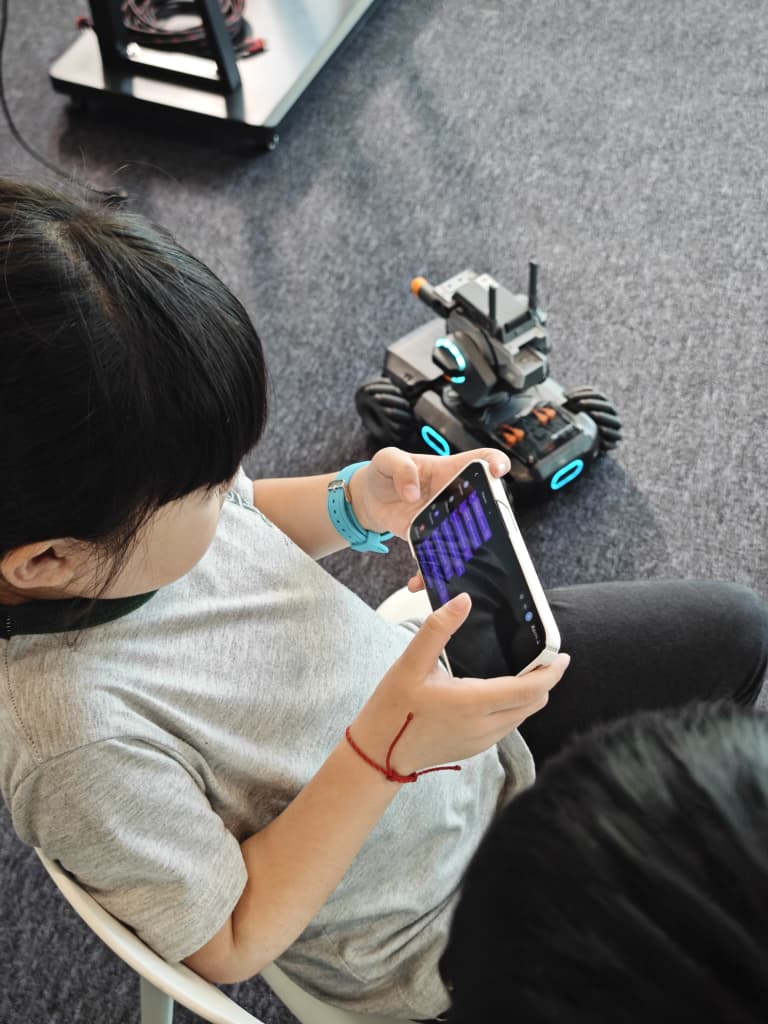
Ultimately, the goal is not to raise children who simply know how to operate the latest device or navigate the newest platform. It is to raise children who can question what they see, understand the technology they use, make informed decisions and use digital tools to create rather than merely consume.
As technology continues to evolve, the definition of literacy will continue to expand with it.
For today’s children, being literate may mean more than knowing how to read the words on a page — it may also mean knowing how to read the world behind a screen.
And perhaps, in preparing children for an increasingly digital future, the greatest skill we can give them is not knowing every technology, but knowing how to think.