BY JASNITA AHMAD
FAMILIES gather at the resting places of their loved ones, pails of water in hand and flowers carefully cradled in their grasp.
From rime immemorial, this tradition has stood firm during the time of Aidilfitri, with generation after generation, on serving this quiet time at cemeteries.
The rows of cars parked along the fringes of the cemetery indicates that families have arrived for their visit.
“It is our responsibility to visit and take care of the graves of those who have passed away,” says Madinah, one of the visitors.
“Whether it is compulsory or not, that is something for the learned to decide, but for us, it is an act of love.”
She was at the gravesite of her father who passed away a year ago in the holy month of Ramadan.
The most beautiful thing about this tradition is it is being imbued even among the youngest in the family.
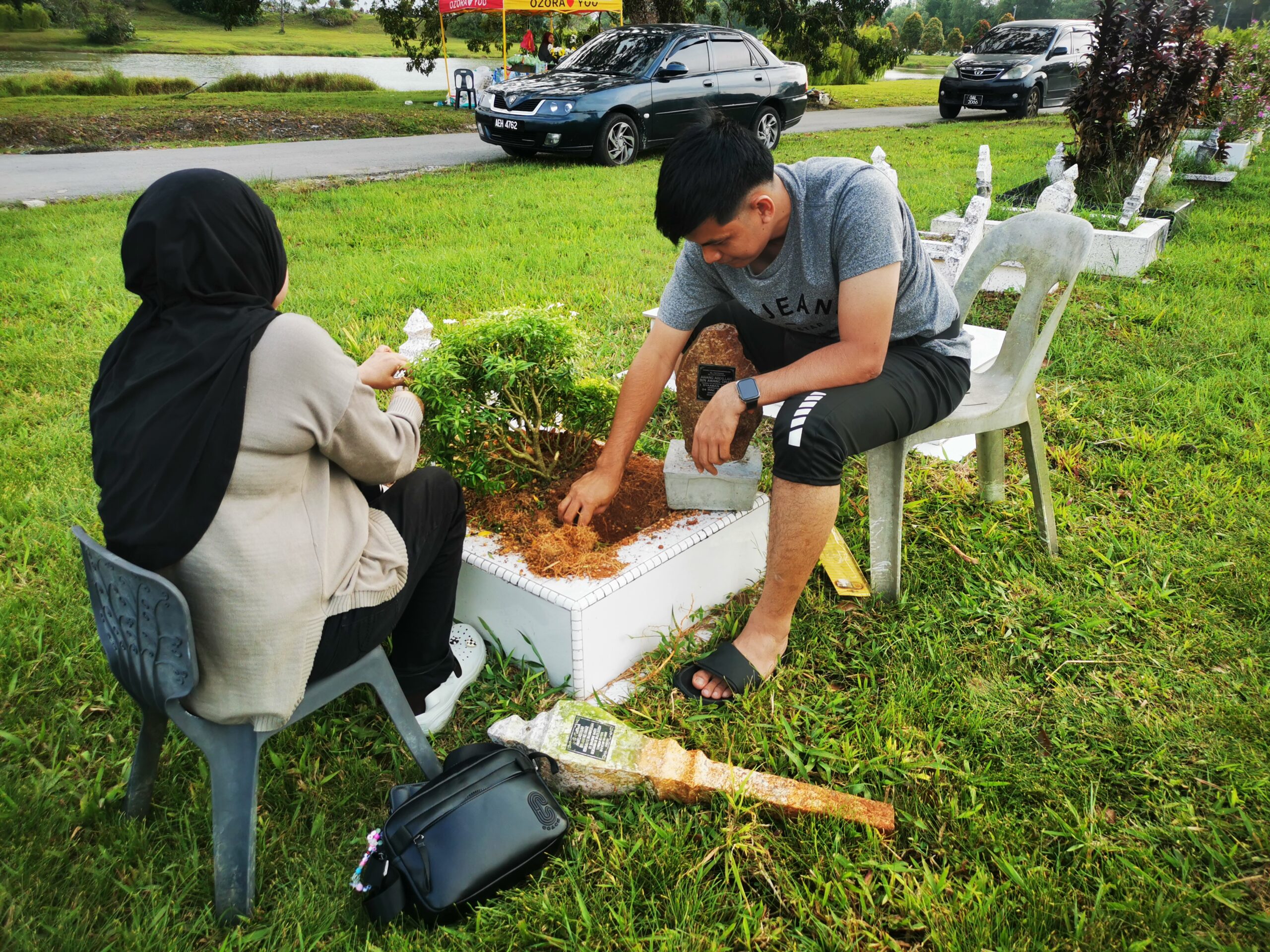
Some watch curiously as their elders carefully clean the gravestones, brushing off dried leaves, removing overgrown grass.
Nearby, Jamilah, another visitor who came with her youngest son, brought flowers for her late husband, who lost his battle with cancer.


“This is how we teach them to remember their roots,” she says.
“It’s not just about visiting. It’s about making sure they don’t forget where they come from.”
Beyond a tradition passed down to multiple generations, this is a testament that visiting the grave of our loved ones before a festive celebration is simply another way to honour their memory.
Next to Jamilah is her son, Tareeq Aziz.
“I visit my dad for one thing and that is to ease the feeling of missing him,” he says simply.
He recalls the last Hari Raya they spent together, when his father insisted on buying everything his children needed.
“It was like he knew it was his time to go,” he said.
At the Semariang Islamic Cemetery in Kuching, the atmosphere is lively with vendors selling fresh flowers and other essentials to help visitors decorate the graves of their loved ones.
Just as people buy new attire for themselves for Raya, the best way to honour those who have passed is by decorating and cleaning their graves.
It is seen as a way to make their loved ones who have passed on ‘well-presented’ for the occasion.
Another visitor, Syed, stresses the importance of maintaining gravesites.


“We are still here, so it is our duty to take care of them, just like we clean and decorate our homes for festive seasons,” he said while clearing overgrown grass at his late mother’s grave, which he chose to replace it with artificial grass, as it would help keep ants away and make it easier for his children to visit their grandmother.
With Hari Raya approaching and the crowd inevitably growing, Polis Bantuan officers stationed around the cemetery monitor the flow of visitors, making sure everything is in order.
They will be there until the first morning of Raya, as families come and go.
It is a very profound moment as families gather at the cemetery, each with their own stories of love, loss and heartbreak.
Not everyone is able to visit in person, but they can still do so through remembrance and prayer.
For Nailussa’Adah, visiting the graves is a way to feel closer to her late daughter.

She shared that last year was the first and only time she celebrated Hari Raya with her daughter before tragically losing her in an accident.
However, this year, she could only send her prayers from afar, as her daughter was buried in Tangkak, Johor, her husband’s hometown.
Almost similarly, Ara Abang, who relies on a wheelchair to travel, stays home, knowing that the path to her late husband’s cemetery has uneven grounds and lack of facilities.
“It’s not that I don’t want to visit my husband,” she says, “but I struggle to go anywhere without my wheelchair. So I send my prayers from afar instead.”
Airinna Suraya, who comes to visit her late grandfather says that this is a meaningful tradition that reminds everyone to do good all the time as it will reflect how people treat them after death.
Many believe that tending to the resting places of their loved ones reflects the love and respect that continue even after someone has passed.