Rekindling a lost part of Kenyah culture, the lutong is making its way back before it fades into forgotten whispers. This musical instrument, also known as the female sape, was traditionally played only by Kenyah women.
The sound of one instrument fading into silence
This is part one of a two-part series on the forgotten whispers — the lutong, a long-lost Kenyah heritage now being revived through efforts to rediscover and relearn the art of this musical instrument.
An instrument of the past, yet to be lost — the Kenyah’s cultural musical instrument, the lutong, is on its way to becoming a forgotten whisper. Like the sape, which was traditionally reserved only for men, the lutong was played exclusively by the womenfolk.
Its beauty lies in the traditions it holds — the lutong served as the strength behind the sound of the sape. It was as though, behind every great man, there was the support of his woman. That was the quiet nature of the lutong — though meek on its own, it could bring wonders to its listeners when performed alongside the sape.
“It’s a dying instrument,” cultural teacher Elizabeth Bungan said.
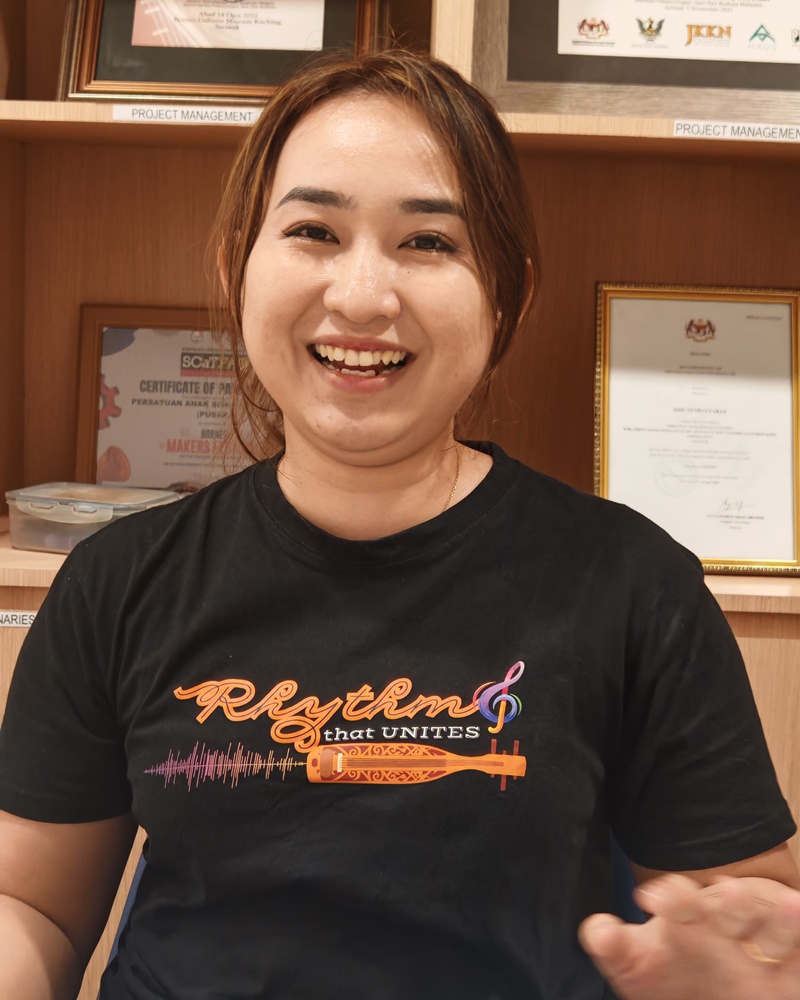
“While the sape thrived for its masculinity, flexibility, and sound, the lutong couldn’t make it because there were no instructors or successors to it.”
In sharing this, Elizabeth further explained that to date, there are only a few elderly women in Sarawak who can still play it. But they are unable to travel to the city, with some already too old to play. Furthermore, not every Kenyah village has an elderly woman who can play the instrument — hence, its scarcity brings great danger to the lutong’s survival.
Art of the distant past
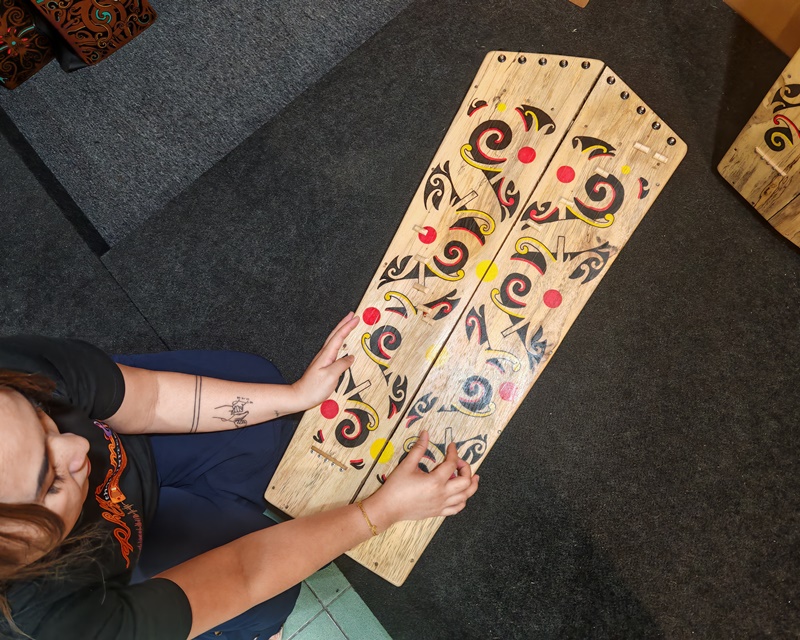
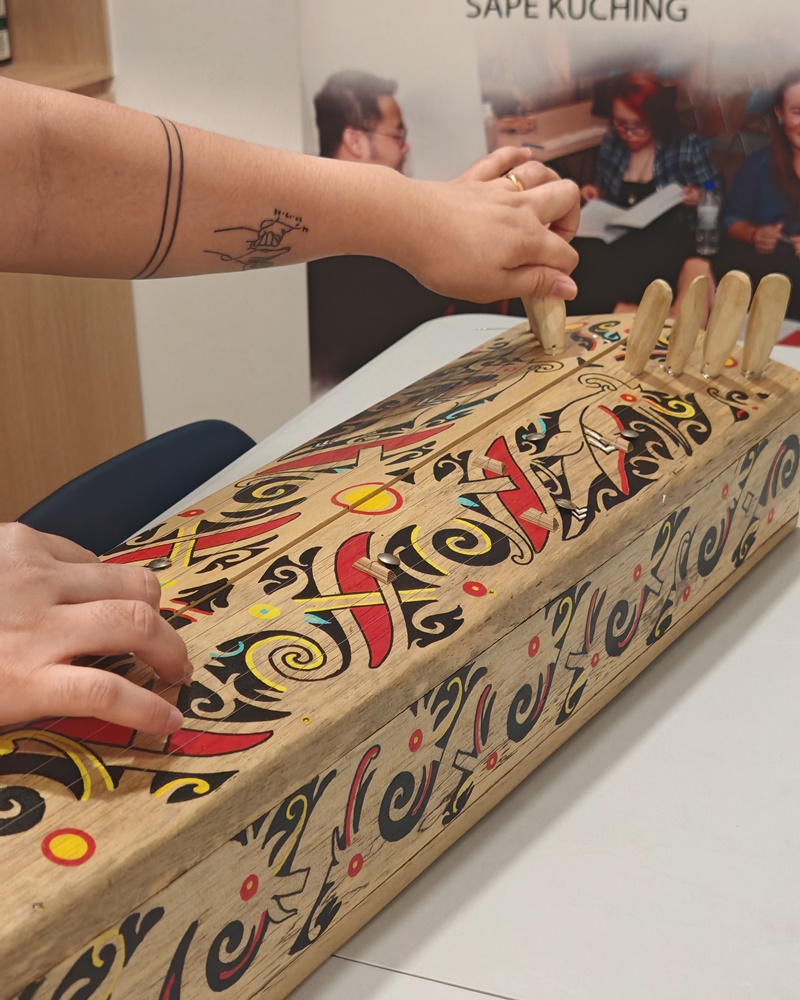
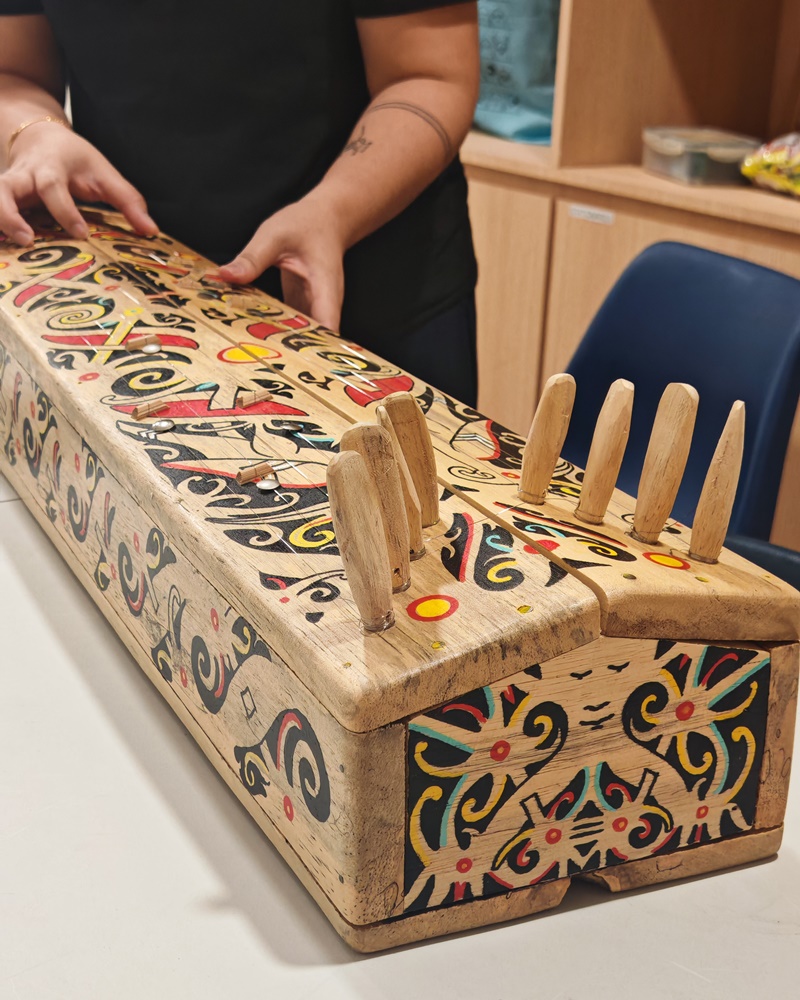
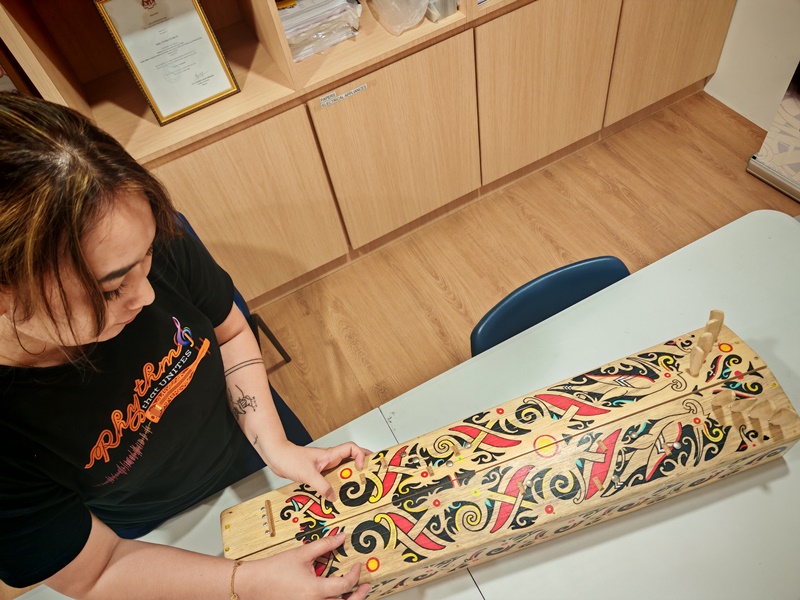
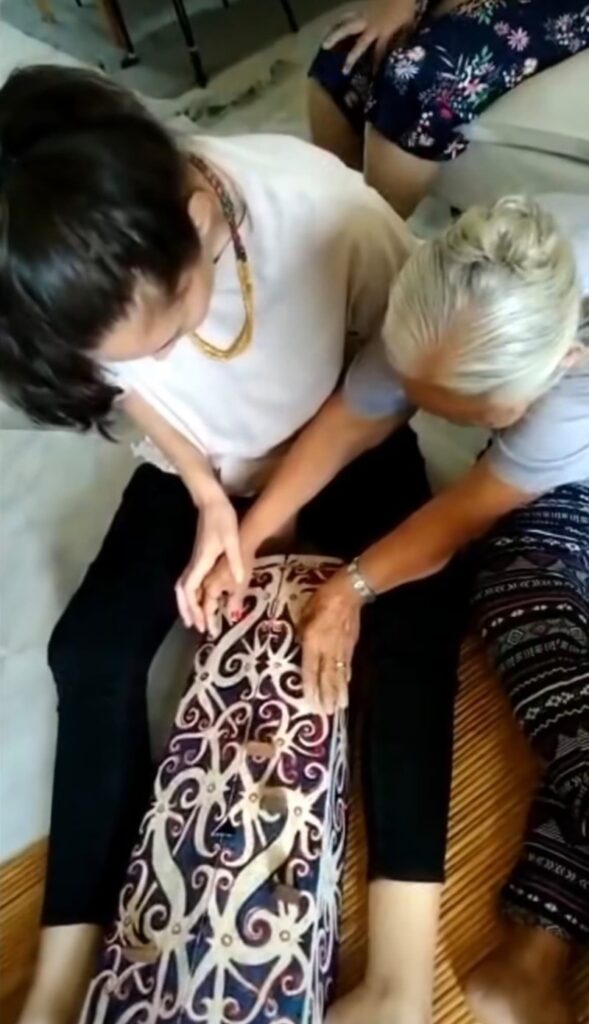
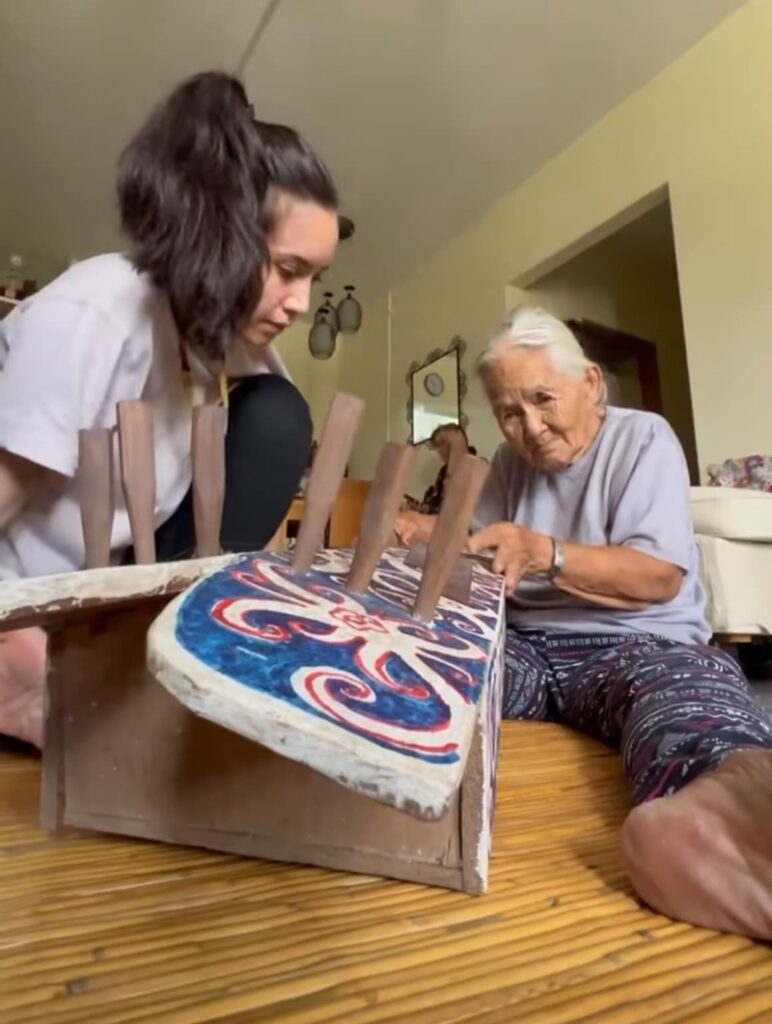
When met, Elizabeth showed a display of the lutong at her studio in Sarawak Plaza, Kuching. Unlike its sape counterpart, the lutong has the shape of a trapezoid. Similar to the Chinese traditional instrument, the gu zheng, the lutong is played while seated, with the instrument laid flat on the ground.
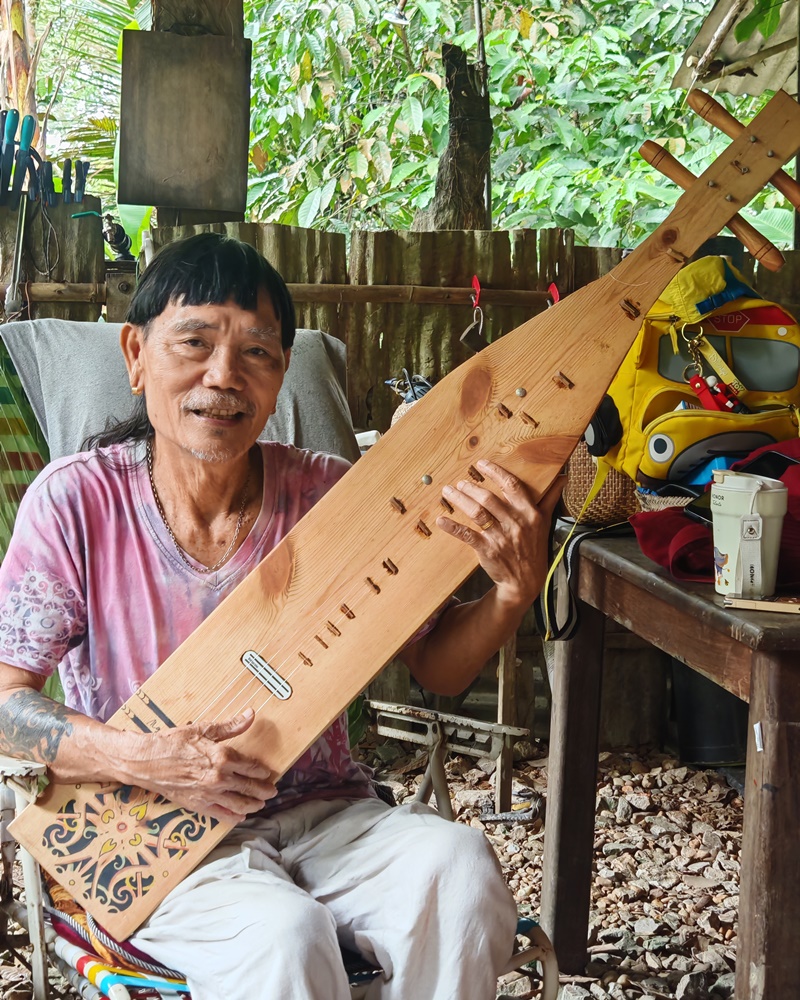
Traditionally, the lutong is made with six to eight strings. However, contemporary versions can have up to 10.
The ladies who played the string instrument were often seen sitting in a demure position on the floor — a symbol of femininity and grace. As someone who has played the sape for over a decade, Elizabeth finds it difficult to learn the lutong, particularly because of the posture required to play it.
“I have always been a sape player, so when I discovered the lutong, I felt quite regretful not knowing about it earlier. Nevertheless, I try to learn the instrument, though it is quite hard as there are no instructors available to teach,” she shared.
Still under research and experimentation, Elizabeth foresees opening a class at Bungan Creative to teach the lutong soon. Sharing more about this art of the past, she explained that the lutong has always been harder to play compared to the sape. She believes that due to its complexity, and its role as an accompanying instrument, it became a fading tradition.
“Back then, ladies would have to sit in a specific position to be able to play it well. What made it harder was that each time they played a song, they had to re-tune it, as the pegs were not fixed on the lutong.”
Nevertheless, through innovation and research and development, the modern lutong was redesigned by sape maker Ezra Tekola to include fixed pegs for easier playing.
“But I’m still trying to get used to it. As a sape player, the lutong, though from the same culture, is more complex to play. Furthermore, there are no proper instructions — I can only refer to videos online, which makes it difficult and time-consuming to learn.”
Elizabeth further conceded that it isn’t the act of learning to play that’s difficult, rather, the challenge lies in the lack of proper guidance.
Echoes from the past
As a little boy, sape legend Matthew Ngau Jau remembers the ladies in his village playing the lutong. It was usually performed with the sape, as it could not be played on its own.
“Back then, people usually performed the two together on special occasions or celebrations. The musicians would gather and play on the veranda. There wasn’t any particular taboo about the instrument, it’s just that, traditionally, only the ladies would play it.”
For Matthew, the memory of those moments isn’t just nostalgia — it serves as a reminder of how far the culture has shifted. Looking back, the sape master hopes that through evolution, the younger generation will learn more about their roots. To him, it is essential to maintain one’s identity while embracing modernity.
Meanwhile, sape musician Alena Murang shared that she had never seen a lutong being played in her village. However, a visit to Long Semiyang in 2014 left her in awe of the instrument.
“I was part of a music production project called ‘Small Island Big Song’. They wanted to film and record some musicians in the area where my kampung is. That’s when we paid Uko Usun a visit,” Alena shared.
Drawn by the tone and chords of the lutong, Alena occasionally practices the instrument. As she looks forward to the day she can master it, she hopes for the revival of the forgotten lutong — to rekindle the soul of a rhythm quietly waiting to be heard again.