BY ASYRAF HALIM
ASAJAYA: Abandoned agricultural lands in the Asajaya Peninsula are set to receive a new lease of life through a circular embankment network project stretching from Sebuyau to Sebangan Bajong.
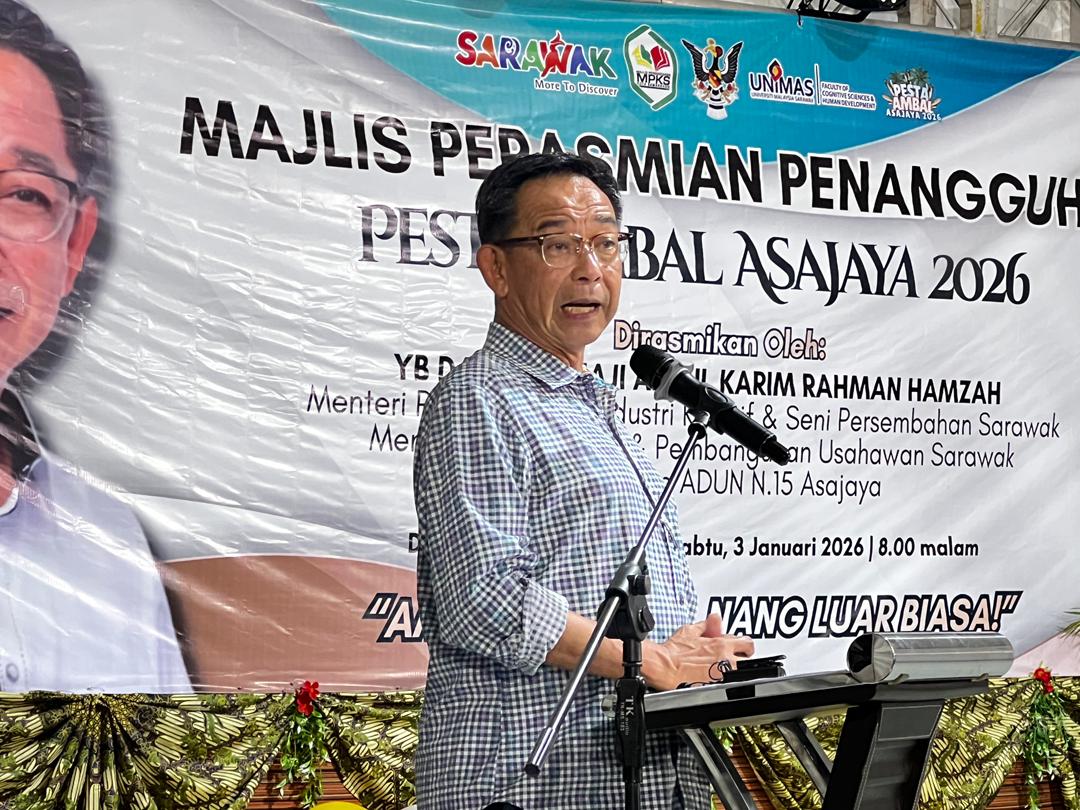
Minister of Tourism, Creative Industry and Performing Arts, Datuk Seri Abdul Karim Rahman Hamzah, who is also Integrated Regional Samarahan Development Agency (IRSDA) Chairman, said RM680 million has been allocated for the project.
“Asajaya now boasts the largest circular embankment and irrigation network in Sarawak, the result of phased development implemented over several decades.
“Many circular embankments have been built, starting from Beliung, passing through Tanjung Apong to Sadong Jaya, including across Sadong Jaya itself,” he said during the Closing Ceremony of Ambal Festival Asajaya 2026 here on Saturday.
He added that the allocation will be used to construct circular embankments from Sebuyau to Sebangan Bajong, with half of the funds specifically earmarked for projects in the Sebuyau area.
Abdul Karim, who is also Asajaya state assemblyman, noted that prior to the construction of these circular embankments, villages such as Asajaya Ulu were often affected by high tides every month.
“Before the embankments were built, during full moon high tides, seawater would flood the village areas of Asajaya.
“Seawater once reached the far end of villages including Asajaya Ulu or Nonok Ulu, making agricultural land unsuitable for certain crops,” he said.
However, he said, the construction of the circular embankments has brought major changes, allowing lands previously affected by saltwater and left abandoned to be cultivated once again.
“Today, thanks to these embankments, land that was once unusable is now yielding good returns.
“Even durian trees, which previously could only be planted in hilly areas, can now be cultivated near the coast,” he said.
He noted that the success of the irrigation and circular embankment system is the result of long-term planning by previous leadership since the 1970s.
“Previous leaders recognised the need to develop irrigation infrastructure to maximise the potential of coastal lands.
“Their vision was to ensure that the land in Asajaya could be fully utilised, thereby generating real economic returns for the people,” he said.
He added that expanding the circular embankment network will not only boost agricultural output and food security but also increase land value and improve the livelihoods of residents in Asajaya.