ABOUT 30 to 40 minutes from Kapit town, along a winding road into Sungai Yong, stands a longhouse where history continues to shape everyday life.
Built almost entirely from resilient Belian timber about 120 years ago, the old 23-door Rumah Jandok has withstood changing generations, modern development and shifting lifestyles.
Although most residents moved to a new 20-door longhouse about 1.6km away in 2015, the original structure remains a proud symbol of the community’s identity.
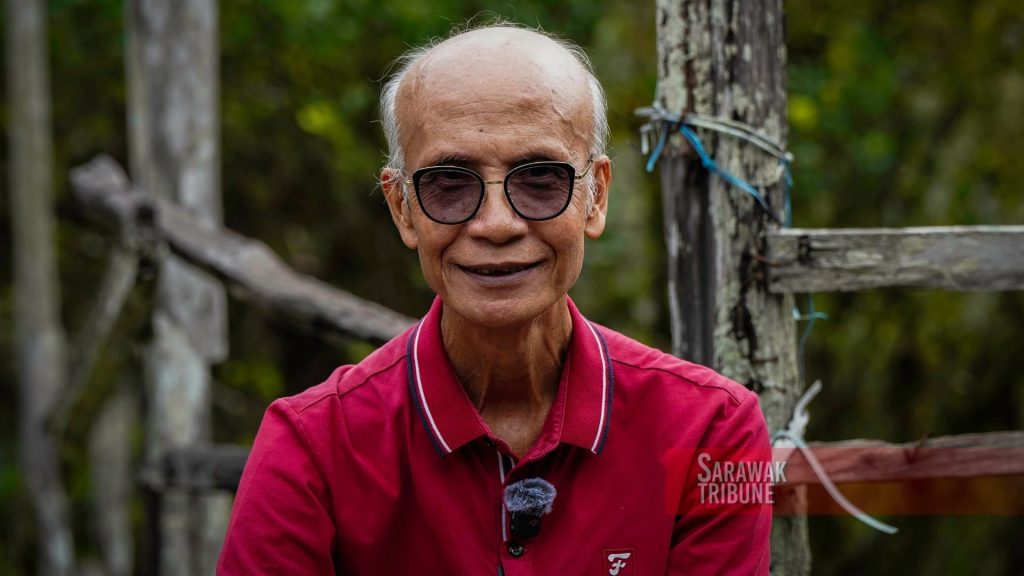
For Tuai Rumah Jandok Untam, 73, building a new longhouse was never about abandoning the old one.
Instead, it was about providing families with a more comfortable place to live while ensuring the home built by their ancestors continues to preserve the community’s history.
“Our new longhouse is where we live today, but this old longhouse is our heritage.
“We want our children and grandchildren to know where they came from,” he said.
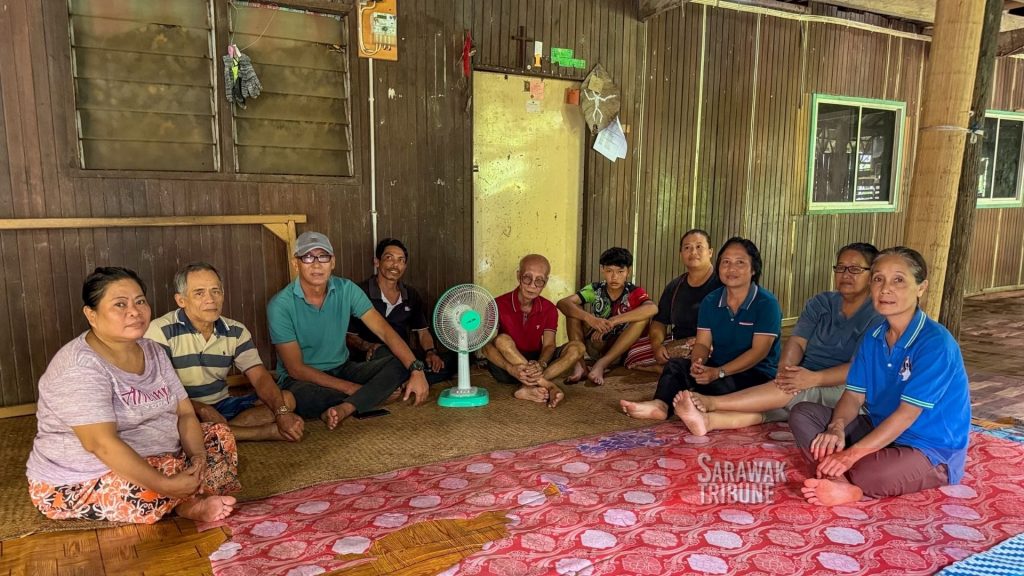
Today, the old Rumah Jandok has become one of the area’s cultural attractions, welcoming visitors eager to experience authentic Iban traditions in the very place where they have been practised for generations.
Before the Covid-19 pandemic, more than 1,000 visitors a year travelled to Sungai Yong, including tourists from Germany, Australia and China.
Guests are welcomed with Ngajat performances, introduced to traditional Iban cuisine and guided through customs that remain part of daily community life.
Elders also share stories of the longhouse’s past, offering visitors a deeper understanding of its history and the values passed down through generations.
The community hopes to expand its tourism offerings by developing homestays at the new Rumah Jandok, allowing visitors to spend more time at the longhouse while the historic longhouse continues to serve as the cultural centre of the settlement.
“People come here because they want to learn about our culture and history.
“As long as this longhouse stands, those stories will continue to be shared,” Jandok said.
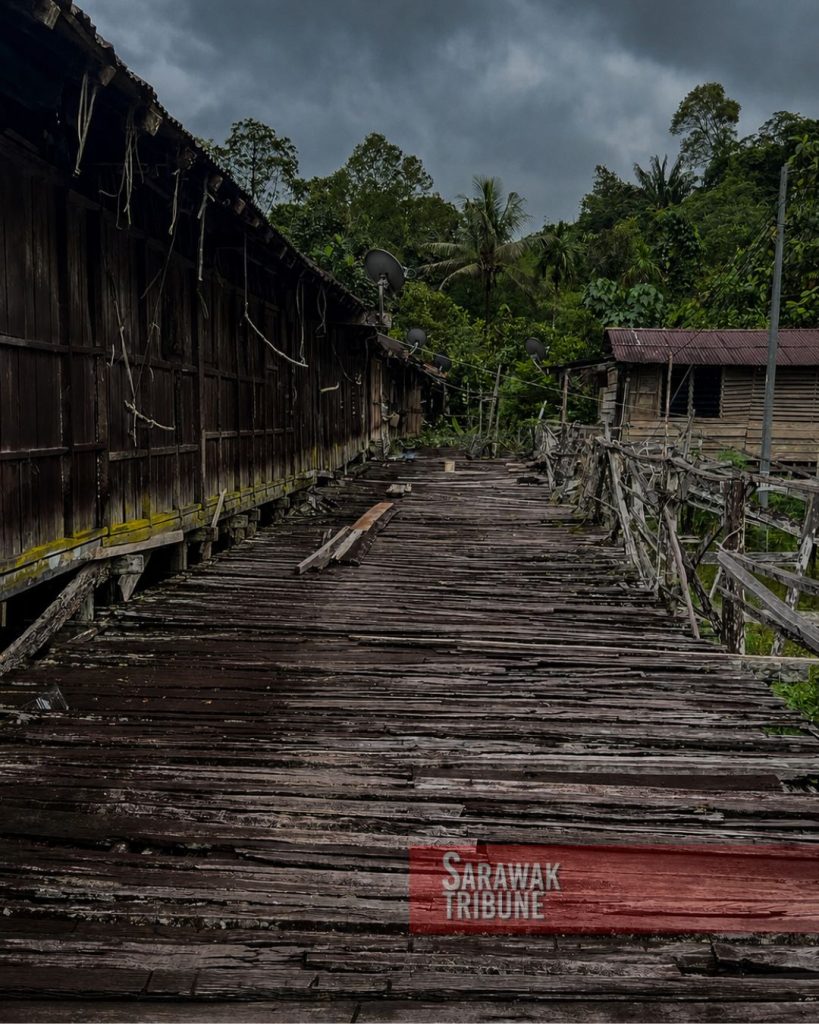
The longhouse itself reflects the craftsmanship of earlier generations. Constructed almost entirely from Belian, one of the world’s most durable hardwoods, it has survived more than a century of tropical weather with little more than routine maintenance.
Its spacious communal gallery, family apartments and weathered pillars remain largely unchanged, preserving the character of a traditional Iban longhouse.
For Jandok, every beam carries memories.
He spent his childhood growing up within its walls, where children played along the ruai, elders gathered to discuss village matters, and families celebrated Gawai, weddings and other important occasions together.
Guardians of the ancestors
Stepping inside the old Rumah Jandok is like entering another era.
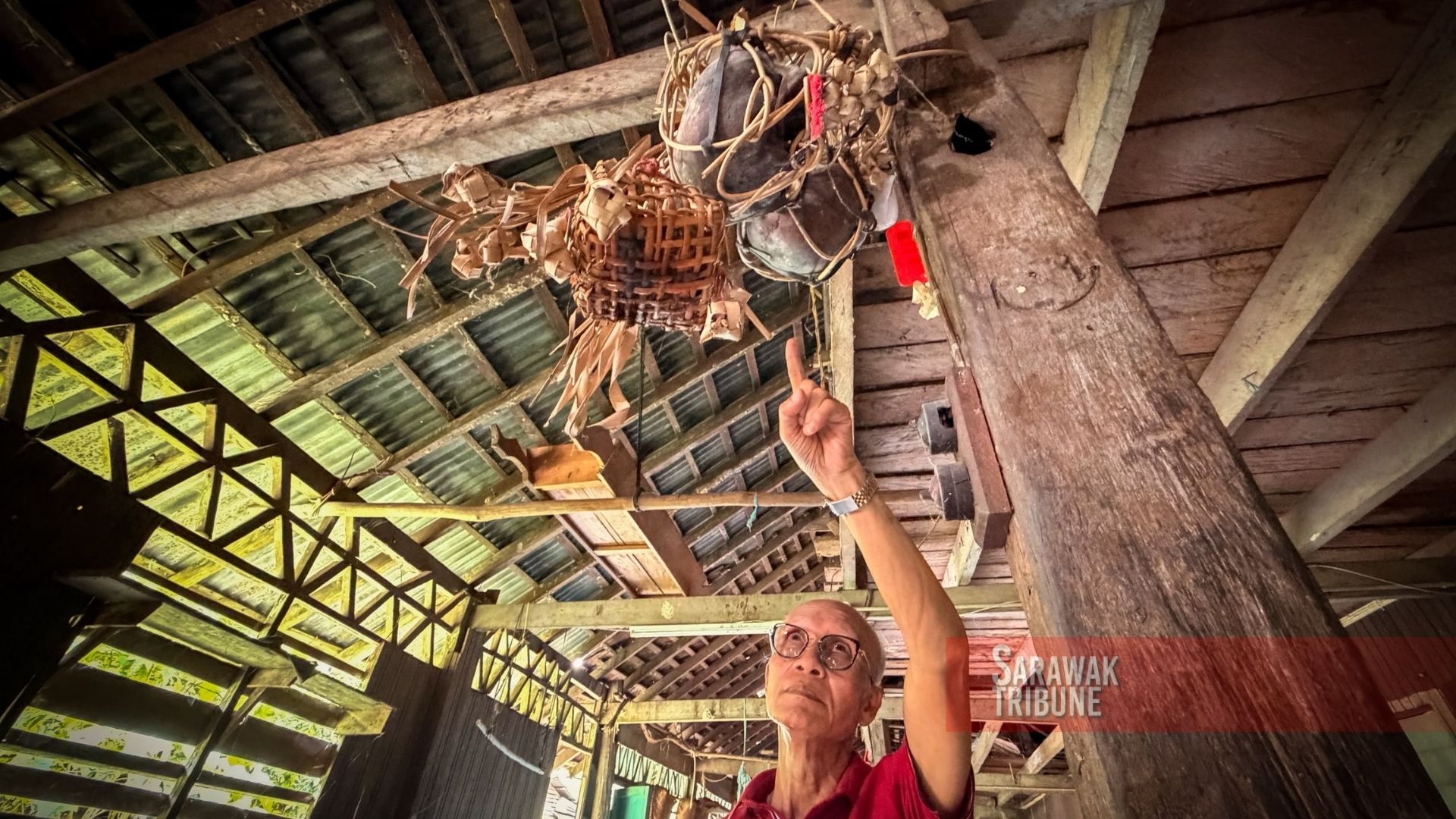
Sunlight filters through narrow gaps in the Belian walls before reaching two human skulls suspended beneath soot darkened rafters.
Believed to be more than 200 years old, the skulls were brought back by the community’s ancestors from Batang Ai during the era when headhunting formed part of Iban warfare.
Today, they are regarded not as symbols of conflict, but as sacred heirlooms linking present generations with the people who first established Rumah Jandok.
Every Gawai Dayak, residents perform the Miring ceremony for the ancestral skulls, presenting food and prayers to honour the spirits of their forefathers and, according to local belief, to keep the skulls at peace so they do not disturb the living.
Jandok said the community believes the skulls are able to speak, making the ritual an important tradition that continues to be observed today.
“Our ancestors handed these traditions down to us. It is our responsibility to continue them,” Jandok said.
According to Jandok, elders say that if rainwater falls onto the skulls, they may appear in someone’s dream, complaining that they are cold.
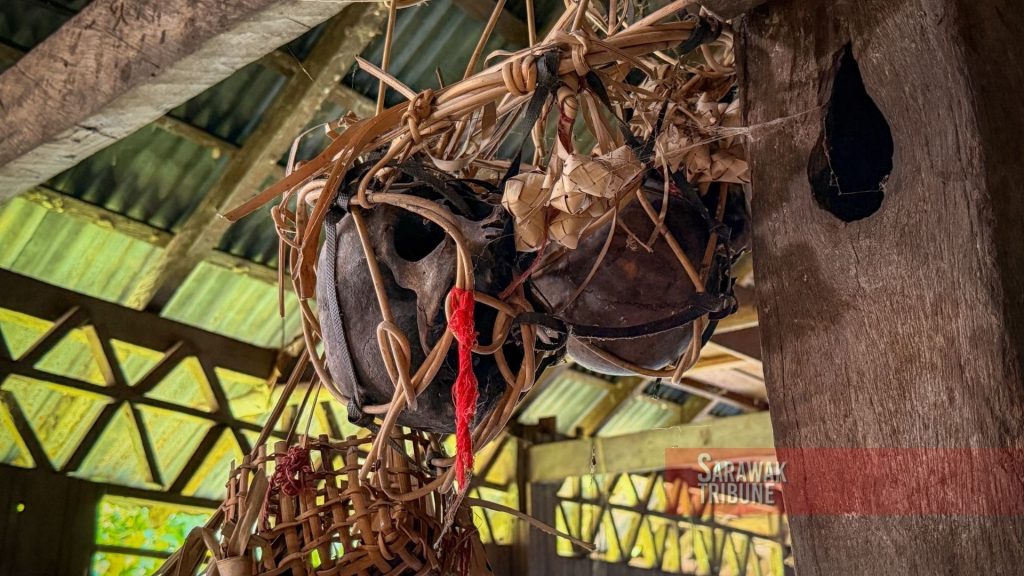
“When that happens, we light a fire beneath them,” he said.
Whenever such dreams are reported, elders carefully perform the customary ritual before moving the skulls to another Belian pillar where rain cannot reach them.
Years of exposure to smoke have gradually darkened the skulls, giving them their distinctive appearance.
Only a handful of elders are entrusted with handling them.
“They know the proper customs. Younger people cannot simply touch them,” Jandok said.
He also recalled a story passed down through generations about a person who removed a tooth from one of the skulls without observing customary practices.
Not long afterwards, the individual became seriously ill.
Whether viewed as cultural belief, oral tradition or spiritual inheritance, the story reinforces the deep respect the community continues to hold for its ancestral heirlooms.
“They are part of our history.
“They remind us of the people who came before us and the sacrifices they made. We respect them because without our ancestors, Rumah Jandok would not be here today,” Jandok said.
From river journeys to road access
Long before roads reached Sungai Yong, the Rajang River was the community’s only connection with the outside world.
It carried people, food, building materials and essential supplies between Kapit and settlements deep in the interior.
Growing up at Rumah Jandok, Jandok’s childhood revolved around farming, fishing and the rhythms of the river.
Travelling to Kapit was a full day journey.
“It took about eight hours by boat.
“We would leave around seven in the morning and only arrive at about five in the evening,” he recalled.
Today, the same journey takes only about 30 to 40 minutes by road, giving residents far easier access to schools, healthcare, government services and daily necessities.
While improved roads have transformed life in Sungai Yong, development remains a work in progress.
The new Rumah Jandok still relies on a generator for electricity, highlighting the continuing challenges faced by many rural communities.
Even so, better accessibility has opened new opportunities for tourism.
Jandok believes visitors are drawn not only by the age of the longhouse but by the fact that it remains closely connected to the people who built it.
“We do not want to change the old longhouse.
“We want people to experience it just as our ancestors left it,” he said.
As visitor numbers gradually recover after the pandemic, residents hope more travellers will once again make the journey to Sungai Yong to experience one of Sarawak’s oldest surviving Belian longhouses and learn about the traditions that continue to be practised there.
Looking to the future
Like many rural communities across Sarawak, Rumah Jandok has watched many of its younger generations leave in search of higher education and better employment opportunities.
Some now live and work in Kapit, Sibu, Kuching and other towns, returning mainly during Gawai Dayak, Christmas and important family gatherings.
Jandok understands their decision.
He knows young people must build their own futures, but hopes they will always remember where they came from.
“They have their own lives and responsibilities now, but this is where our roots are.
“I hope they will always come home, visit their parents and grandparents, and continue our traditions,” he said.
He is also optimistic about the future of the old longhouse.
Jandok said Kapit Member of Parliament Datuk Seri Alexander Nanta Linggi had informed the community that the century old longhouse would be repaired and preserved as a heritage tourism attraction.
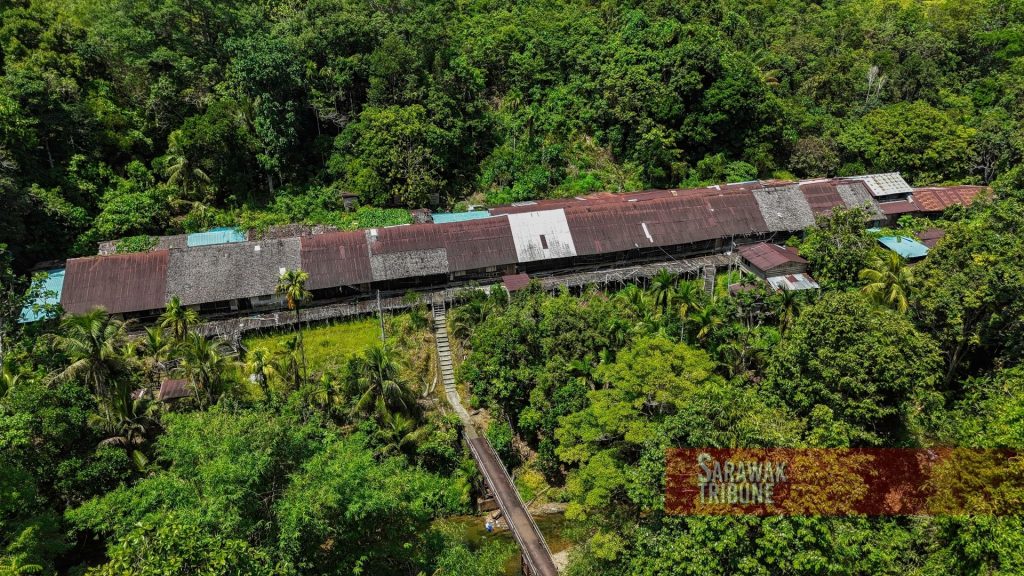
The announcement has strengthened hopes that the landmark will continue welcoming visitors while safeguarding the stories and traditions that have shaped the community for more than a century.
“We are grateful for the support.
“We hope the restoration can be carried out so more people will have the opportunity to visit, learn about our culture and understand our history,” he said.
For more than 120 years, Rumah Jandok has witnessed births, weddings, Gawai celebrations, mourning rituals and countless everyday moments shared beneath one roof.
Although families now live in a newer longhouse nearby, the old Rumah Jandok remains a lasting reminder of the community’s journey from the river era to the present day.
Its weathered Belian pillars and ancestral heirlooms continue to tell the story of the generations who built, protected and sustained the settlement.
With plans to restore and preserve the landmark, the community hopes Rumah Jandok will continue standing for many years to come, allowing future generations to understand not only where their ancestors lived, but also the traditions and values that continue to define them.