KUCHING: Sarawak will intensify land gazettement efforts for paddy cultivation as part of a targeted strategy to boost local rice production and reduce overreliance on imports, said Minister of Food Industry, Commodity and Regional Development Datuk Seri Dr Stephen Rundi Utom.
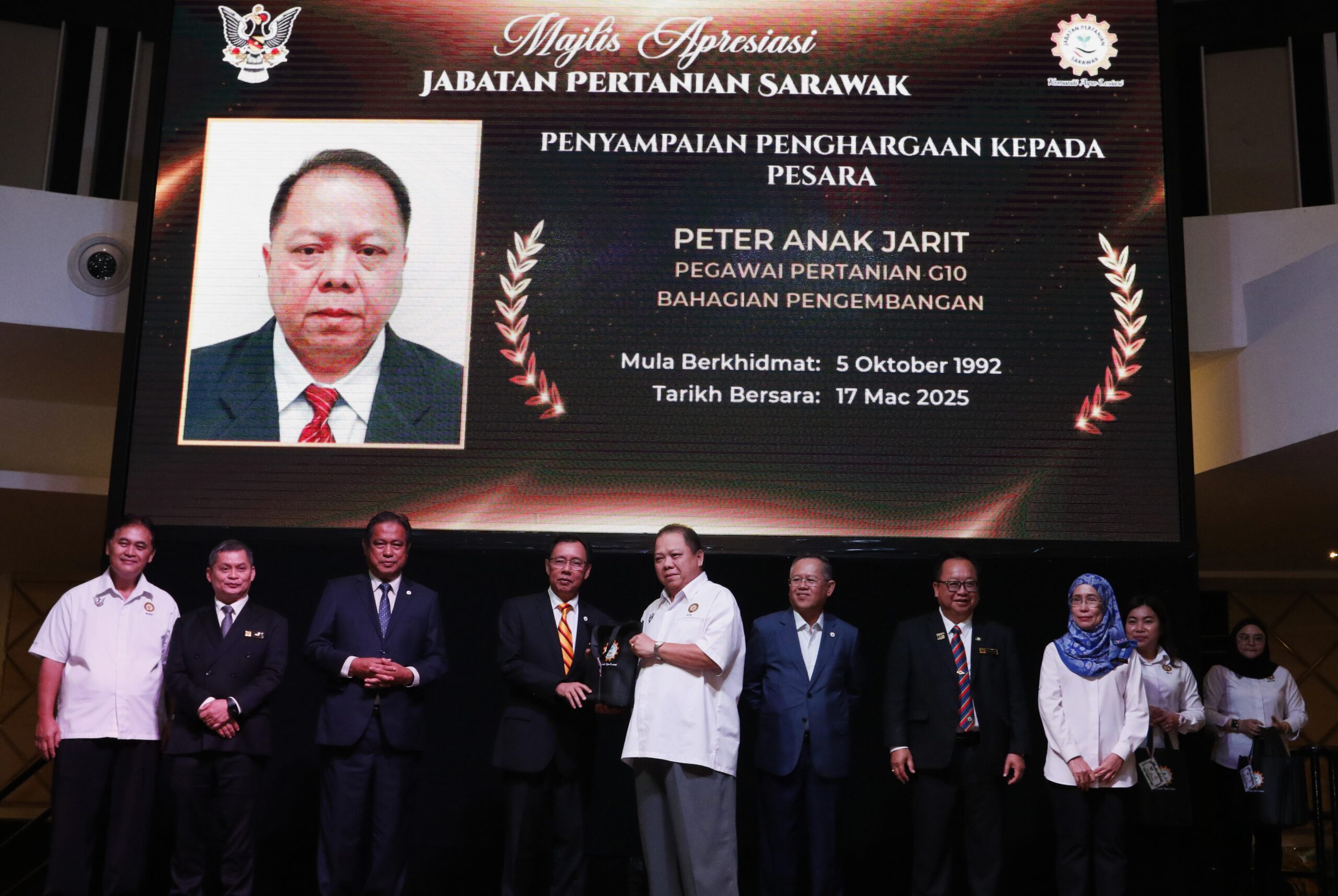
Speaking to reporters after attending the Excellent Service Award Department of Agriculture Sarawak at Imperial Hotel here on Wednesday (June 18), Rundi said that Sarawak’s rice self-sufficiency level (SSL) remains critically low at only 32 per cent, making the state vulnerable to global supply disruptions.
“We are too dependent on imports, 68 per cent of our rice comes from Vietnam, India, and elsewhere. If these countries stop exporting, we are exposed.
“That is why we must act now by gazetting more land specifically for paddy,” he said.
Rundi added that initial steps have already been taken, with land in Limbang and Lawas earmarked for rice planting.
“More zones are expected to be gazetted under upcoming state-level initiatives.
“Unlike oil palm or other high-yield commodities, paddy plays a direct role in feeding the population.
“You cannot eat oil palm. We need to rethink how we prioritise land use food crops must come first,” he said.
Infrastructure development will go hand-in-hand with land gazettement, he added, pointing out that without irrigation, drainage, and mechanisation, large-scale rice farming would not be feasible, especially in coastal and deep-soil areas.
“We are also preparing to integrate precision agriculture and smart farming into its next development phase, including under the 13th Malaysia Plan.
“We aim to build smart agricultural zones land that is automated, sensor-driven, and managed based on soil nutrient needs. We’ll use AI to help guide decisions and improve yields,” he said.
Rundi also floated the possibility of adopting hybrid rice varieties, citing his visit to Hainan, China, where farmers are producing up to 15 tonnes per hectare using minimal labour and advanced technology.
“We don’t need 20 people working 5 hectares. With the right tools, one farmer can manage that alone. That’s where we’re heading,” he said.
He said while short-term returns from paddy may be less attractive, long-term food security and national resilience outweighs commercial gain.
“This is no longer about routine agriculture. It’s about survival. If we don’t make these changes now, we’ll be left behind, and our people will pay the price,” he said.