Photos: Mohd Alif Noni
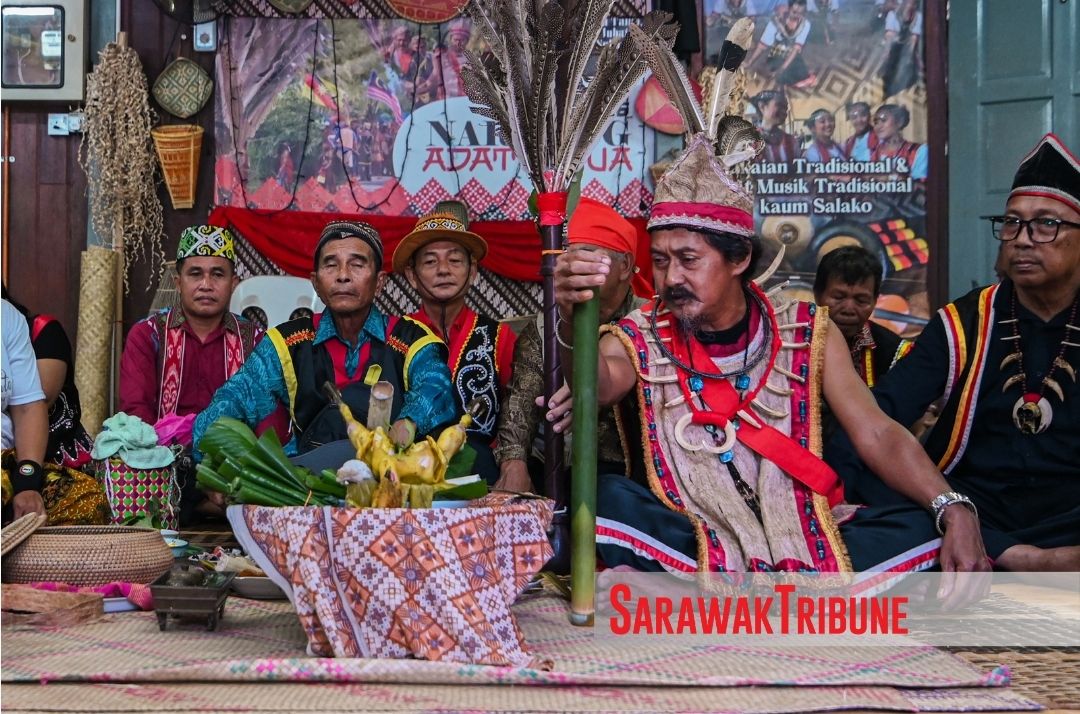
As the first rays of sunlight illuminated the grounds of Bantang Nek Bujur in Kampung Pueh, hundreds of members of the Salako community were already gathering for a ritual that has connected generations for centuries.
The second day of Gawai Dayak is often a time of celebration and thanksgiving, but for the Salako people of Sematan or specifically Kampung Pueh and Kampung Siru Dayak, it is also a day dedicated to preserving a unique cultural tradition known as Narakng Adat Binua.
Deeply rooted in custom, spirituality and community values, the ritual remains one of the most distinctive cultural practices among the Salako, one of the four Bidayuh sub ethnic groups in Sarawak.
Found only in the districts of Lundu and Sematan, the Salako are known not only for their unique language but also for customs and rituals that set them apart from other Bidayuh groups. Their cultural heritage continues to be safeguarded at Bantang Nek Bujur, believed to be the oldest surviving Salako longhouse in Malaysia and one of the community’s most treasured landmarks.
As early as 7 am, participants began assembling at the historic longhouse for a series of customary rites that marked the beginning of Narakng Adat Binua. Men, women and children gathered alongside elders and community leaders, creating a scene that reflected the strong intergenerational ties within the Salako community.
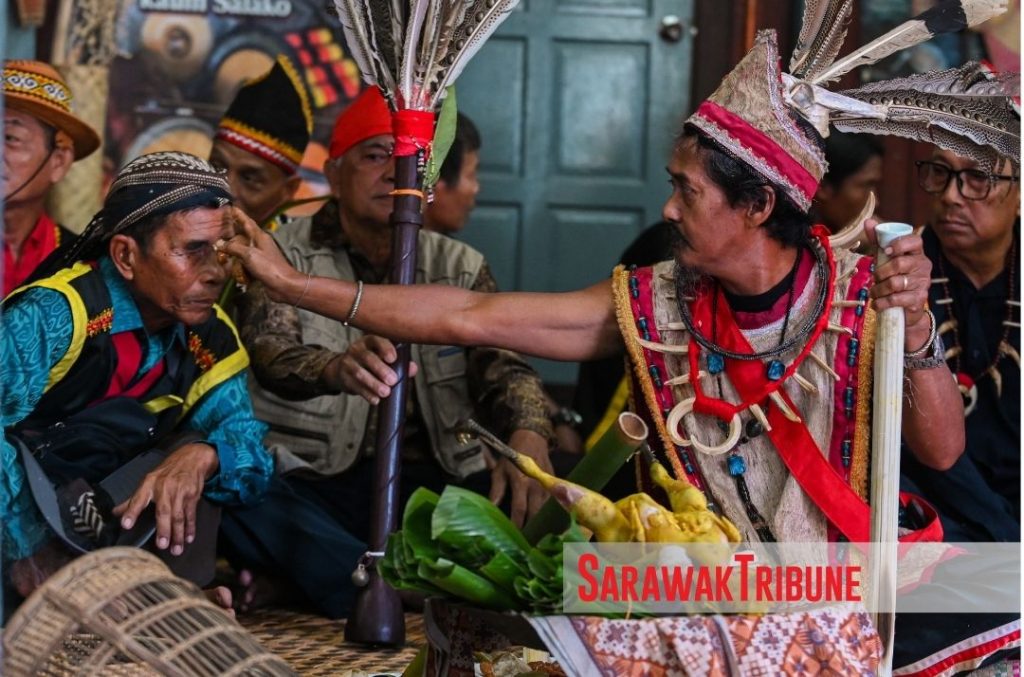
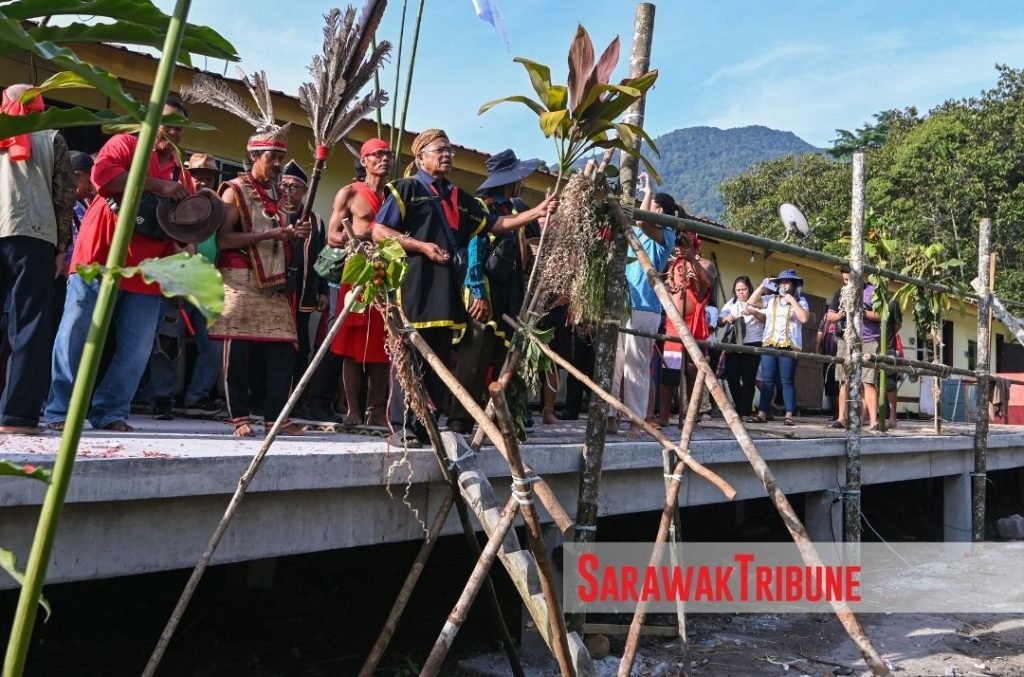
Before the journey began, the ritual started off with Madahatn, a ritual of informing Jubata, and Nyangahatn, a prayer seeking blessings, protection and a safe journey. The participants then took part in the Nurunatn Anak Tarakng, which was the ceremonial sending off of those taking part in the procession.
The prayers were led by Tukang Tarakng or ritual leader, Limbi Binet, while the official sending off ceremony was conducted by Tarakng assistant Rabin Putun.
The atmosphere was both solemn and uplifting as participants prepared themselves physically and spiritually for the journey ahead.
At the heart of the ritual lies a profound expression of gratitude and hope. Narakng marks the conclusion of one agricultural cycle, particularly following the rice harvest season, and the beginning of preparations for the next. Through prayers and ceremonial acts, the community gives thanks for the harvest received while seeking blessings for future crops and the continued wellbeing of their villages.
The term Adat Binua refers to customs involving the wider community and territory. Together, Narakng Adat Binua symbolises a collective journey that strengthens kinship, honours ancestral heritage and reaffirms shared values among the Salako people.
These values are reflected in the sacred phrase, “Pakat Baya Ka Taino, Mampaut Ka Jubata, Bajejekng Ka Subayatn”, which means united among people, steadfast in God and walking hand in hand towards heaven.
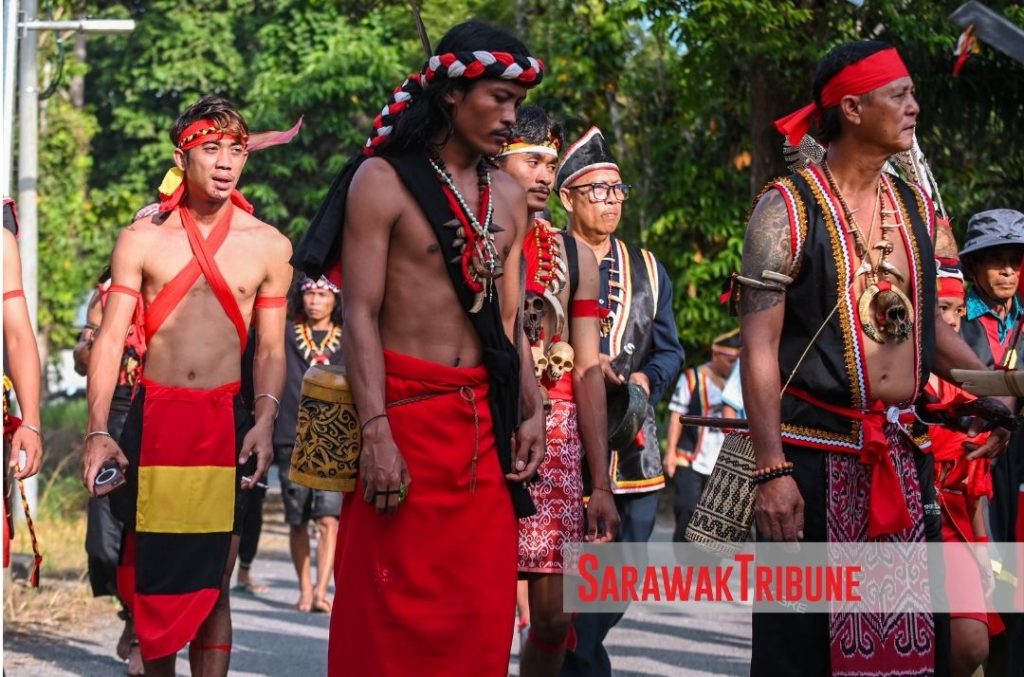

Shortly after the ceremonies concluded, more than 400 participants set off on a 10- kilometre procession that would take them across roads, forests and streams.
The route passed through Kampung Pueh, Kampung Pueh Kenek and Kampung Siru Dayak before reaching several gathering points known as ‘tumpuk’, including Sungai Merah, Balok, Bantang Nek Gima, Bapiet and Tanjam.
Along the way, participants encountered challenging terrain, yet the spirit of the procession remained unwavering. Young children walked alongside their parents and grandparents, while participants encouraged one another throughout the journey.
Adding a distinctive soundtrack to the procession was the rhythmic sound of the Dalu, a small traditional gong played by Penokok Dalu. The carefully coordinated beats echoed through the forests and villages, accompanying participants throughout the entire route and creating a unique atmosphere that blended celebration with spirituality.
This year’s procession carried added significance with the participation of Salako relatives from Sungai Bening in West Kalimantan, Indonesia. Their presence highlighted the enduring cultural connections shared by Salako communities on both sides of Borneo despite geographical and political boundaries.

At each ‘tumpuk’, rituals and prayers were performed, reinforcing the relationship between the community, the land and Jubata. These moments served as reminders that traditions such as Narakng Adat Binua were not simply ceremonial events but living expressions of identity that continued to shape community life.
After completing the journey, participants returned to Bantang Nek Bujur where the final stage of the ritual took place. They circled the Apar Buis, signifying the completion of Narakng Adat Binua and marking the end of the ceremonial procession.
The celebration then continued in a more festive setting. Participants received blessings through the practice of Ngicakng Barakat, a ritual of seeking blessing, before gathering to enjoy a variety of halal dishes prepared by the residents of the longhouse. Traditional Salako dances were also performed, offering visitors a glimpse into the richness of the community’s cultural heritage.
Throughout the day, Bantang Nek Bujur became more than a venue for rituals. It served as a meeting place where history, faith and tradition came together through the participation of people from all walks of life.
In an age when many indigenous customs face the risk of being forgotten, Narakng Adat Binua stands as a powerful example of cultural resilience. It continues to unite the Salako community while ensuring that the wisdom, beliefs and traditions inherited from their ancestors remain relevant to future generations.
For those who took part, the 10-kilometre journey was more than a walk through forests, streams and villages. It was a journey through heritage itself, one that continued to keep the spirit of the Salako people alive.