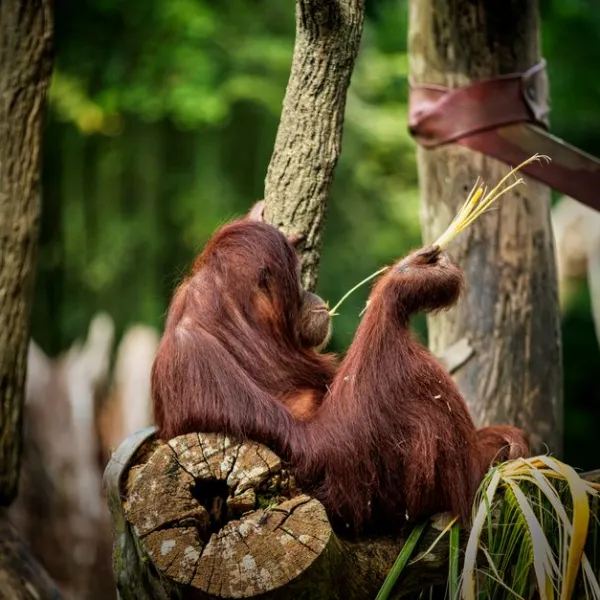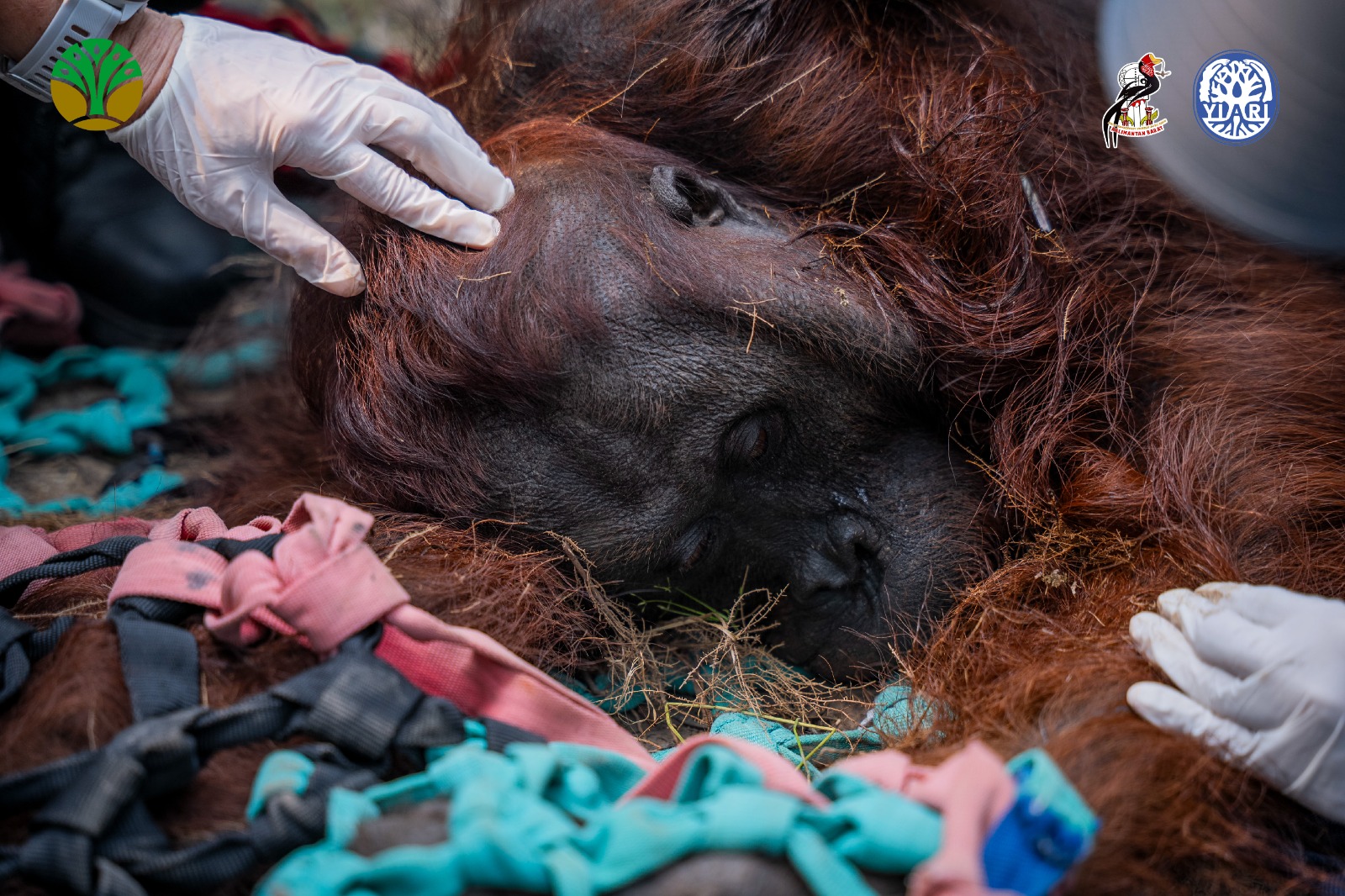
KUCHING: Sampurna, the orangutan rescued after being found struggling to breathe near an oil palm plantation in Indonesia’s West Kalimantan, died hours later after efforts to save him, with a necropsy indicating prolonged smoke exposure likely contributed to his death.
In a statement today (Sept 3), the West Kalimantan Natural Resources Conservation Agency (BKSDA) confirmed the adult male orangutan died at 3.20pm on Aug 30, hours after he was rescued from Dusun Sempurna in Desa Kuala Satong, Ketapang.
Sampurna was first reported by villagers at about 7am after he was found lying inside a dry drainage ditch in a community-owned oil palm plantation.
When rescuers from BKSDA and the Foundation for International Animal Rescue Indonesia (YIARI) arrived, Sampurna was unable to stand, could only move with difficulty and was suffering from severe breathing problems.
Emergency treatment, including oxygen therapy and intravenous fluids, was administered before he was transported to YIARI’s rehabilitation centre at about 11.30am for further medical care.
However, his condition continued to deteriorate.
At about 2pm, Sampurna’s breathing became increasingly shallow and his oxygen saturation could no longer be detected. Veterinary staff immediately performed cardiopulmonary resuscitation (CPR), but he was pronounced dead at 3.20pm.
A necropsy conducted on Sept 1 found pathological changes in several organs, particularly the lungs, heart and kidneys.
Examiners found congestion and partial lung collapse, particularly in the lower sections of both lungs.
Based on Sampurna’s clinical condition and the necropsy findings, BKSDA said the lung abnormalities were believed to be associated with prolonged exposure to wildfire smoke, which may have impaired lung function and caused acute hypoxia, or oxygen deprivation.
The agency said the resulting lack of oxygen was believed to have contributed to cardiovascular complications that ultimately led to Sampurna’s death.
West Kalimantan BKSDA director Murlan Dameria Pane expressed regret over the loss despite the rescue effort.
“We deeply regret that Sampurna could not be saved. From the moment we received the report, BKSDA and YIARI immediately carried out the evacuation and provided medical treatment based on the animal’s condition.
“Further examinations were also conducted to determine his health condition and the factors believed to have contributed to his death,” he said.
Murlan also thanked members of the public for reporting Sampurna’s condition, describing public cooperation as vital in wildlife rescue efforts, particularly during emergencies involving injured, sick or wildfire-affected animals.
He urged members of the public not to handle distressed wildlife themselves, but to immediately report such cases to the authorities so trained personnel could respond safely and promptly.