Beneath the shadow of Mount Santubong, a family’s long-kept secret resurfaces — humble vessels from the sea, carrying with them sacrifice and a fragment of Borneo’s forgotten past.
When the sea gave back history
AT the foot of Mount Santubong, where rainforest meets the restless sea, stands a modest home weathered by decades of salt and wind.
From its windows, the waves stretch endlessly, the same waters that once carried traders, pilgrims, and seafarers through one of Borneo’s busiest ancient ports.
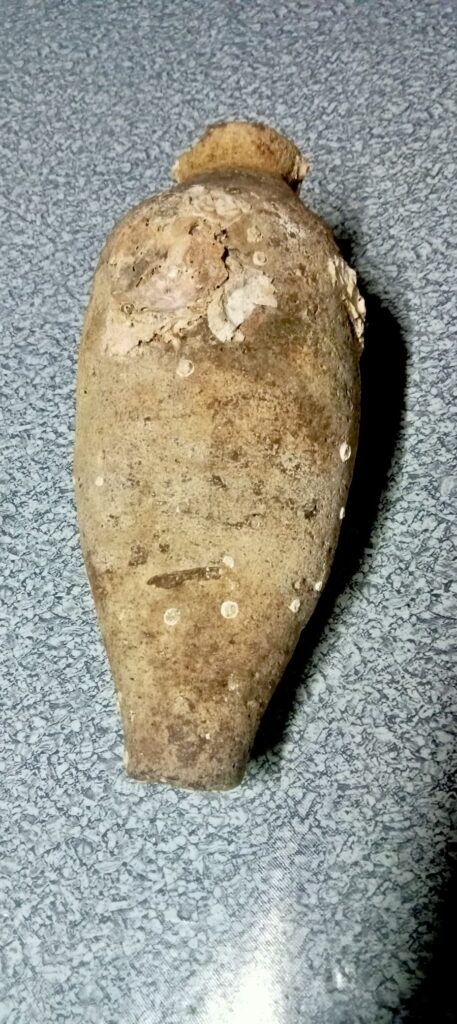
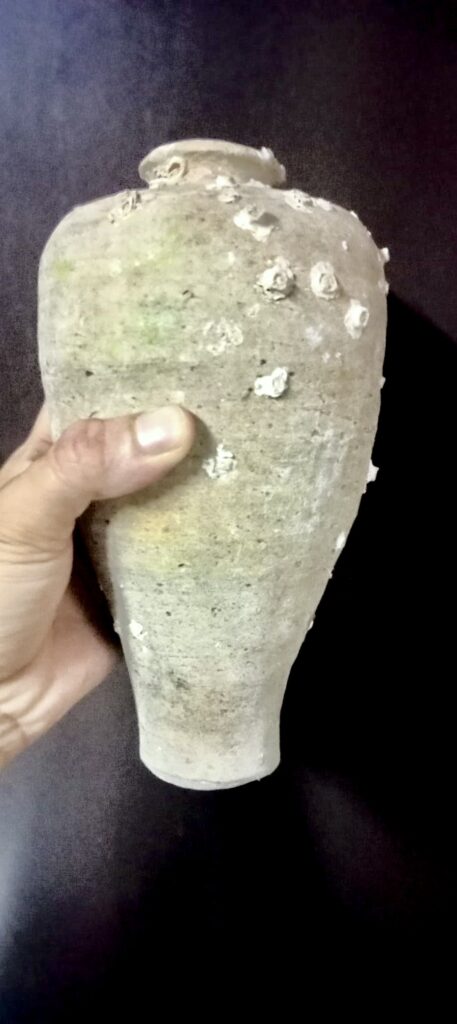
Inside this home, for more than half a century, old pottery vessels sat quietly in the corner — their glazed surfaces dulled by time, their silence heavy with secrets.
They were no ordinary pieces of pottery. For Mohd Rizal Bujang, the vessels became symbols — of his father’s sacrifices, of a fisherman’s bond with the sea, and of a heritage that Santubong has almost forgotten.
A haul like no other
The story begins in the 1970s, when Rizal’s father, Bujang Abdullah, and his two brothers-in-law — Othman Zen and Ibni Zen — set out for what should have been just another night of fishing.
Their boat, creaking under lantern light, drifted into the dark waters. Nets cast, the brothers waited, the way fishermen had done for centuries.
But what they pulled up was not just fish. It was an earthenware vessel. Ancient, encrusted with the sea. Days later, another surfaced the same way.
“In the village, such things were often called ‘bearers of fortune’.
“My father and uncles always reminded us to take good care of the vessels. They believed they were ancient, perhaps watched over by a guardian spirit, and should not be taken lightly,” Rizal recalled.
From that moment, the vessels were never just objects. They became a presence in their lives, passed from one brother to another, treated with respect and, at times, quiet reverence.
Vessels of silence
Rizal grew up knowing the vessels were there but never truly seeing them.
“We were never allowed to touch them, or even to look at them freely. They were kept hidden because my elders believed they carried mystical elements. At times, it felt almost as if they had a soul of their own,” he said.
In Santubong, this sense of reverence is not unusual. For centuries, fishermen and coastal families believed that objects retrieved from the sea carried both blessing and burden.
Some were said to bring protection, others misfortune if mishandled. The pottery vessels, to the Bujang family, were both a legacy and a responsibility.
The weight of heritage
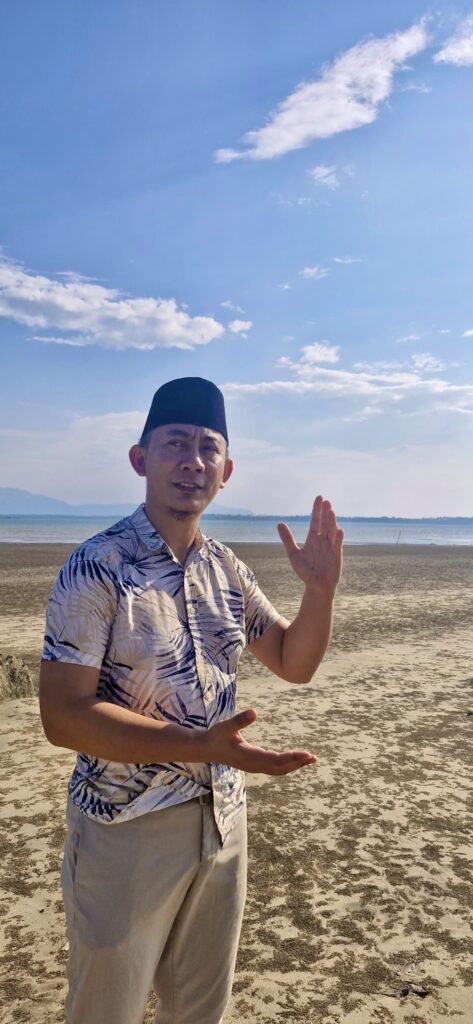
Santubong itself carries similar silences. Archaeological excavations indicate that it thrived as a maritime hub from roughly the 8th to 14th centuries — a centre of iron-working and regional trade.
Finds include vast quantities of iron slag, Chinese ceramics, Buddhist statuettes, Hindu-influenced carvings, and ritual shrines, each echoing a time when this coastline stood at the crossroads of early Southeast Asia.
Some researchers even suggest it may correspond to the obscure port called “Poni” in Chinese records as early as the 5th century.
Today, the beaches are quiet, the furnaces cold, and the only reminders are the relics unearthed by spades and, in the case of Bujang and his brothers-in-law, by nets.
The vessels were not just artefacts; they were Santubong itself, resurfacing.
A parting gift
For decades, the vessels remained within the family, their mystery intact. Each brother in turn became their custodian, until they finally rested with Ibni.
But as his health began to decline, the weight of guardianship grew heavier. The family began to wonder what should become of them. Would they remain hidden forever, their story fading with the brothers? Or should they be entrusted to others who could preserve them for the future?
The vessels carried not only history but also unease.
At one point, Rizal’s father even suggested they ought to be “discarded.” An Islamic healer had warned that the vessels held a spiritual presence — a ‘penunggu’ — and were better not kept in the house.
Yet the other brothers could not bring themselves to let them go. To them, the vessels were more than clay; they were vessels of memory, of their Santubong childhood.
“The saddest part was that just a day after the vessels were taken out of Ibni’s care to be handed to the museum, he passed away,” Rizal recalled quietly.
For the family, the coincidence was more than chance. It deepened the vessels’ aura of fate, even as they prepared to let them go.
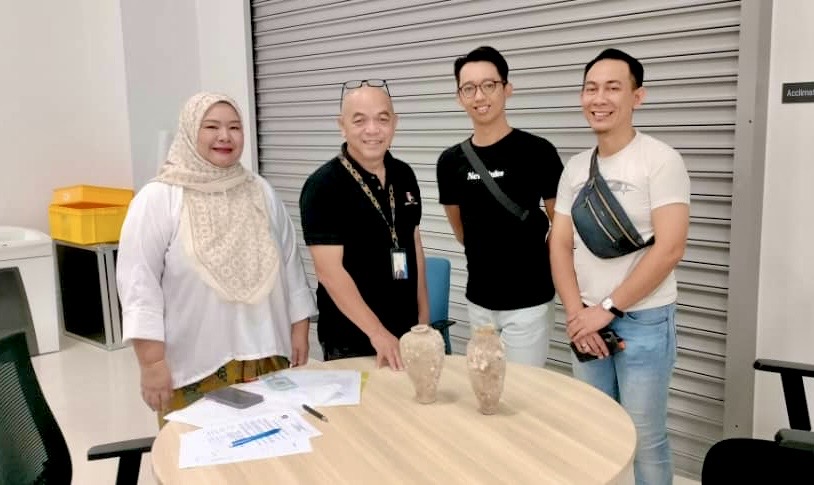
In January 2025, they finally entrusted the vessels to the Sarawak Museum Department — not as a surrender, but as an offering.
“We never felt guilty. Instead, we were relieved knowing they would now be cared for by the right hands. And if they are displayed one day, we can still see them as part of Santubong’s history,” he said.
More than clay and sea
For Rizal, the vessels’ meaning is not in their material but in what they represent.
“To us, the vessels remind us of how difficult life was back then.
“My father and uncles went out to sea, casting nets at night, just to raise us. The vessels, for us, are symbols of their sacrifice,” he explained.
Within their clay walls lie the echoes of nets dragged against the tide, of sweat on weathered brows, of nights spent chasing sustenance beneath starlight. They are more than ceramic; they are memory made tangible.
Soon, the vessels may stand beneath museum lights, their story inscribed in neat labels. Scholars may speculate on their origin, tracing their lineage to dynasties or distant kilns. Visitors may admire their glaze, their form, and their survival.
But for Rizal and his family, their true story will never fit on a placard. It lives instead in memory: the sound of nets tightening under current, the breath of fishermen working the sea, and the quiet pride of a family who kept the sea’s secret safe for half a century.

A legacy returned
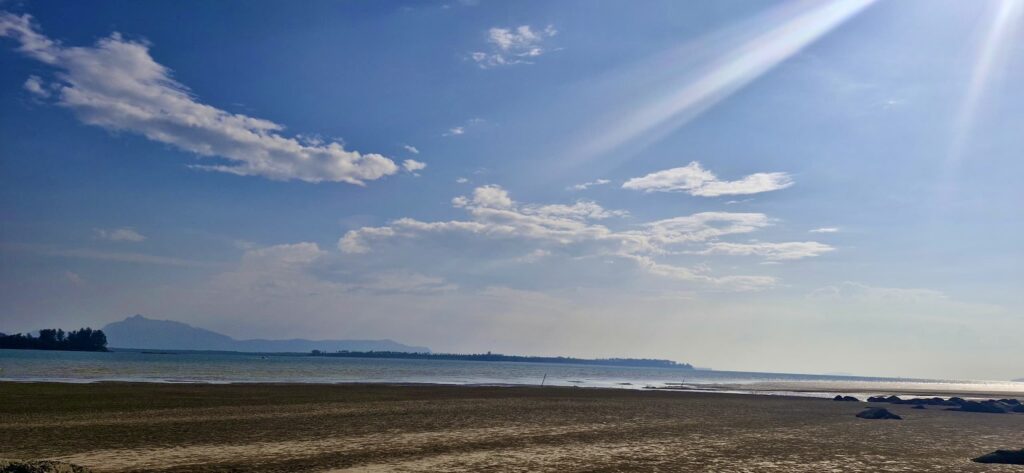
In Santubong, the tides still whisper against the shore, carrying echoes of ships that once sailed from here to Java, to Canton, and to the Middle East. The mountain still stands watch, and the sea still hides its treasures in silence.
Now, one of those treasures has returned to history.
For Rizal and his family, letting go was not an ending but a continuation. The vessels have left their home, but they carry with them the story of three brothers, of a family bound by the sea, of Santubong’s forgotten past.
And in museum halls, when visitors stop to admire them, they will not just be looking at clay. They will be glimpsing the life of fishermen, the resilience of a family, and the enduring spirit of a place where history rises with the tide.