KUCHING: The United Nations Office on Drugs and Crime (UNODC) has commended Sarawak’s approach in tackling drug and substance abuse, describing it as closely aligned with international standards for prevention, treatment and rehabilitation.
UNODC Malaysia Country head Eric Van Der Veen said the agency places strong emphasis on a “balanced approach” and noted that such a model is clearly reflected in Sarawak’s strategies under the leadership of Women, Early Childhood and Community Wellbeing Development Minister Datuk Seri Fatimah Abdullah.
“I really wanted to see first-hand how the Sarawak government does prevention and treatment of drug users.
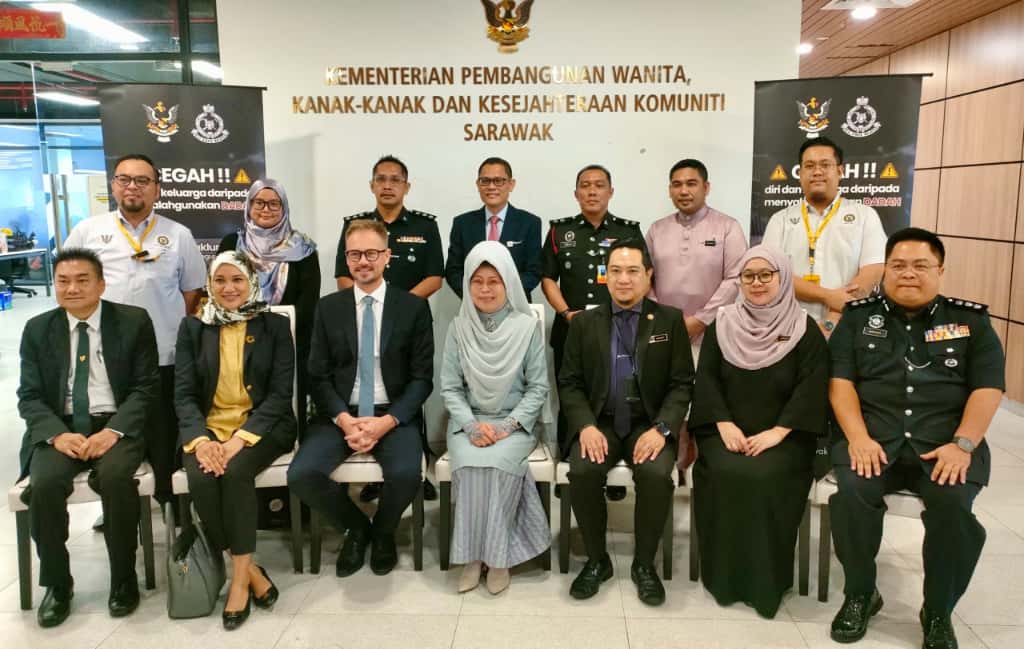
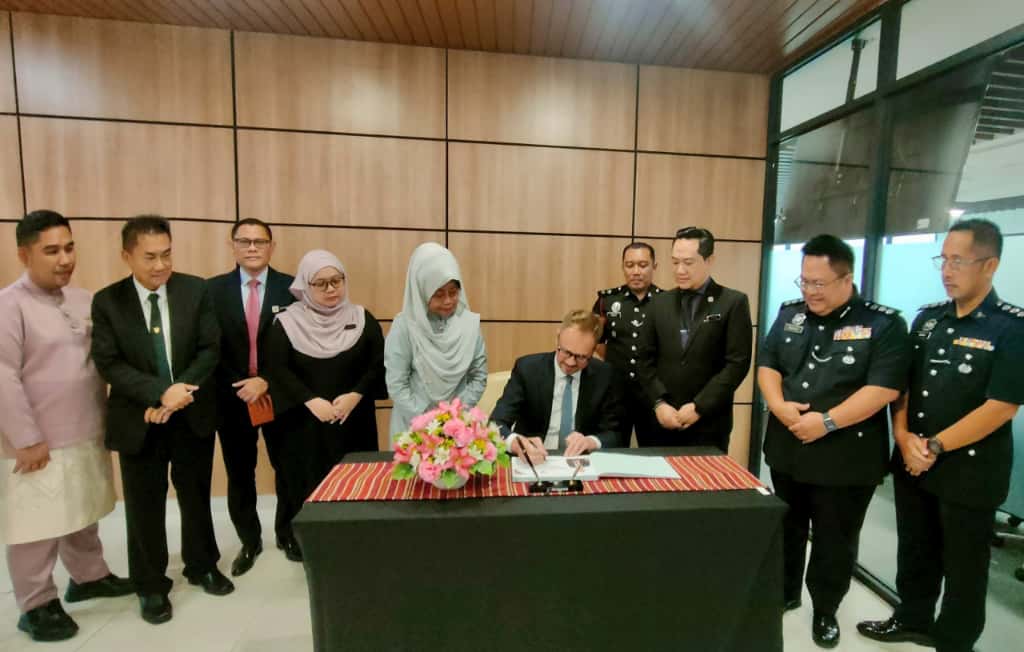
“What we at the UN find very important is that we have a balanced approach to drug prevention and treatment, and that is what is happening here in Sarawak under your leadership,” he said during a courtesy call to Fatimah’s office at Baitul Makmur II building on Friday.
The visit, he added, followed their initial meeting in Bali two months ago during an international conference involving substance abuse professionals.
On another note, Fatimah said the courtesy call also provided an opportunity for UNODC to observe Sarawak’s holistic and integrated model in managing drug and substance issues, which is implemented through the state’s One-Stop Committee Centre (OSC).
According to her, the OSC involves various strategic partners working collectively across four core pillars cutting off drug supply, reducing demand, rehabilitation efforts, and advocacy, including helping recovered individuals reintegrate into the community.
“Our approach is holistic and coordinated, and we wanted UNODC to see first-hand how we handle drug and substance issues in Sarawak,” she said.
Fatimah added that the ministry had also invited all OSC strategic partners to join the session to provide UNODC with a comprehensive overview of the state’s ongoing efforts.
In 2024, Sarawak recorded 11,408 drug-related arrests across 8,389 enforcement operations, represents 1.3 per cent of the state’s population.
Out of these cases, 80 percent (9,052 individuals) were tested positive for using drugs, more than double compared to the number of cases reported in 2018 (4,762 individuals).
The OSC for Addressing Drug and Substance Issues (MIDS) is an integrated governance mechanism that adopts a whole-of-nation approach, whereby integrated multi-agency and multi-sectoral collaborations are adopted, to address the entire spectrum of drug and substance abuse issues in Sarawak.
The ministry had also outlined the way forward for Sarawak’s Drug Supply Reduction (DSR) and Drug Demand Reduction (DDR) efforts, which includes collaborating with UNODC to build OSC members’ skills; sharing evidence-based modules, provide expert support for programme evaluation; and funding workshops aimed at accrediting OSC members and facilities in the state.