KUCHING: Sarawak is working closely with Cambridge University to explore ways to strengthen students’ performance in mathematics and science, says Education, Innovation and Talent Development Minister Datuk Seri Roland Sagah Wee Inn.
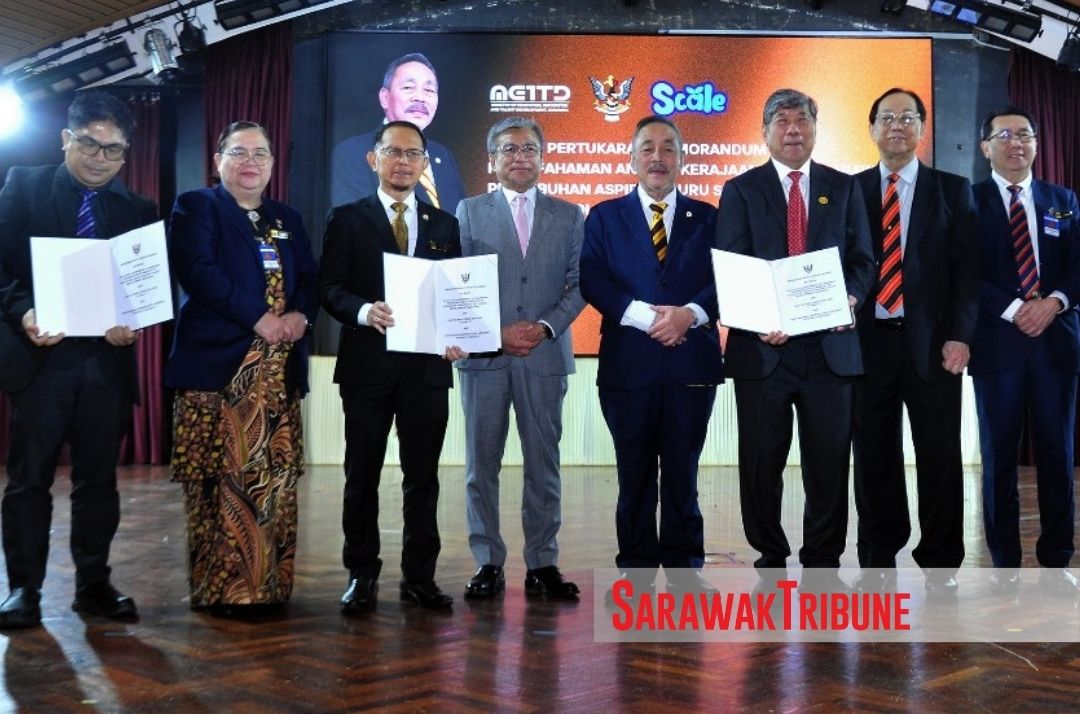
Speaking to reporters after a memorandum of understanding (MoU) involving the Sarawak government, Sarawak Teachers’ Aspirations Organisation and Arc Technologies Sdn Bhd at Dewan Santapan, DUN Sarawak today, he said discussions with Cambridge are ongoing following the latest findings from the state’s assessment initiatives.
“Yes, we are in touch with Cambridge all the time. That’s why we carry out this assessment test together with Cambridge.
“After seeing this happening, we are also discussing with Cambridge to see how they can suggest ways to improve performance in maths and science,” he said.
He added that strengthening the subjects is crucial, especially after the Ujian Penilaian Dual Language Programme (UPDLP) confirmed earlier assumptions about students’ weaknesses in mathematics — a foundational subject that influences science stream entry.
“All this time we assumed we were weak in maths, but it was never proven. With our UPDLP, we discovered that the assumption is justified,” he said.
Sagah said the state must act swiftly as Sarawak targets 60 per cent participation in the science stream by 2030 under the Post-COVID-19 Development Strategy (PCDS) 2030.
“Since our target is to have 60 per cent of science students by 2030, now is the time to work hard,” he said.
To achieve this, he emphasised that improving student outcomes requires broader cooperation.
“We will need help not just from teachers, but also from the private sector and technology-driven companies who can assist students to improve their performance,” he said, adding that such partnerships are essential in lifting overall achievements in maths and science.
Sagah reiterated that mathematics remains the foundation for science learning, and strengthening it is key to driving future progress.