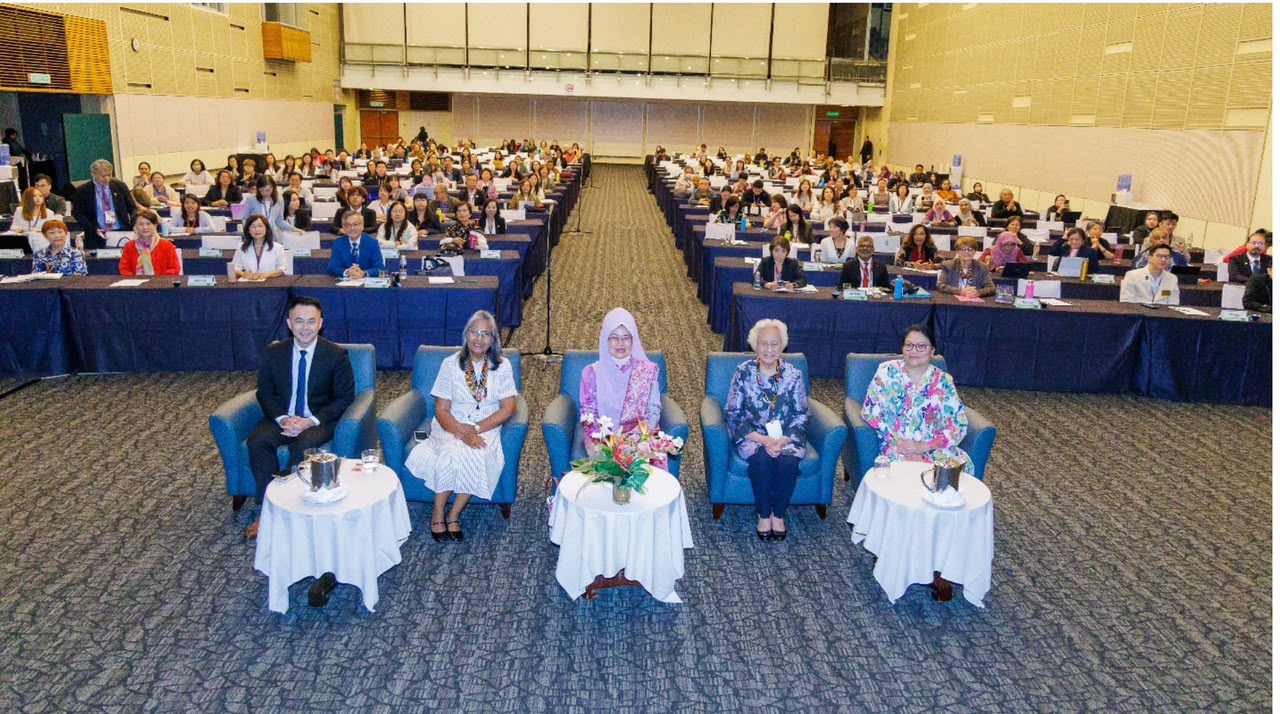
KUCHING: Sarawak is looking to expand mental health support in workplaces and help general practitioners identify and respond to people in need of psychosocial support.
Women, Early Childhood and Community Wellbeing Development Minister, Datuk Seri Fatimah Abdullah, said her ministry looked forward to working with the National Coalition for Mental Wellbeing Malaysia (NCMW) on both initiatives.
She said stress and burnout could easily go unnoticed at work, where many people spend much of their day.
“A workplace that speaks openly about mental health and responds with care supports not only its employees, but their families as well,” she said at the opening of the CIFA Regional Symposium 2026 at Borneo Convention Centre Kuching (BCCK) on Wednesday (Nov. 18).
Fatimah said NCMW was reaching out to general practitioners because family doctors were often the first people patients consulted when they felt unwell.
“Equipping our general practitioners to respond will add much-needed support on the ground, at a time when specialised mental health services remain in short supply,” she said.
NCMW’s Chairwoman and symposium organising committee co-chairperson, Siti Subaidah Mustaffa, said the region needed closer coordination to turn mental health research into practical support.
“Our region does not lack awareness of mental health. What we lack is coordinated action,” she said.
NCMW and the Consortium of Institutes on Family in the Asian Region (CIFA) signed a memorandum of understanding at the opening to advance joint mental health initiatives.
Recommendations from the symposium will be shared with relevant agencies to help improve how services are delivered.
The November 18 to 20 symposium, held in Malaysia for the first time, brings together policymakers, researchers, clinicians and community leaders from more than 10 countries and territories at the Borneo Convention Centre Kuching and the Waterfront Hotel.
Discussions cover how artificial intelligence affects mental wellbeing across generations, how families can manage digital habits and how agencies can expand community-based mental health services.