KUCHING: Sarawak is expected to become an ageing state by 2028, with senior citizens projected to make up at least 15 per cent of its population.
Women, Early Childhood, and Community Wellbeing Development Minister, Datuk Seri Fatimah Abdullah, said current data from the Department of Statistics Malaysia (DOSM) shows about 14 per cent of Sarawak’s population is already aged 60 and above, underscoring the need for early policy preparation.
Fatimah said her ministry collaborated with Swinburne University of Technology Sarawak Campus to conduct ‘The Profile of Ageing Issues of Older Persons in Sarawak’, a study that will guide preparations for the state’s demographic transition.
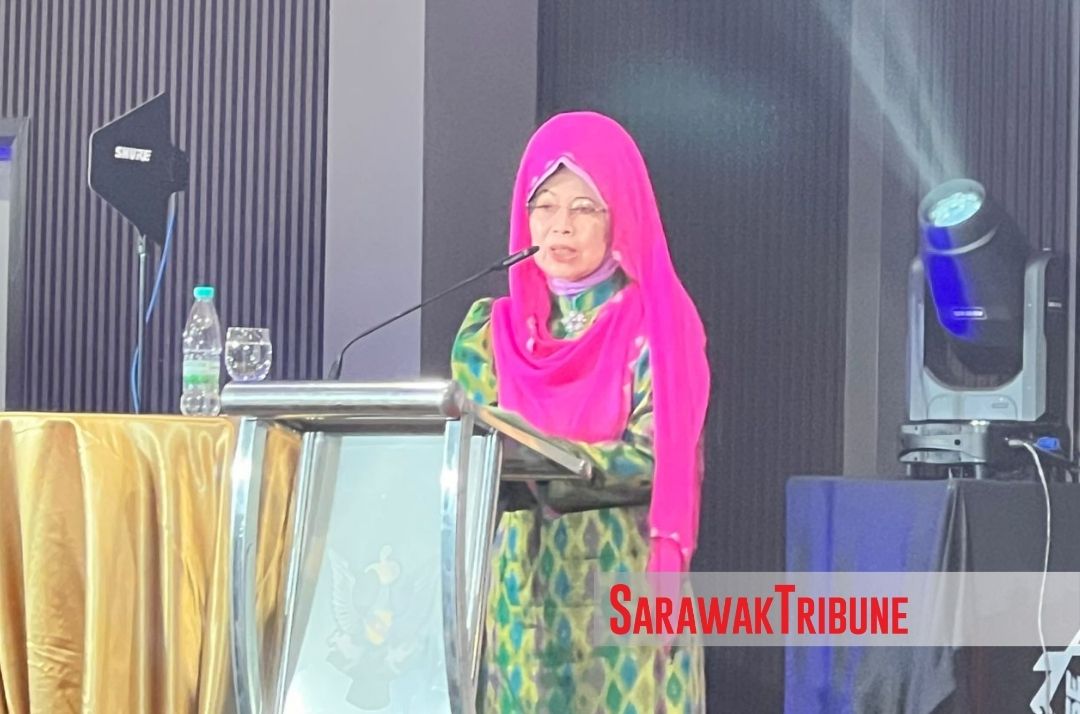
“This study forms the basis for the development of the ‘Masterplan for Healthy, Active and Dignified Ageing’ as Sarawak prepares for its transition into an ageing state,” she said at the ‘Senior Citizens – We Care for You’ programme at Dewan Serbaguna Taman Sukma today.
Among the study’s major findings, chronic health conditions remain prevalent among older persons, with hypertension affecting 44 per cent of respondents, followed by high cholesterol (35.5 per cent) and diabetes (23 per cent).
“Around two-thirds of respondents exhibit cognitive decline, and many underutilise healthcare services due to cost, transport limitations or lack of awareness,” she added.
The study also revealed that nearly 30 per cent of older persons live on less than RM2,500 monthly income, indicating financial vulnerability and reliance on informal support systems.
“In terms of housing and living conditions, seven per cent live alone, while many reside in homes that are unsafe or not adapted for ageing, particularly in rural districts,” she said.
Fatimah further noted that digital and social exclusion remains a concern, with many older persons having low digital literacy, limited participation in lifelong learning, and low awareness of government support programmes.
She added that family caregivers continue to shoulder the main responsibility but often face emotional and financial strain due to the absence of structured respite services or training support.
“These findings will guide our policy priorities as Sarawak prepares to become an ageing state, ensuring senior citizens can live safely, actively and with dignity in their communities,” she said.