KUCHING: Sarawak Forestry Corporation (SFC) has intensified surveillance in fire-prone areas amid the current hot and dry weather, with particular attention given to peat forests and locations near human activities.
It said prolonged dry spells, drought and haze could increase the risk of forest fires while placing pressure on ecosystems and wildlife.
Based on previous fire incidents, monitoring has been stepped up at several Totally Protected Areas (TPAs), including the Sibuti Wildlife Sanctuary, Piasau Nature Reserve and Lambir Hills, Niah and Gunung Mulu national parks in the Miri region.
Other areas under close watch are the Samunsam Wildlife Sanctuary, Bako National Park and Kuching Wetlands National Park in the Kuching region, as well as Bukit Lima Nature Reserve in Sibu.
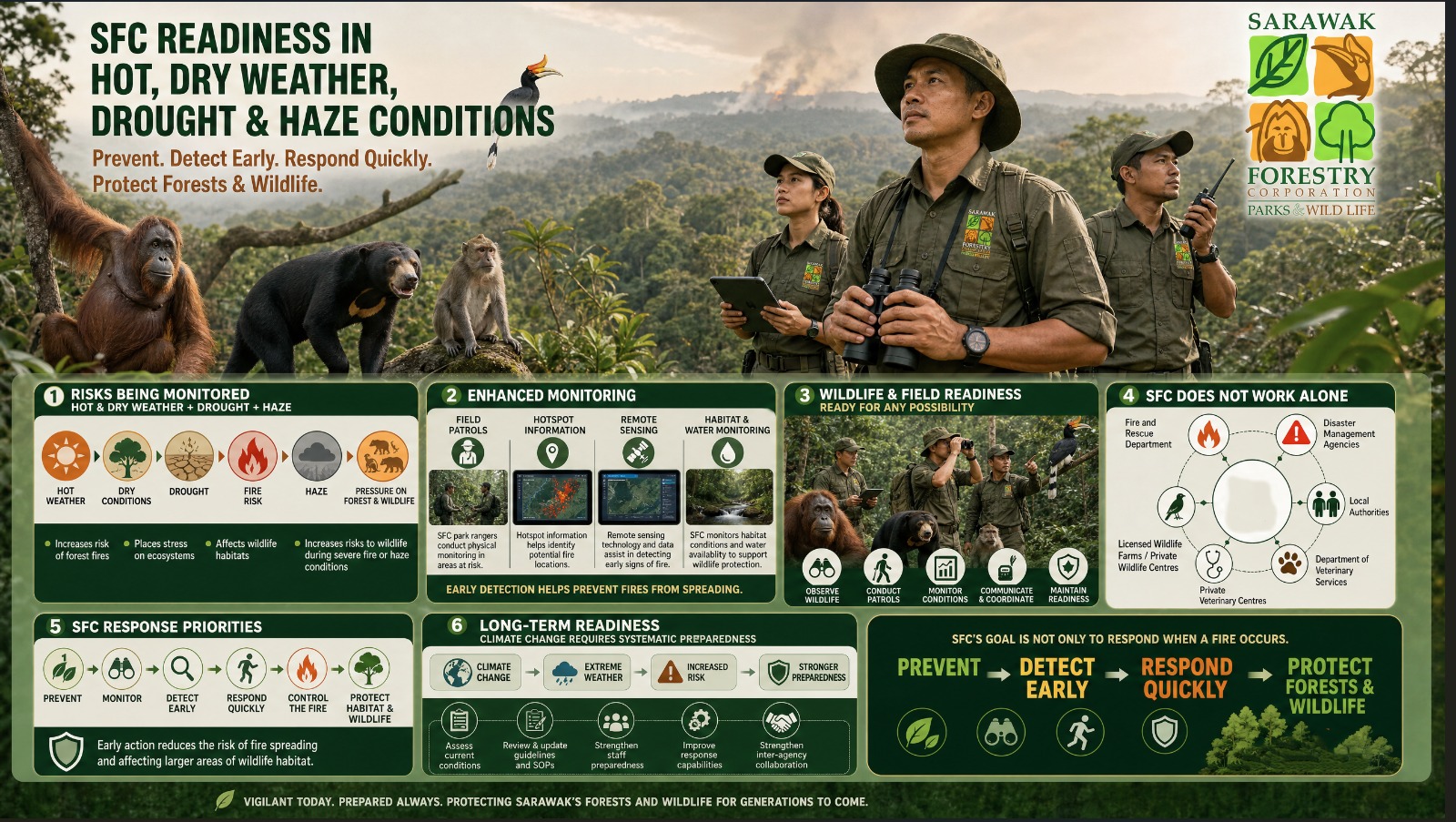
“SFC conducts ground patrols and uses hotspot information and remote-sensing technology to detect early signs of fire,” it said in a statement.
The corporation is also monitoring water availability and wildlife habitat conditions, particularly in areas vulnerable to prolonged heat and drought.
It said early detection and intervention would be prioritised should a fire break out to prevent it from spreading and affecting a wider habitat area.
“We are working closely with the Fire and Rescue Department (BOMBA), disaster management agencies and local authorities on surveillance, prevention and emergency response measures,” it said.
SFC also assured that it was prepared to manage wildlife injuries or smoke-related distress resulting from forest fires or extreme haze.
Its emergency preparedness includes suitable equipment and trained personnel, including SFC veterinary officers.
“We also maintain collaborative arrangements with private veterinary centres, the Department of Veterinary Services and licensed private wildlife facilities to manage emergencies that may exceed its existing capacity,” it said.
SFC said climate change had made hot and dry conditions, as well as extreme weather events, risks that must be addressed more systematically.
As part of its long-term preparations, SFC continues to assess current conditions and review existing guidelines and standard operating procedures, including strengthening inter-agency collaboration.
“Our objective is not merely to respond when a fire occurs. More importantly, it is to prevent fires, detect them early and protect forests and wildlife before the situation becomes more serious,” it added.