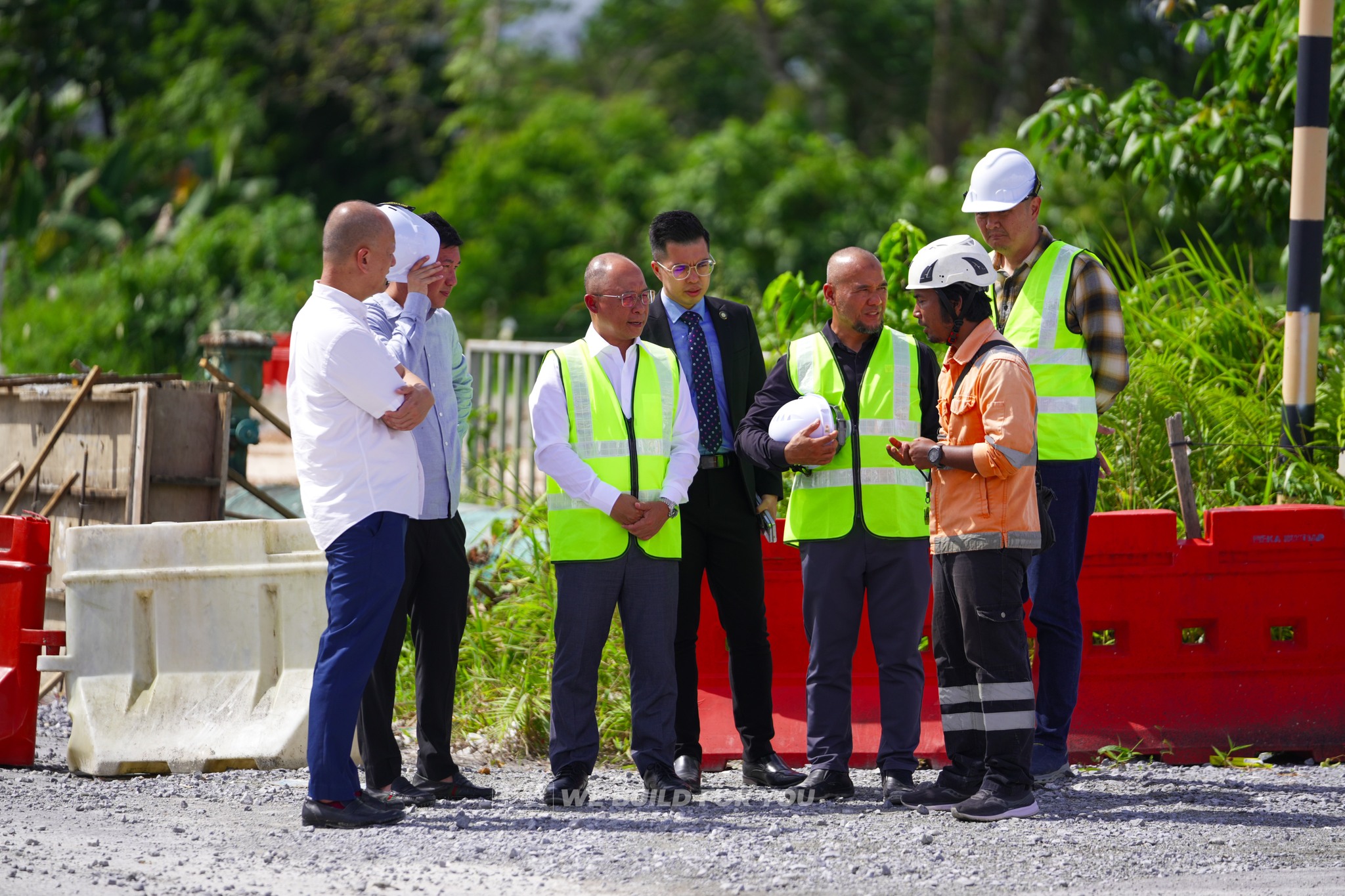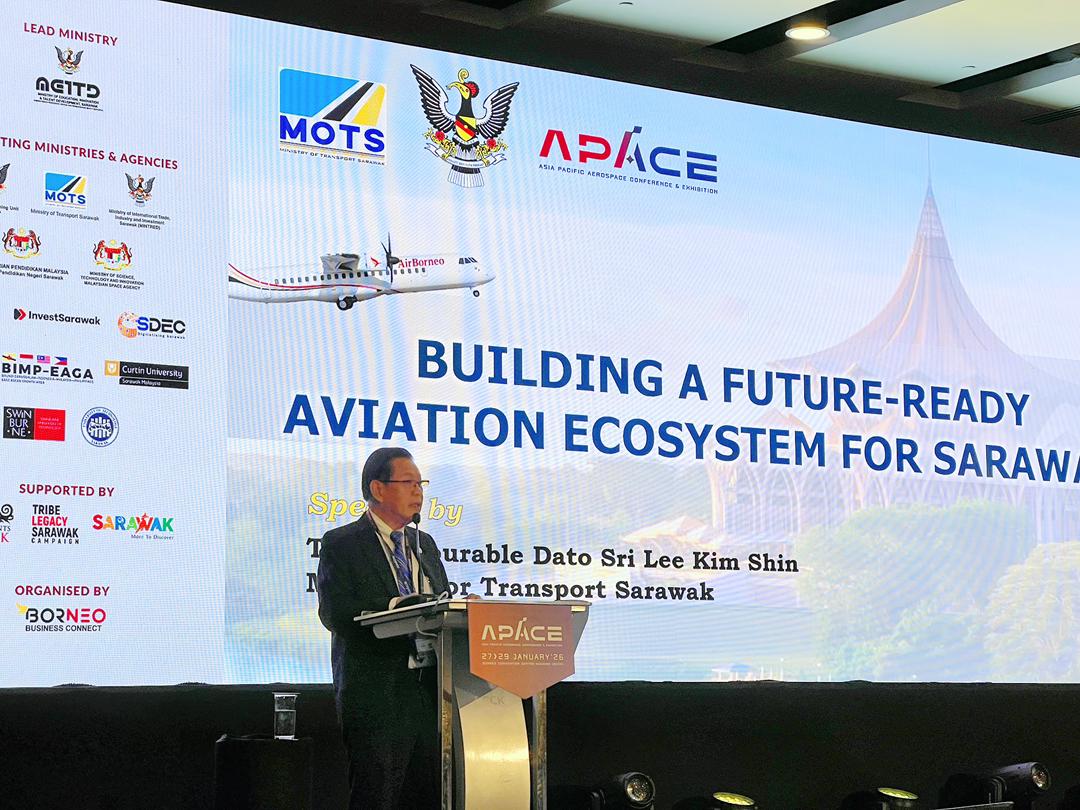
KUCHING: Sarawak is undertaking a feasibility study on the proposed new Kuching International Airport, a key step in its long-term plan to build a future-ready aviation ecosystem.
Transport Minister Datuk Seri Lee Kim Shin said the study will explore more than just constructing a larger airport and focus on long-term capacity, sustainability and resilience.
“We are asking what capacity Sarawak will require over the next 30 to 50 years, how to design for future aircraft technologies and operating models, and how sustainability and resilience can be embedded from the outset,” he said in his keynote address at the Asia Pacific Aerospace Conference and Exhibition (APACE) 2026 at the Borneo Convention Centre Kuching (BCCK) on Tuesday (Jan 27).
Lee said the study also examines the long-term potential of the new KIA as an aerotropolis, integrating aviation-linked economic activities alongside airport infrastructure.
“This includes future opportunities in Maintenance, Repair and Overhaul services, aerospace parts and component manufacturing, logistics, and aviation-related training and services,” he said.
He added that the acquisition and rebranding of MASwings as AirBorneo is aimed at strengthening connectivity within Sarawak and Borneo, particularly for rural and underserved routes.
“This move is not about ownership for its own sake. It is about strategic alignment.
“AirBorneo will support rural and underserved routes sustainably, anchor STOL and regional operations, and complement broader commercial aviation networks,” he said.
Lee also highlighted Sarawak’s extensive network of Short Take-Off and Landing airstrips (STOLports) as a strategic advantage in providing essential connectivity.
“These STOLports serve remote and rural communities, enable medical evacuations and essential services, and support disaster relief and humanitarian access,” he said.
He stressed that aviation is critical for Sarawak’s development.
“For Sarawak, aviation is not a luxury. It is a necessity,” he said, noting that air connectivity links rural communities to healthcare, education, emergency services and economic opportunities.
On sustainability, Lee said Sarawak is embedding green considerations into aviation planning from the start.
“Sustainability is not a constraint on growth. It is a condition for long-term competitiveness,” he said, adding that the state is exploring sustainable aviation fuel pathways and low-emission airport operations.
Lee said Sarawak is also strengthening aviation talent development through collaboration with local institutions, while leveraging its strategic location within the Brunei Darussalam-Indonesia-Malaysia-Philippines East ASEAN Growth Area (BIMP-EAGA) to enhance regional air connectivity.
“The future of aviation will favour those who plan early, invest wisely and collaborate openly.
“Sarawak chooses to prepare and build for the long term,” he said.