MIRI: Sarawak’s long-standing culture of coexistence across ethnic and religious lines has been held up as a national example of how unity can be nurtured through everyday life rather than rhetoric, as the federal government intensifies efforts to strengthen social cohesion in an increasingly complex landscape.
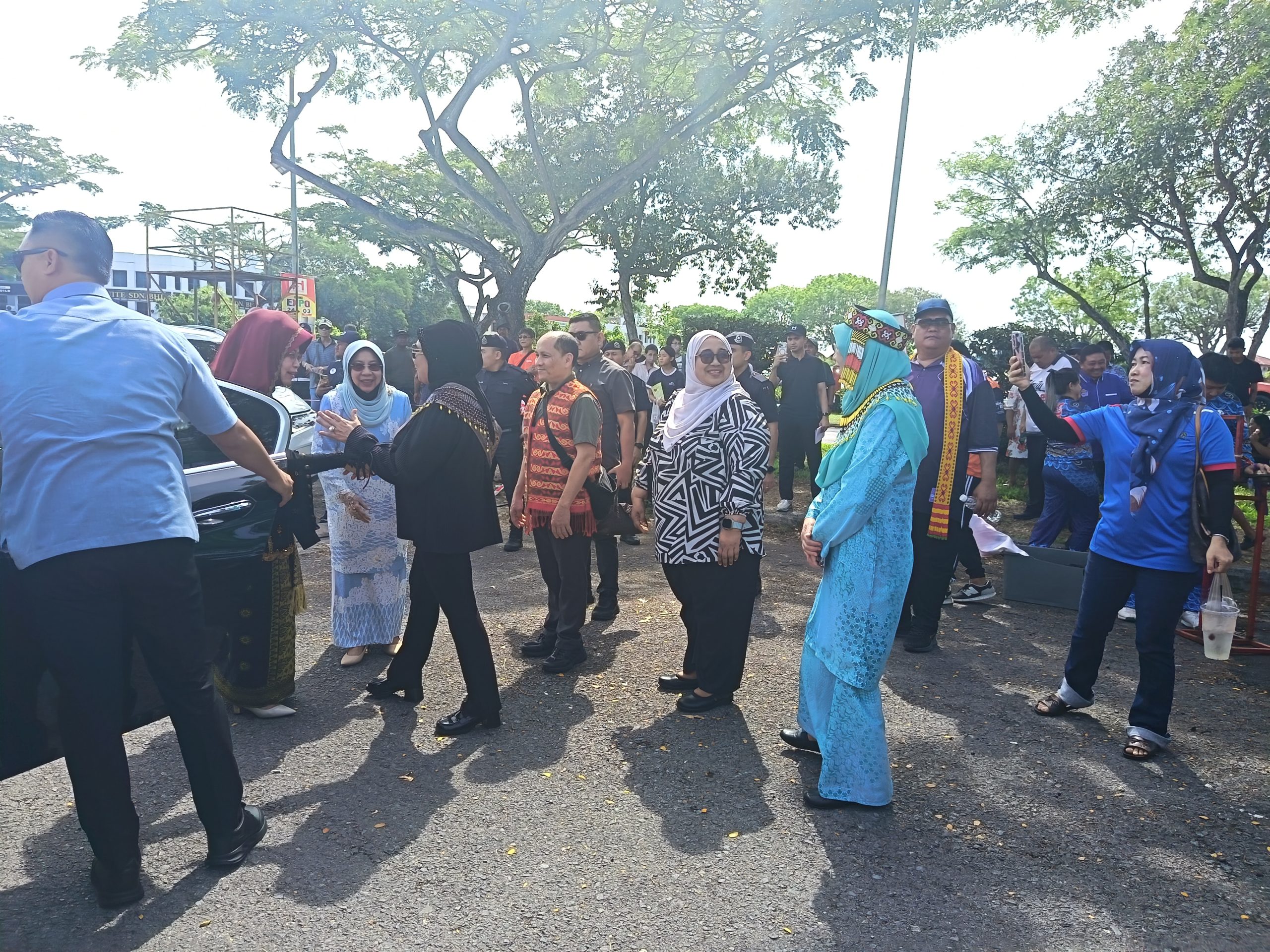
Speaking at the Sarawak Zone Unity Week 2026 celebration here today, National Unity Ministry secretary-general Datuk Haslina Abdul Hamid said Sarawak’s multicultural society reflected the true strength of Malaysia’s social fabric.
She said harmony in the state had been built through mutual understanding, respect, and a willingness among communities to live together peacefully despite differences in ethnicity, religion and culture.
“In Sarawak, diversity is not something foreign. It has long been part of the people’s way of life,” she said during the event held at Boulevard Mall here.
Haslina said Sarawak demonstrated that unity was not sustained merely through slogans or campaigns, but through daily interactions among ordinary people.
“It is reflected in how we greet one another, work together, celebrate festivals, help our neighbours and build trust within the community,” she said.
Her remarks come as the government seeks to reposition national unity as a broader governance and development agenda under the MADANI framework, amid concerns over social fragmentation fuelled by economic pressures, online polarisation and widening disparities in access to opportunities.
Haslina acknowledged that the challenges confronting national unity today had become increasingly complex compared with previous decades.
“Previously, the challenges largely revolved around physical interaction between communities. Today, they also emerge in digital spaces, economic realities, cost-of-living pressures, education opportunities and access to development,” she said.
She stressed that unity could no longer be viewed in isolation from governance, equitable development and public wellbeing.
“When people feel that development is implemented fairly and opportunities are shared collectively, trust in institutions will increase and social relationships will become stronger,” she added.
The secretary-general said the ministry was moving away from broad-based, symbolic and one-off programmes, which she described as no longer relevant in addressing modern unity challenges.
Instead, the ministry has adopted what she termed a more targeted and integrated strategy encompassing education, youth development, religion, community engagement and socio-economic empowerment.
Under the approach, grassroots initiatives such as the Progressive Neighbourhood Watch programme, or RT Progresif, are being strengthened to deepen community interaction while improving local wellbeing.
“The initiative not only reinforces social interaction but also empowers the community comprehensively,” she said.
Among younger Malaysians, the ministry is intensifying programmes aimed at strengthening understanding of the Rukun Negara and fostering patriotism.
These include the Unity Integration Movement programme, Rukun Negara public speaking competitions, youth outreach initiatives, university volunteer missions and school-based archival projects.
Haslina also underscored the importance of interfaith dialogue and cross-cultural engagement in reducing misunderstanding and building empathy among communities.
“Healthy dialogue spaces are essential in reducing misconceptions, building empathy and increasing mutual respect,” she said.
She said unity should no longer be treated as a seasonal agenda tied to commemorative events, but as a continuous national process requiring sustained policy commitment, effective implementation and active participation from all Malaysians.
The Sarawak Zone Unity Week celebration forms part of a nationwide series organised by the National Unity Ministry.
This year’s programme is being held across five regions comprising the Eastern, Northern, Southern and Central zones, as well as Sarawak.
According to Haslina, four zones have already been completed, culminating in the National Unity Week 2026 celebration scheduled to take place in Kota Kinabalu, Sabah, from June 11 to 14.