SARAWAK has the potential to lead Malaysia and Southeast Asia in integrating Islamic social finance with Sustainable Development Goals (SDG)-driven development.
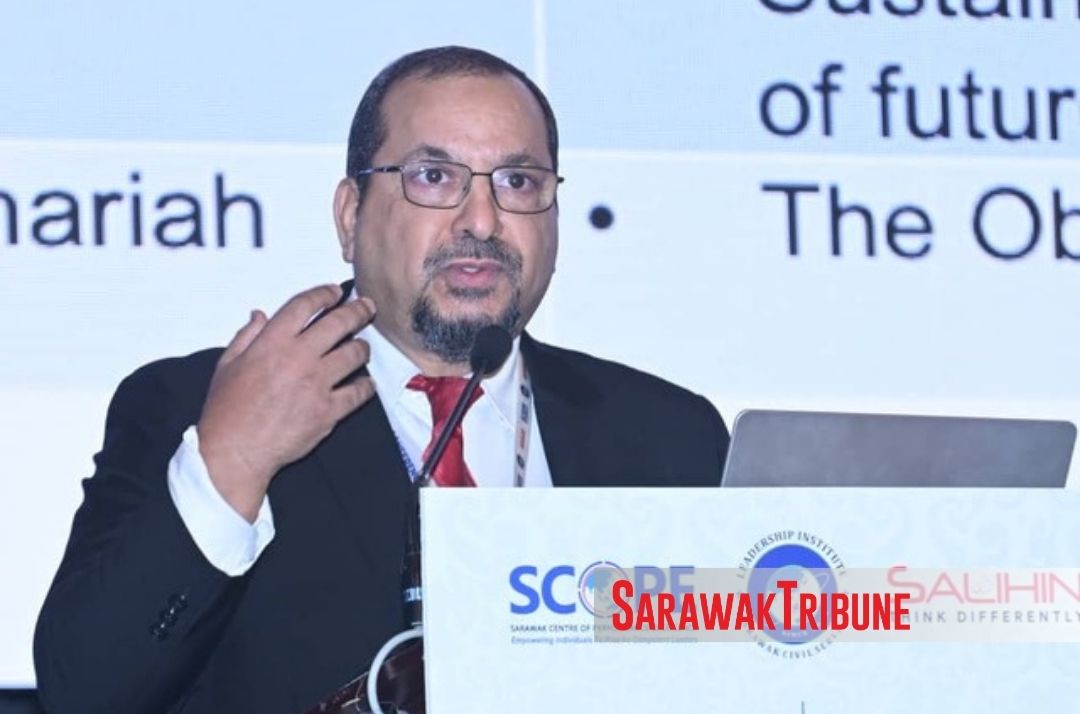
Chief Executive Officer of SALIHIN, Shariah Dr Ahcene Lahsasna, said Sarawak’s natural resources and diverse cultural heritage placed the state in a strong position to adopt sustainable and ethical economic models as a complement to its existing economic framework.
He said ethical economic growth aligned with social finance and Maqasid al-Sharia could support more inclusive development across the state, particularly in addressing disparities between rural and urban areas.
“We have not seen so far any regions that claim to be a hub for social finance. I think that is a good opportunity for Sarawak to claim or champion itself as a social hub, a hub for social finance, a hub for wealth management, SDG-driven development, or even a free zone for such initiatives.
“This could be considered as a way to position Sarawak in the region.
“By making Sarawak a regional power in green renewable energy, consistent with the ESG-SDG framework, and by focusing on ethical and sustainable finance, the state can achieve balanced growth that uplifts rural communities, preserves natural resources, and ensures dignity for all,” he said.
He said this during a session titled ‘Sustainable Ethical Economic Growth in Sarawak through SDGs and Social Finance’ at the 2026 Sarawak Budget Conference (SBC) in Kuching on Tuesday.
Dr Ahcene said the Post COVID-19 Development Strategy (PCDS) 2030 had already captured key principles such as financial inclusion, social inclusivity and environmental sustainability, which aligned closely with the objectives of social finance and the SDGs.
However, he said geographical disparities remained a major challenge, with many rural areas still facing limited access to infrastructure, financial services and social amenities.
As such, he said improvements in connectivity, transport efficiency and the use of financial technology could help bridge these gaps by enabling greater participation in economic activities.
“Digital platforms can help overcome logistical challenges on the ground and bring more communities on board,” he said.
Dr Ahcene also pointed to environmental concerns, saying climate risks required more responsible growth and stronger alignment with climate-related initiatives under the SDG framework.
He said inclusive development should remain central to mainstream planning, particularly in strengthening urban-rural economic integration.
To move forward, he said Sarawak needed to strengthen and give greater visibility to existing strategies, while providing additional momentum to ethical and sustainable development initiatives.