KUCHING: As global warming forces coffee producers worldwide to confront rising temperatures and diminishing highland zones, Sarawak is carving out a unique role in the international coffee landscape by pioneering low-elevation, high-temperature cultivation, an emerging frontier for the industry.
Borneo Coffee Symposium organising director Kenny Lee said the experiences and solutions developed in Sarawak’s tropical environment could offer valuable insights to the global coffee sector, especially as climate change reshapes traditional growing regions.
“Our challenges are very different from those in most other coffee regions. The answers we discover here may offer useful insights internationally,” he said when welcoming delegates to the symposium 2025 held at the Old Court House on Saturday.
Lee said the symposium was intentionally designed around the theme of low-elevation cultivation, noting Sarawak’s position within the coffee belt, combined with its tropical forest environment, high temperatures and humidity, demands innovative approaches in farming and processing.
“With the pressure of global warming, I believe there will be more low-elevation coffee regions in the future. The experience we generate today will become even more important,” he said.
Lee emphasised that Sarawak’s farmers must remain central to the state’s coffee narrative.
“The farmers are the key. Only when they succeed economically and culturally can the industry be sustainable. They cannot remain invisible in the interior; they must be part of the whole story,” he said.
He added that the symposium offers farmers an important opportunity to witness global trends firsthand and understand how their work contributes to shaping the future of coffee.
“This helps them see their own value and how their coffee can even influence the world,” he said.
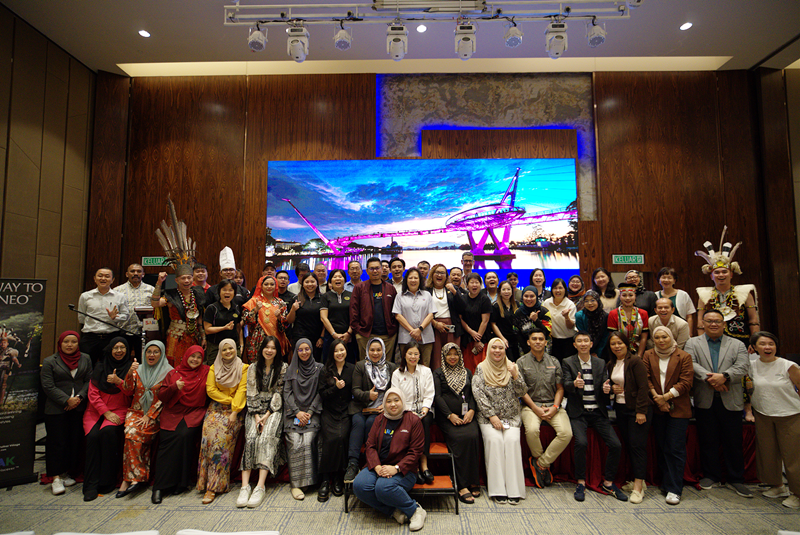
More than 200 participants from Germany, the UK, Africa, India, Indonesia, the Philippines, Thailand, Vietnam, Taiwan, Venezuela, Malaysia and Sarawak attended the event.