KUCHING: Political analysts readily acknowledge that Sarawak’s role since 1963 has been pivotal to Malaysia’s development, particularly through its natural resources, multicultural society and steady leadership.
They said the Malaysia Agreement 1963 (MA63) continues to guide federal-state relations, with Sarawak’s distinct position shaping how the federation evolves six decades after its formation.

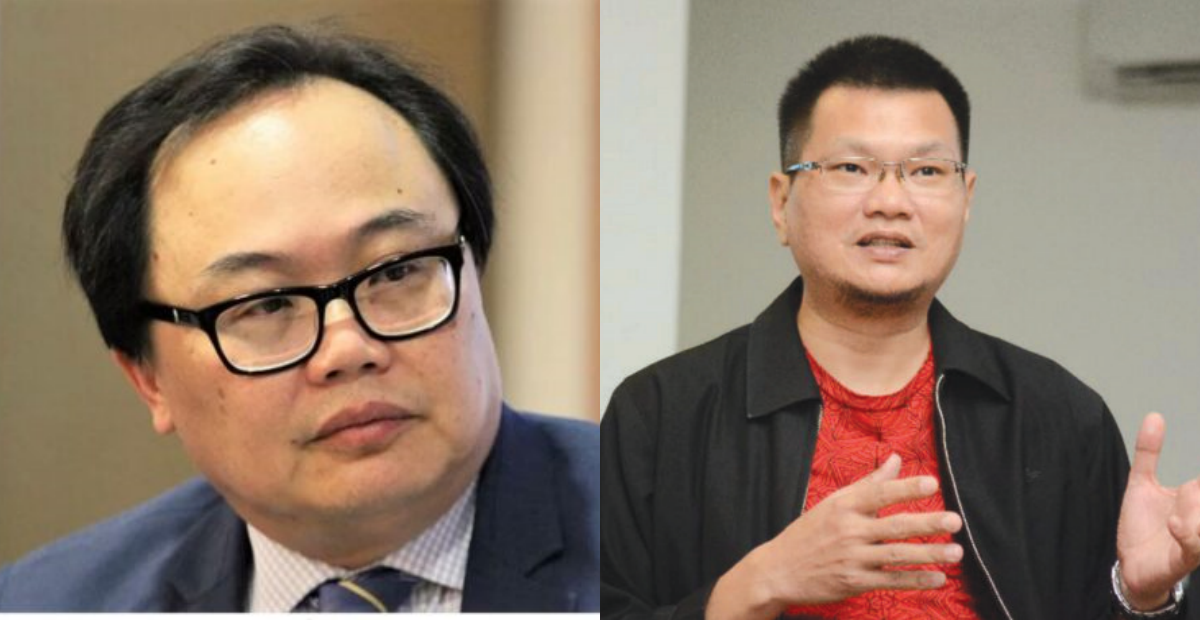
Prof. James Chin of the University of Tasmania said Sarawak’s oil and gas had been the state’s most important contribution, driving Malaysia’s economy and strengthening PETRONAS as a national company.
He said Sarawak had also been a reminder of how a multiracial society could succeed, though its political stability had not translated into wider influence at the federal level.
“Sarawak’s most important contribution to nation-building is our oil and gas. Together with Sabah, we really powered PETRONAS. Without Sarawak and Sabah, PETRONAS would be nothing. Our oil and gas has topped up the Malaysian economy.
“Unlike in the peninsula where racial and religious divisions have widened, Sarawak has shown that a multiracial way of life works.
“For many years Sarawak was treated as a fixed deposit. It is only with the renewed attention on MA63 that the state has begun to reclaim its role in shaping federal policies,” he told Sarawak Tribune.
Chin stressed that Sarawak and Sabah must also play a greater role in reforming the federal-state system to ensure their uniqueness was recognised in the federation.
He asserted that their voices had often been overlooked in earlier administrations, but the ongoing debate on MA63 had created new bargaining power.
“It all depends on getting back the 35 per cent parliamentary seats. That is the only way our special character is recognised. In Malaysia, without political power, people just ignore you.
“Sarawak and Sabah never shared much political voice at the federal level until the MA63 issue blew up. That is when the federation began to pay attention,” he added.

Universiti Malaysia Sabah (UMS) senior lecturer, Prof. Dr Lee Kuok Tiung, said MA63 remained alive in shaping Sarawak’s relationship with Putrajaya, reflected through constitutional amendments and technical committees.
He said MA63 was both a legal framework and a symbol of unity, reminding all parties of the commitments made at the formation of Malaysia.
“The amendment of Article 1(2) to restore Sabah and Sarawak’s equal partner status and the interpretation of Article 160 which now includes MA63 show that Putrajaya is listening.
“MA63 carries strong symbolic weight. It is not mere rhetoric, but a reminder of promises made and the importance of fair treatment to Sabah and Sarawak,” he said.
Lee added that Sarawak’s political cohesion under Gabungan Parti Sarawak (GPS) had given the state leverage in negotiations, with further autonomy already achieved in oil and gas.
He said incremental reforms suggested that more progress could be secured in the future, provided Sarawak planned its next steps carefully.
“Unity within GPS is a strong institutional mechanism. It enables Sarawak to negotiate from a position of strength, and Putrajaya cannot simply ignore the state.
“All the incremental reforms tell us Putrajaya is willing to negotiate. Most importantly for Sarawak is to plan the next steps and work it out. It is a long journey to success,” he said.
He added that Sabah had also begun following Sarawak’s lead in resource management, pointing to interim payments as evidence of progress, though still far from constitutional entitlements.
“The current Sabah Government is moving in the right direction with oil and gas involvement. The interim payment has risen to RM600 million, still far from the 40 per cent revenue share under Article 112C, but it is progress,” he added.