KUCHING: Sarawak’s cultural and textile heritage stood as a living model for how tradition should be preserved, practised and carried into the future.
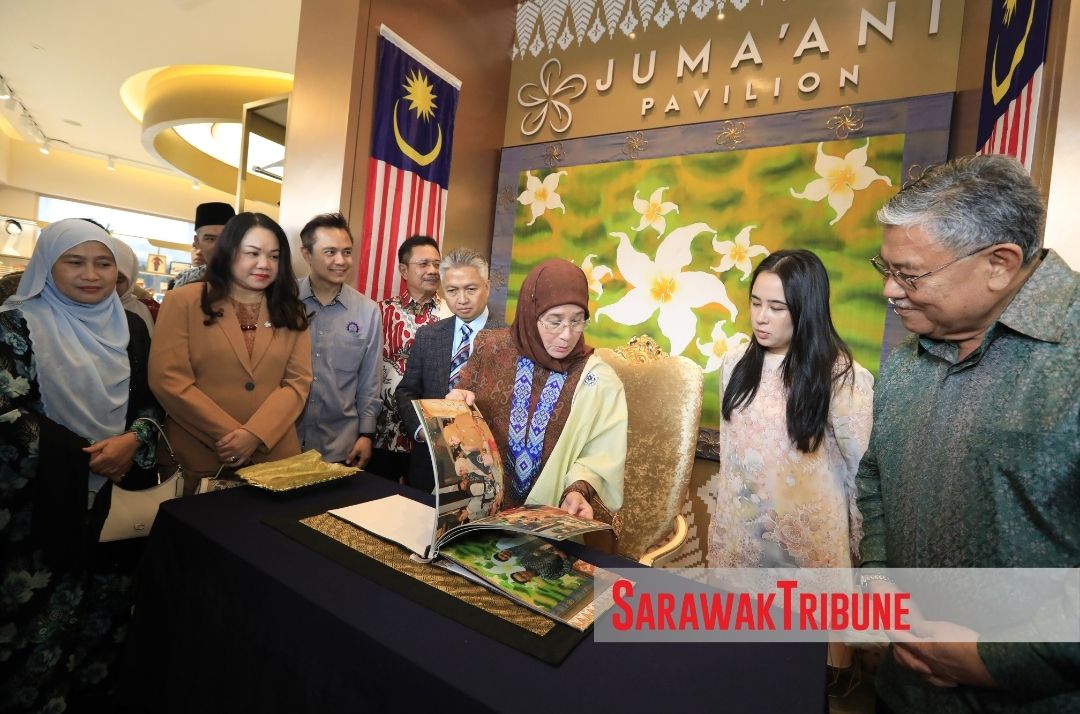
Tengku Ampuan Pahang, Tunku Azizah Aminah Maimunah Iskandariah, said Sarawak was blessed with institutions that had shaped its heritage ecosystem, including Juma’ani Pavilion, Centre of Technical Excellence Sarawak (CENTEXS), Tun Jugah Foundation, Tanoti Crafts and designer Tom Abang Saufi.
“Sarawak does not merely preserve heritage, Sarawak lives it. Your youth carry it with pride. Your institutions nurture it, your museums honour it and your government protects it.
“Your children dance your dances, your youth weave your pua kumbu, your artisans carve stories into wood, your elders guide, your communities celebrate.
“Sarawak is a role model for how heritage should be lived, breathed, and carried forward,” she said in her keynote address at the Borneo International Textile Festival (BiTF) 2025 Seminar at Pullman Hotel here Monday (Dec 8).
Tunku Azizah said the Borneo Cultures Museum—recently voted number one in the world — reflected how Sarawak’s cultural identity had earned global respect, not only for the state but also for Borneo, Malaysia and ASEAN.
As such, she stressed that heritage could not survive in isolation and required collaboration across federal and state governments, non-governmental organisations (NGOs), corporates, artisans and communities.
“When these forces unite, we build an ecosystem that sustains livelihoods, strengthens identity, and empowers people,” she added.
She described Borneo’s cultural landscape as one of extraordinary diversity, with communities such as the Malay, Dayak, Orang Ulu, Kadazan-Dusun, Murut, Melanau, Penan, Bajau, Iban and Bidayuh contributing to a shared cultural fabric enriched by centuries of coexistence.
She noted that each ethnic group possessed its own design vocabulary, motifs that conveyed worldviews, spiritual beliefs and relationships with nature.
Textiles, she added, were historically seen as sacred objects carrying prayers, ancestry and meaning beyond mere decoration.
“The beauty of Borneo’s textiles is, in truth, a reflection of the beauty of its people.
“Behind every motif, every weave, every bead lies a myth ; tales of guardians, ancestral heroes, and the unseen realm that shapes Bornean cosmology. These stories breathe life into the textiles,” she said.
Tunku Azizah also paid tribute to the women of Borneo, describing them as master weavers, dyers and bead artists who carried the knowledge and discipline that shaped cultural identity.
She said men, too, played important roles as artisans, carvers, tattoo artists, musicians and designers.
“Where there is weaving, there are women; and where women lead, a civilisation thrives. But heritage is not only in the hands of women.
“Many men are extraordinary artisans, carvers, mask-makers, tattoo artists, musicians, designers and sometimes even more clever than us!
“Heritage belongs to all of us, together,” she added.