SERIAN: Sarawak has the potential to become a new production hub for Musang King durian as more agricultural land is being developed for premium durian cultivation across Serian, Padawan, Bau and Betong.
Institute of Cooperative Malaysia (IKMa) Deputy Director-General (Human Capital Development) Mohd Zaib Mat Yunus said the industry in Sarawak is currently in an active growth phase, supported by suitable tropical rainfall conditions, available land and state initiatives in the agri-food sector.
He said although Sarawak is not yet a major producing state compared to the peninsula, the groundwork placed by cooperatives and local growers shows strong long-term potential.
“I encourage cooperatives in Sarawak to seize opportunities in high-value agriculture such as Musang King, because this commodity not only promises significant economic returns, but can transform the socioeconomic landscape of cooperative members when developed in a structured and competitive manner.
“With rising export potential, government policy support and stable market demand, this is the right time for cooperatives to move forward and become key players in Sarawak’s Musang King value chain.
“With strong membership, collaborative networks and government assistance, cooperatives can emerge as leaders in this sector and strengthen Sarawak’s position in the national agri-food chain,” he said.
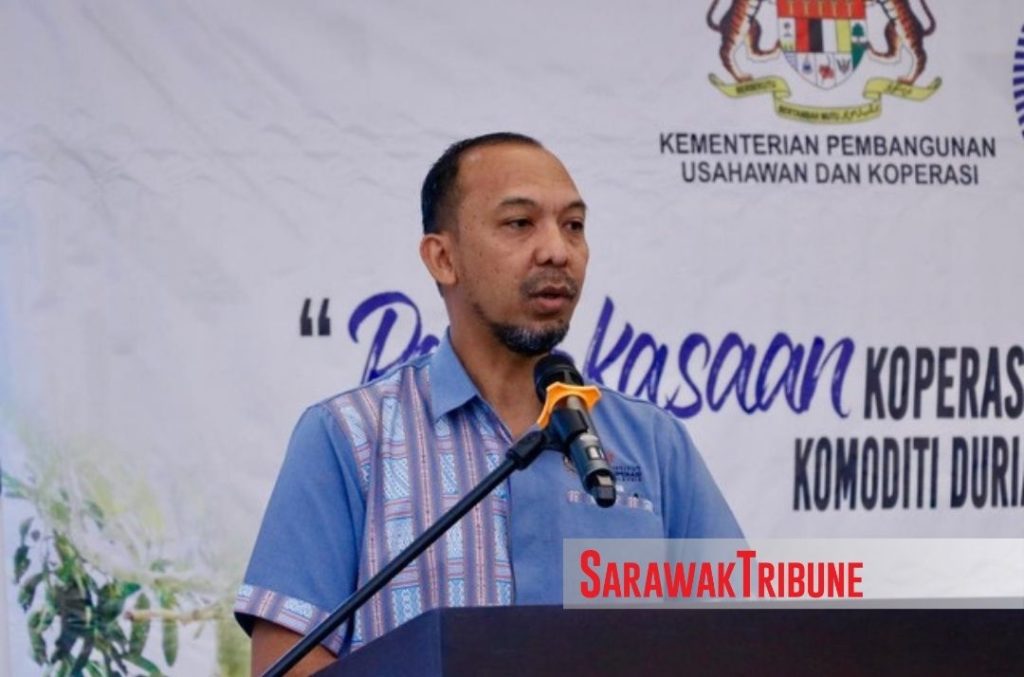
He said this when officiating the Knowledge Forum 2025: Empowering Cooperatives Through the Musang King Durian Commodity at a hotel here Monday (Dec 15).
Mohd Zaib said the forum aims to strengthen cooperative understanding of the Musang King industry landscape in Malaysia, particularly in Sarawak.
He added that it also marks a starting point for developing more competitive and knowledgeable cooperatives prepared to participate in the Musang King value chain in a sustainable and well-planned manner.
He noted that the Musang King industry in Malaysia has undergone significant transformation, shifting from small-scale planting to a high-value sector contributing to national export earnings.
“High demand from China and regional markets has made Musang King a long-term strategic commodity that must be managed more systematically.
“For cooperatives in Sarawak, involvement in the Musang King value chain also creates opportunities to channel production from rural areas into larger markets in a more organised way,” he said.
Industry estimates show that a Musang King tree typically begins producing commercially from between six and eight years of age, yielding around 20 to 50 fruits per season depending on soil conditions and farm management.
At the usual planting density of 30 to 40 trees per acre, this translates to an estimated output of roughly 800 to 2,000 fruits per acre each season.
Based on current market prices — which range from RM35 to RM55 per kilogram depending on grade and harvest period — an acre of Musang King could generate gross returns of about RM30,000 to RM80,000 per season.
Mohd Zaib said the Musang King industry contributed significantly to Malaysia’s economy, with Malaysian durian exports exceeding RM1.2 billion in 2023.
More than 95 per cent of fresh and frozen durian exports were destined for China.
In terms of production, he said Pahang remains Malaysia’s largest Musang King producer, covering more than 14,000 hectares and supplying over 60 per cent of the national output.
Perak is the second-largest producer, while Kelantan is rapidly expanding large-scale plantations and becoming an increasingly important contributor.
“These developments position Musang King as a premium commodity that continues to strengthen Malaysia’s standing in the international market as one of the region’s leading producers of high-value durian,” he added.