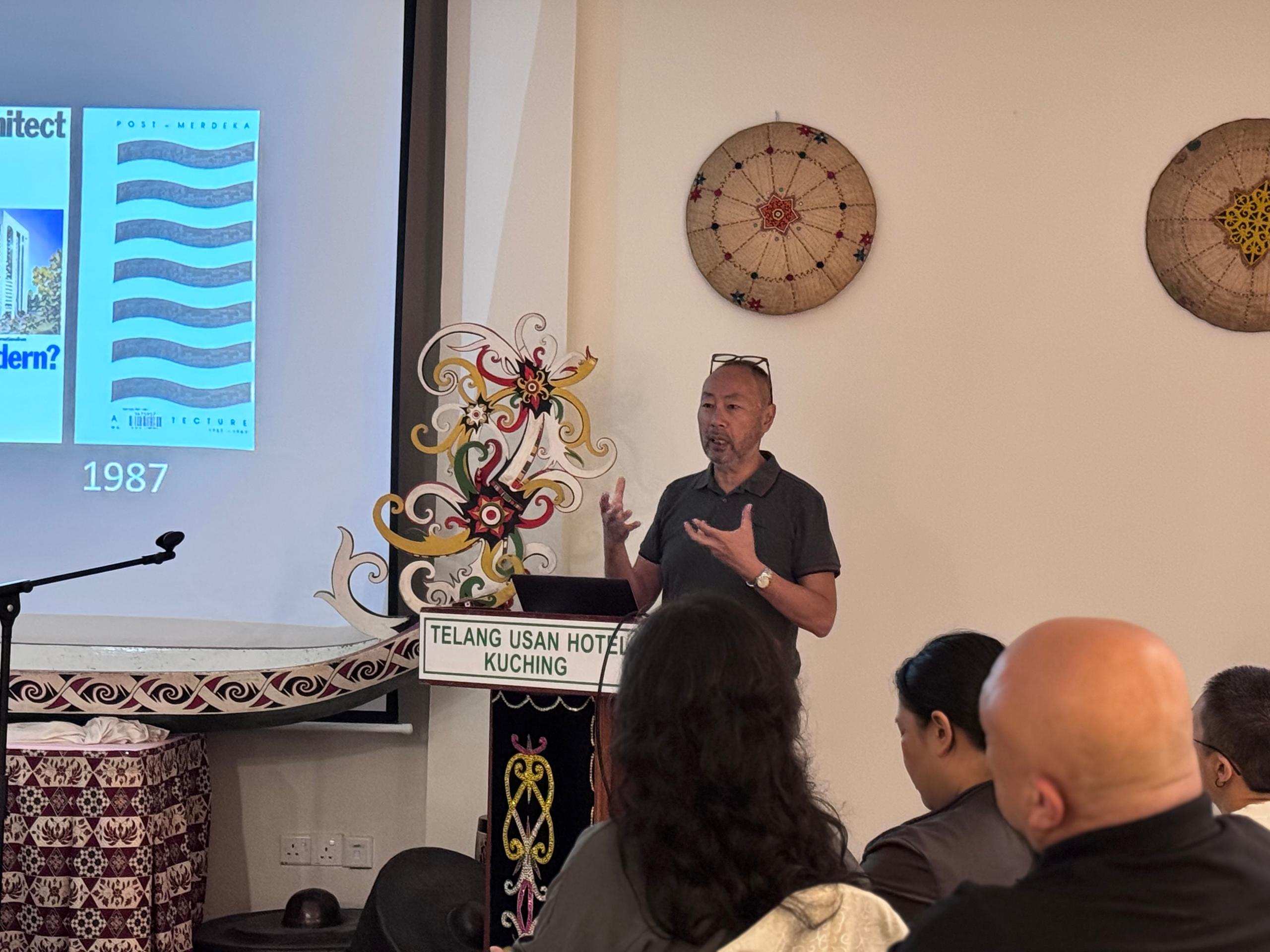
KUCHING: Sarawak’s architectural identity is dynamic and evolving rather than disappearing, reflecting changing social realities while remaining rooted in its unique history, said University of Canberra senior lecturer in architecture Dr John Ting.
Ting said his decision to document Sarawak buildings constructed before 1963 stemmed from a lack of representation in national architectural histories, which often overlook Sarawak despite its distinct built heritage.
“Sarawak is a very unique place, and that uniqueness can be seen through its buildings, spaces and construction methods.
“Traditional Sarawak Malay houses, for example, differ from their Peninsular counterparts, contributing to a broader understanding of Malay architecture in Malaysia,” he told Sarawak Tribune after his talk titled “Islands of Influence” at a hotel here yesterday (Feb 8).
He added that Sarawak’s architectural identity has historically been hybrid rather than strictly colonial, shaped by local cultures, materials and social practices.
This, he said, challenges the notion that identity belongs only to the past, as identity continues to adapt to contemporary influences.
“Identity is not being destroyed. It is changing, and what we are seeing is the emergence of a new Sarawak identity that continues to grow and adapt,” he said.
He also emphasised that architectural identity is not defined by appearance alone, but by the process behind a building’s creation, including community involvement, procurement methods and the intentions of those commissioning the project.
Addressing young architects, he urged them to adapt traditional ideas to modern realities while promoting sustainability, such as designing cooler buildings through insulation, shading and ventilation to reduce reliance on air-conditioning.
He added that understanding Sarawak’s early architecture could help young architects design buildings and modify architectural ideas to suit Sarawak’s current reality.
“This includes learning from historical spatial arrangements, social functions and construction approaches.
“Architects are very resourceful at taking old ideas and modifying them for contemporary life,” he said.