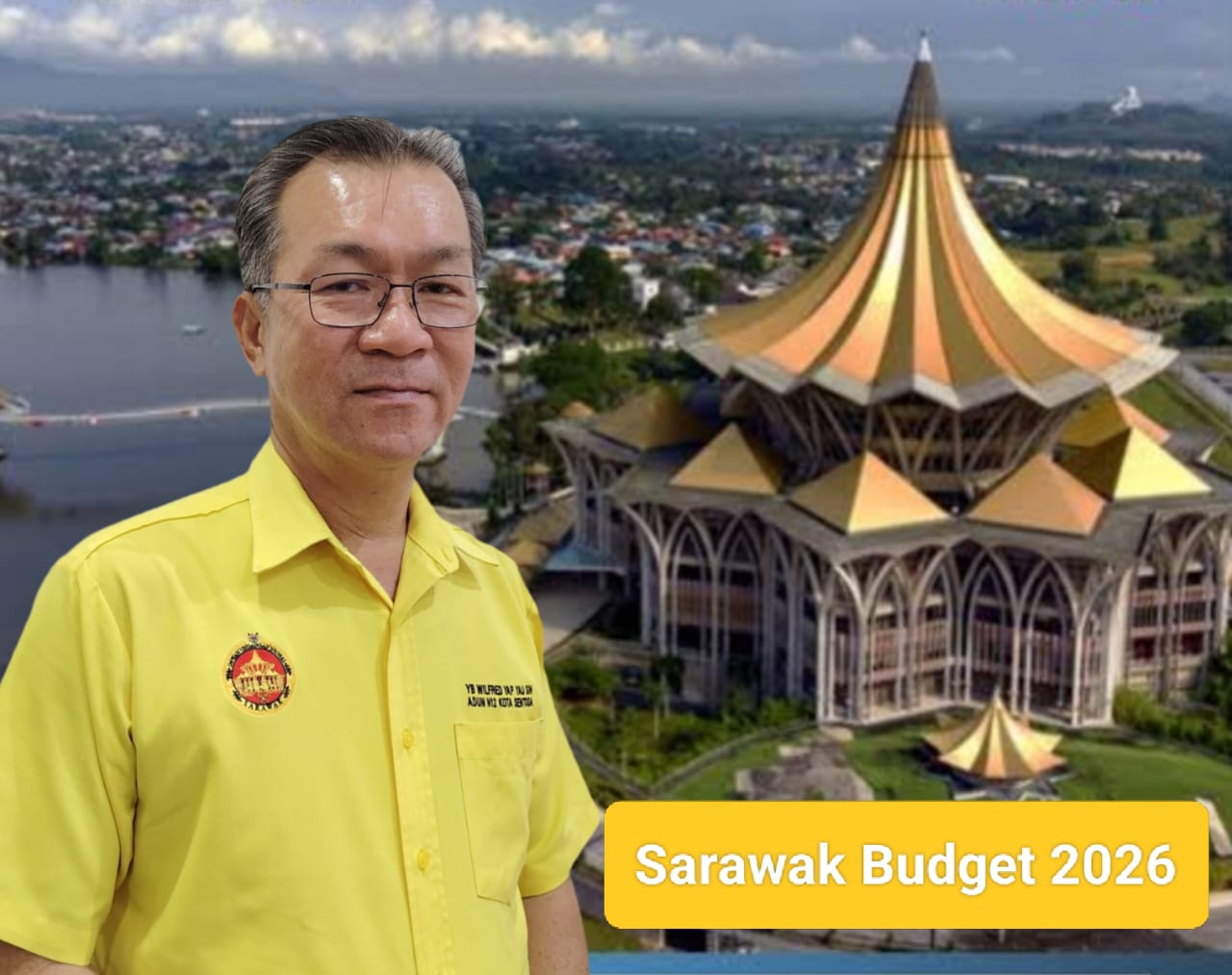
KUCHING: Kota Sentosa assemblyman, Wilfred Yap Sau Sin, has clarified that Sarawak’s financial information, including revenue, expenditures and debt obligations, is publicly available, responding to recent claims by Padungan assemblyman, Chong Chieng Jen, that the state government has been secretive.
Yap described the allegations as misleading, saying they disregard the legislative process, and noted that all financial information is formally tabled in the State Legislative Assembly (DUN) during the Annual Supply Bill and is accessible to all elected representatives.
“These details are contained in the Command Papers and Detailed Estimates that accompany the Budget each year.
“They provide full disclosure of the state’s revenue, detailed operating and development expenditure, statements of financial obligations, fiscal position, economic outlook, and policy justifications,” he said in a statement today.
He emphasised that the documents are debated openly in the DUN and accessible to all elected representatives, including Chong.
“If he has failed to read or understand the documents provided, it is not the fault of the government,” he said.
Yap also addressed criticism of routine fiscal measures, noting that “repeated attempts to politicise normal fiscal measures, such as land premium adjustments, assessment rates, water tariffs, and regulatory fees, ignore the reality that these are part of long-term financial sustainability and development planning”.
“It is simply meant to explain fiscal concepts in a way the general public can relate to. For Chong to twist this into an accusation of ‘sidestepping’ is unnecessary and shows a lack of sincerity in engaging on real policy matters,” he said regarding the Premier’s analogy on borrowing.
He urged the opposition to focus on facts rather than politics.
“Instead of creating confusion outside the House, I urge Chong to first read the Command Papers and Budget documents already provided to him,” he said.
“The information he seeks is there unless his real intention is not transparency, but political theatre.”