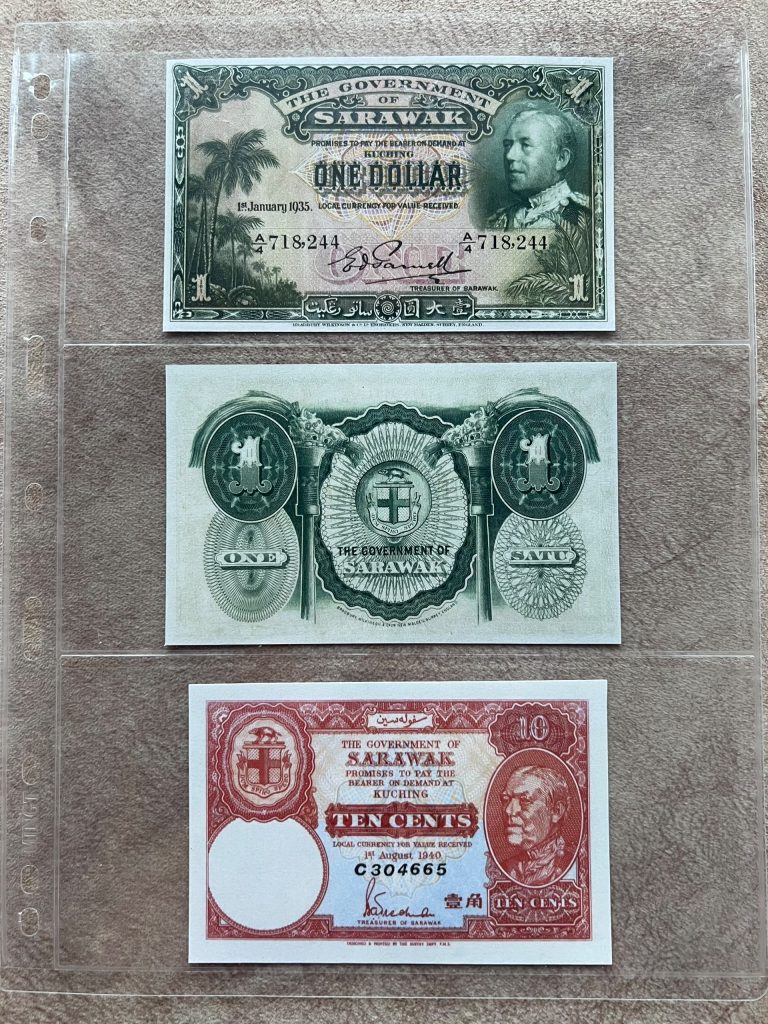
A GREEN Sarawak $1 banknote issued in 1935 can be held in one hand, yet within its ageing paper lies a political world that disappeared long before most Malaysians alive today were born.
The note bears the portrait of Charles Vyner Brooke, the third and last White Rajah, who ruled Sarawak from 1917 until 1946.
For collector Tan Jack Yong, better known as Jordan, the piece is not simply an obsolete form of payment but a surviving witness to Sarawak before it was ceded to the British Crown and later became part of Malaysia in 1963.
Its green colouring and vegetation also evoke the natural environment closely associated with Sarawak, turning the banknote into a compact composition of authority, landscape and identity.
Nearly a century after it was issued, the note allows a period usually encountered through written accounts to be examined through something people once carried and exchanged.
Historical value
The ability to place history within reach is what Jordan believes gives old currency its enduring importance.
“What surprised me most is that a banknote does not just hold monetary value, as it is also evidence of a nation’s history and identity,” he said.
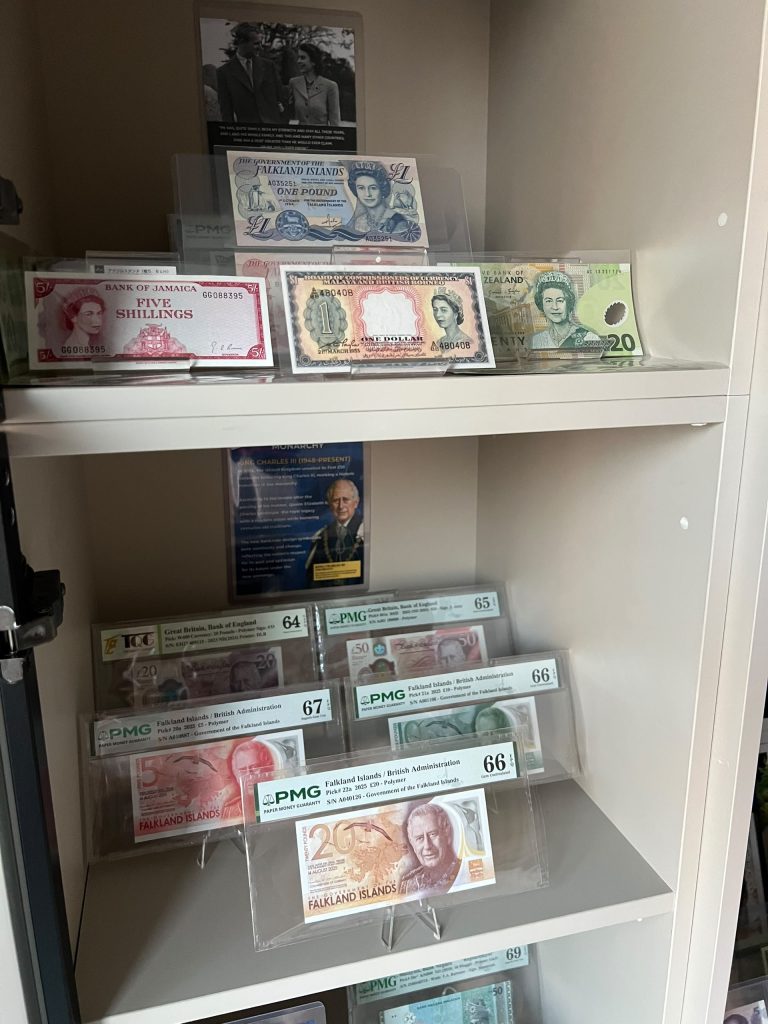
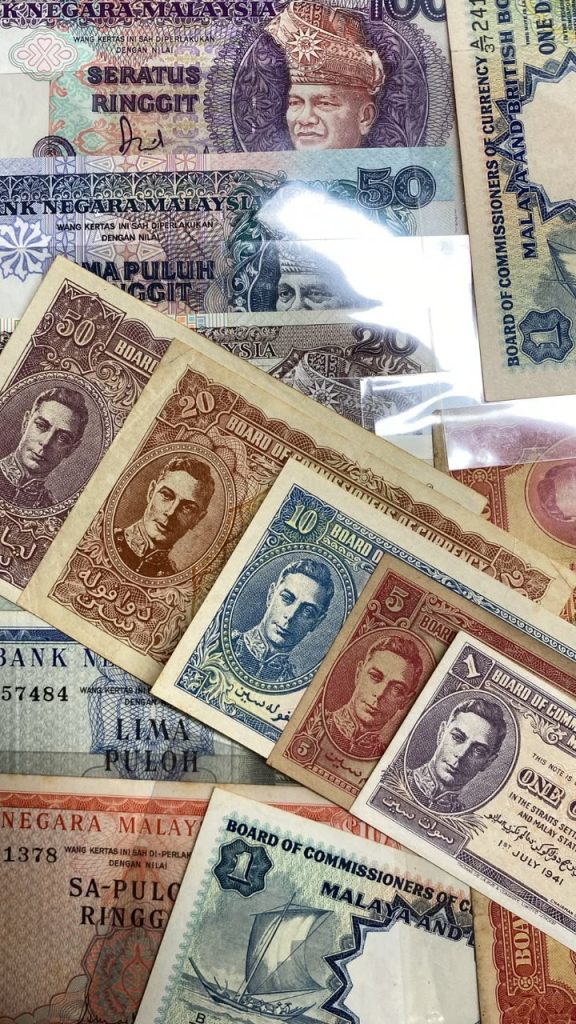
Jordan’s collection covers banknotes from different eras and territories, including the Straits Settlements, Malaya, British North Borneo, Sarawak, the Japanese Occupation, British administration and present-day Malaysia.
He also keeps coins, stamps, postcards, Coca-Cola cans and other Malaysian memorabilia that reveal something about the culture or period in which they were produced.
Together, the objects form a material timeline through which changing governments, rulers, borders, economic systems and national ambitions can be traced.

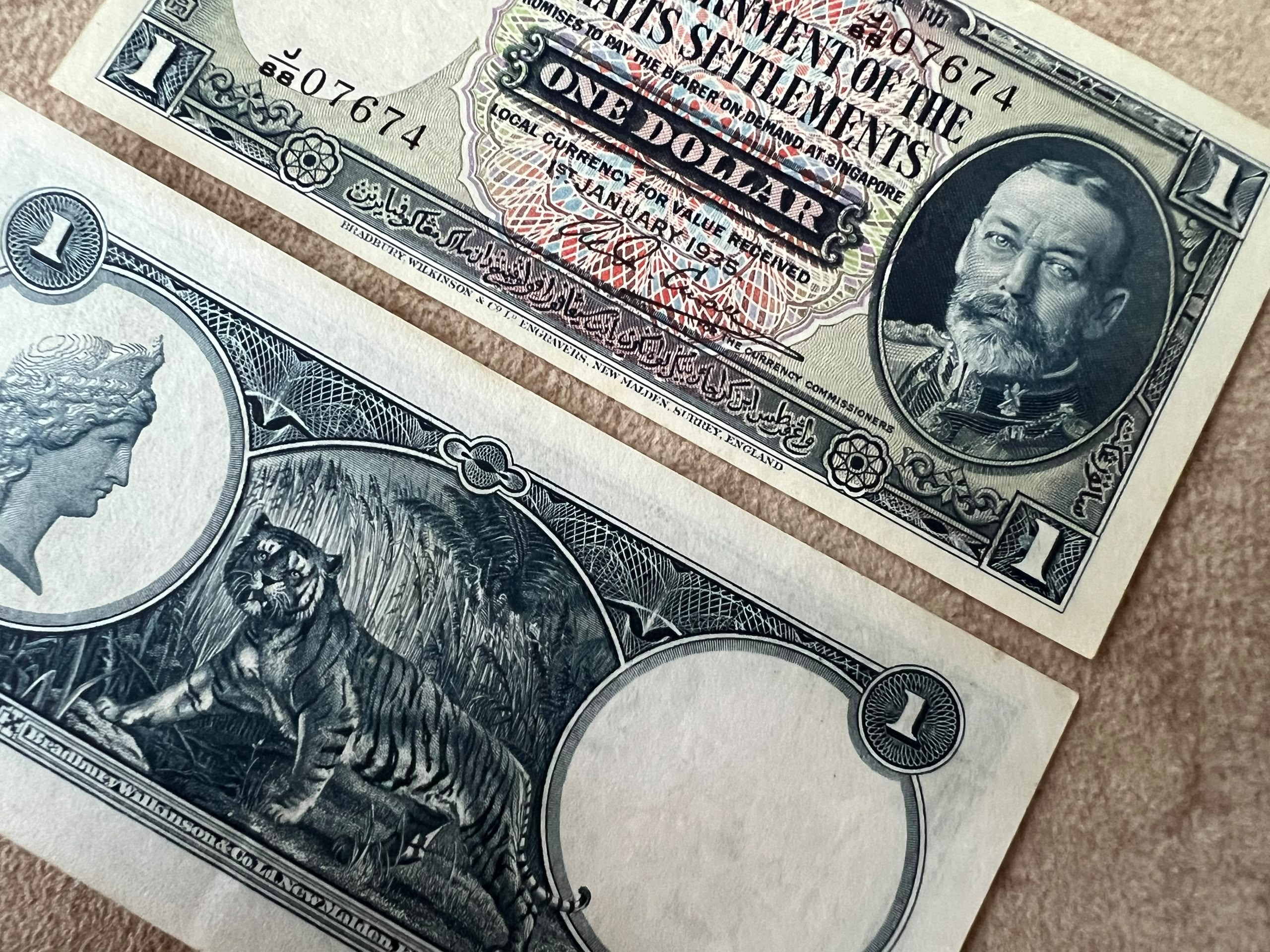
Another significant piece in his possession is the 1935 Straits Settlements $1 banknote featuring King George V on the front and a Malayan tiger on the reverse.
Issued during British colonial rule, the note belonged to a monetary system that connected several trading settlements before the emergence of the independent nation recognised today.
Its imagery placed imperial authority on one side and an animal strongly associated with Malaya on the other, demonstrating how banknote design can communicate several layers of identity at once.
The same object can therefore be read as money, political record, design work and evidence of the economic arrangements under which earlier generations lived.
Jordan’s collection does not stop at the colonial period, as it also includes currency commemorating the milestones through which modern Malaysia defined itself.
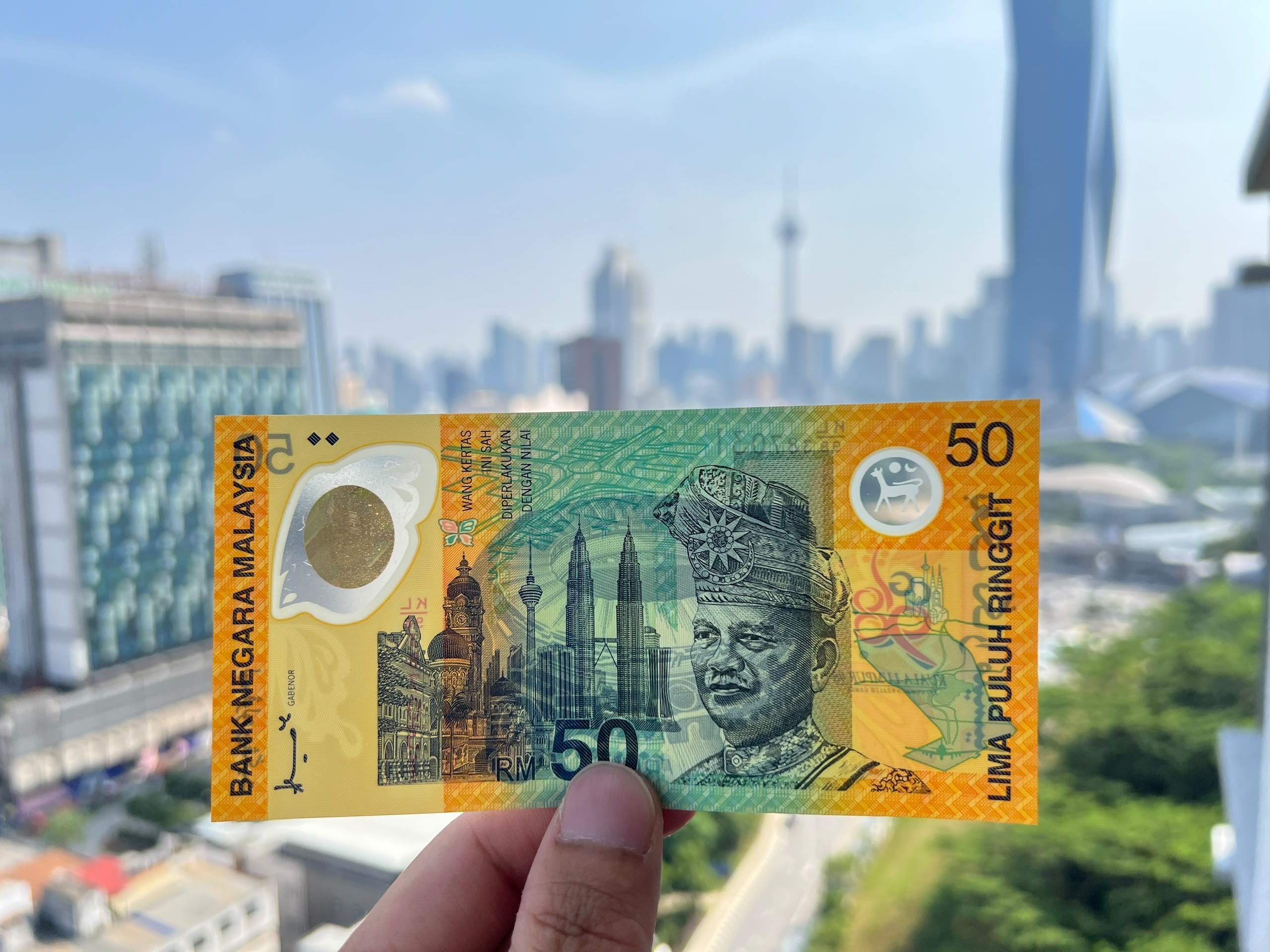
One example is the RM60 banknote issued to mark the 60th anniversary of the signing of the Federation of Malaya Independence Agreement.
Its design features the portraits of the 15 Yang di-Pertuan Agong who had reigned over the six decades following independence and reflects Malaysia’s identity as a constitutional monarchy.
The wider commemorative series also included an unusually large RM600 banknote, transforming the familiar format of currency into an object intended to command attention and remembrance.
Placed alongside the Sarawak and Straits Settlements notes, the RM60 issue shows how the symbols printed on money changed as territories passed through colonial administration, independence and nationhood.
Identity
To Jordan, this is why banknotes can introduce a country before a traveller has visited its museums, monuments or historic sites.
“When we travel to another country, its currency is often one of the first things we encounter. Before we even explore the country, a banknote can already introduce us to its identity through its people, landmarks, culture, wildlife and national symbols,” he said.
As an art director, Jordan is also accustomed to recognising how visual elements can be brought together to communicate a larger idea.
Portraits, typography, colour, decorative borders and security features have practical purposes, but together they also turn a banknote into a carefully composed work on paper.
Bank Negara Malaysia’s Museum and Art Gallery has similarly presented banknotes as miniature works of art whose designs combine creativity, quality materials and the technical challenge of preventing counterfeiting.
Those qualities are easy to miss when a note is used only to pay for an everyday purchase and quickly returned to a wallet.
Collecting removes it from that momentary exchange and gives its details time to be studied.
Authenticity
Before an old banknote can be added confidently to a collection, however, Jordan must determine whether it is authentic.
He begins with details including the feel and colour of the paper, prefixes, serial numbers and the overall quality of the note.
He also examines its security features and the embossing of images and text, looking for inconsistencies that may indicate reproduction or forgery.
Years of exposure have helped him develop an instinct for whether a banknote feels genuine, although he continues to rely on knowledge and research rather than intuition alone.
Authenticity becomes especially important when a scarce historical piece carries a substantial value and a mistake can be costly.
Finding a genuine example is only the first stage, since the collector then becomes responsible for protecting a fragile piece of paper from further deterioration.
Jordan places older notes in transparent protective sleeves, hard covers or albums that allow them to be viewed without unnecessary direct handling.
He stores them in a dry environment and pays particular attention to humidity, which can encourage foxing to develop across the paper.
Foxing appears as brown or yellow spots and can permanently affect both the condition and appearance of an old note.
Exposure to light, moisture and careless handling can also damage pieces that may already have survived for many decades under unknown conditions.
“The biggest challenge is finding the right piece in the right condition at the right price, as some historical banknotes are extremely rare and it can take years to find a good example,” he said.
The requirement for suitable condition does not mean every note must appear untouched, since signs of use can also reveal that it once participated in daily life rather than remaining sealed away from the moment it was printed.
For a collector, the decision involves balancing historical character with the physical stability required for the item to survive into the future.
Jordan believes the same principle applies beyond currency to stamps, flags, postcards and newspaper clippings.
Such objects can document the people, economy, culture and major events of their time without having been created as formal history lessons.
Their ordinariness is precisely what makes them valuable, because they show how national events and political systems entered the routines of everyday people.
“By preserving them, future generations can see and hold a physical connection to the past, rather than only learning about history through books or digital images,” he said.
Digital platforms have nevertheless created opportunities for collectors to share that physical history with audiences far beyond traditional clubs, exhibitions and museums.
Jordan believes younger Malaysians remain interested in the country’s past, particularly when its stories are presented visually and linked to recognisable objects.
Social media can introduce a rare banknote to someone who has never considered collecting, while detailed images can reveal symbols and features that are easily overlooked.
The original object still offers something different, however, because its weight, texture, age and imperfections reinforce the knowledge that it survived from another period.
“Seeing and holding an actual banknote, coin, stamp or postcard from decades ago creates a different connection compared to simply reading about it,” he said.
Historical significance
Jordan hopes that sharing his collection can encourage younger Malaysians not only to admire old objects but to ask why they were produced, who used them and what changed after they disappeared from circulation.
In that process, collecting becomes a doorway into wider questions about colonialism, independence, monarchy, war, trade, culture and the formation of Malaysia.
It also challenges the assumption that history exists only inside official archives or behind museum glass.
The money once carried by parents and grandparents may already contain an entry point into those conversations.
Jordan ultimately hopes his pieces can be documented or displayed publicly rather than remaining known only to a small circle of collectors.
He sees himself not as the final destination of the banknotes but as one custodian within a much longer journey.
Each protective sleeve therefore safeguards more than paper, ink or potential market value.
It preserves evidence of what people once recognised as money and what the authorities of each period wanted that money to say.
“I would want my collection to tell Malaysians that our history is closer to us than we think. It can be found in everyday objects such as the banknotes and coins once carried by our parents and grandparents,” he said.
For Jordan, preserving them ensures that the hands holding those pieces in the future can still discover the nation that existed before their own.