KUCHING: Five Iban longhouse communities have signed a landmark agreement with the Sarawak Biodiversity Centre (SBC) on a high-value local plant, Psychotria viridiflora, commonly known as Engkerebai.
The communities involved are from Rumah Bajau (Julau), Rumah Lembang (Pakan), Rumah Machup (Roban), Karangan Mong (Lubok Antu), and Kampung Rapak Tebus (Pantu).
The signing marks another milestone for SBC as it is its fourth Benefit Sharing Agreement (BSA), reinforcing Sarawak’s ongoing commitment to equitable sharing of benefits derived from the state’s biological resources with local communities.
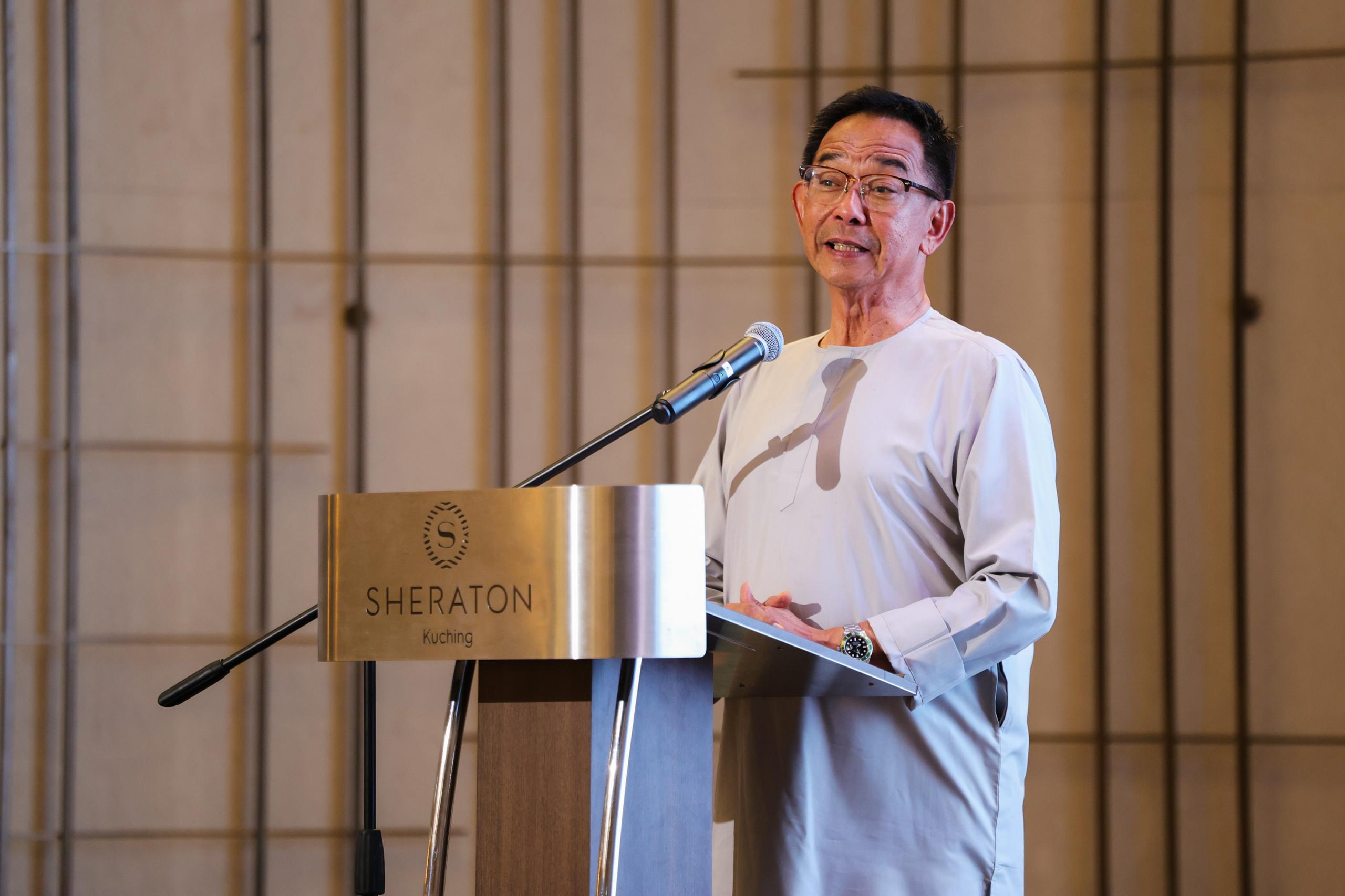
Education, Innovation and Talent Development Minister, Datuk Seri Roland Sagah, who witnessed the ceremony, commended the strong collaboration between SBC and indigenous communities in implementing Access and Benefit Sharing (ABS) under the Nagoya Protocol.
“You have achieved something truly commendable. Now is the time to move forward and reach greater heights,” he said at the Engkerebai Project BSA Signing Ceremony and SBC’s Annual Dinner held at UCSI Hotel, on Tuesday (Nov 4).
SBC Chief Executive Officer Datuk Dr Yeo Tiong Chia expressed gratitude to the participating communities for their trust and partnership, noting that their contribution has placed Sarawak on the global map.
“Your generosity in sharing your traditional knowledge of more than 7,500 plants has put Sarawak on the global stage.
“Countries such as China and Korea, which have long histories of traditional medicine, have also shown interest in our work because of your rich heritage and traditions,” he said.
Dr Yeo recounted how the Engkerebai project began more than a decade ago with the Rumah Bajau community in Julau, who shared their traditional use of the plant for treating fevers and wounds, and for producing natural dye for pua kumbu.
“From a scientific perspective, we suspected it might contain active ingredients, and our laboratory tests confirmed that the plant has anti-pyroxenase activity, meaning it has skin-brightening and anti-ageing properties.
“It is comparable to kojic acid, a well-known commercial brightening and pigmentation control agent used in cosmetics,” he said.
He added that the discovery positions Engkerebai as a promising natural source of compounds for the high-value cosmetic industry, with potential for future expansion into the pharmaceutical industry.
“This agreement ensures the community will be able to produce a sufficient supply of raw material: starting small, but with the potential to scale up to plantation level if successful.
“Our next target is to move from essential oils and fragrances to cosmeceuticals, and eventually to pharmaceuticals within the next two years,” Dr Yeo added.
The ceremony also recognised and honoured the vital role of local communities in preserving traditional knowledge and safeguarding biodiversity.
“This project shows how traditional knowledge and science can work hand in hand to create sustainable opportunities, in line with the Post COVID-19 Development Strategy (PCDS) 2030.
“With this agreement, Sarawak further strengthens its position as a regional leader in biodiversity-based innovation,” Dr Yeo said.
The latest BSA follows three earlier agreements: LitSara® (2019), AdenoSara® (2020), and MadhuSara® (2023), underscoring Sarawak’s sustained commitment to inclusive and sustainable bio-innovation development.