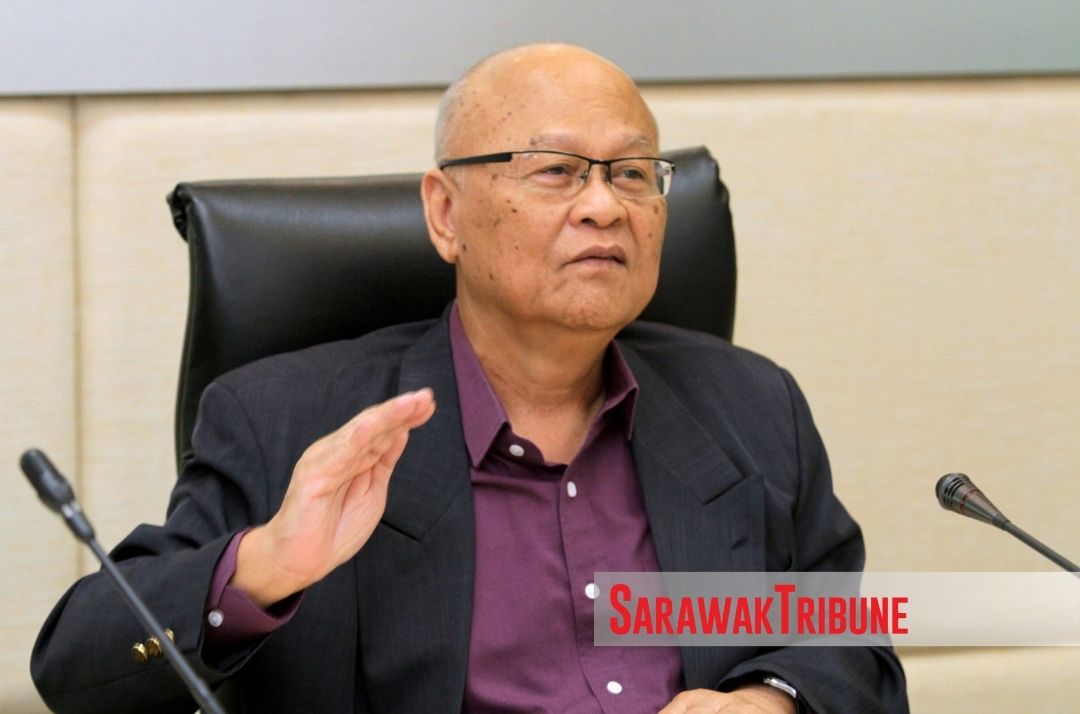
SIBU: Senator Robert Lau Hui Yew has publicly challenged several assertions made during a recent episode of the ‘Keluar Sekejap’ (KS) podcast, arguing that the discussion on the Malaysia Agreement 1963 (MA63) contained significant historical and constitutional inaccuracies that risk misleading the public.
In a statement issued on Thursday (July 30), Lau expressed concern over comments made in Episode 207 of the podcast, which featured Multimedia University’s law lecturer, Muhammad Hafiz Hassan, as a guest discussing federalism, the formation of Malaysia and the constitutional rights of Sabah and Sarawak, including matters relating to petroleum resources.
Lau, a lawyer by profession, said public discourse on MA63 must be firmly grounded in historical facts and constitutional principles, warning that inaccurate narratives surrounding the country’s formation could distort public understanding of one of Malaysia’s most important constitutional documents.
Addressing what he described as the first major inaccuracy, he said no referendum was ever held in Sarawak or Sabah to determine whether the people agreed to join the Federation of Malaysia.
He explained that while Singapore conducted a referendum on the issue, Sarawak and Sabah did not.
Although United Nations decolonisation conventions envisaged a plebiscite to ascertain the wishes of the people in colonised territories, no such exercise was ever carried out in either territory before Malaysia was formed.
Lau also rejected the claim that the nine Malay states, together with Penang and Melaka, were parties to the Malaysia Agreement 1963.
He stressed that the agreement was signed by five entities, one of which was the independent Federation of Malaya – not the individual states within the federation.
To reinforce his argument, Lau cited the landmark case of Government of the State of Kelantan v Government of the Federation of Malaya and Tunku Abdul Rahman Putra Al-Haj [1963] MLJ 355.
He noted that Kelantan had challenged the validity of MA63 on the grounds that it had neither been consulted nor consented to the agreement.
However, the court ruled that the Federation of Malaya possessed the constitutional authority to enter into international treaties and that individual states had no constitutional role in that process.
Lau further disputed the assertion that Sarawak, Sabah and Singapore merely joined Malaysia as states alongside the existing states in Malaya.
Instead, he maintained that Sarawak and Sabah were equal partners in the creation of a new federation and entered Malaysia as founding partners rather than as ordinary constituent states.
“This distinction is fundamental to understanding the constitutional history of Malaysia,” he said.
Lau also took issue with the suggestion that the states of Malaya made concessions to persuade Sarawak and Sabah to join Malaysia.
He clarified that what Sarawak and Sabah received were constitutional safeguards recommended by the Inter-Governmental Committee (IGC), which were subsequently incorporated into the Federal Constitution through extensive amendments following the formation of Malaysia.
He explained that Malaysia did not adopt an entirely new constitution in 1963 but instead retained the Constitution of the Federation of Malaya while introducing significant amendments to accommodate the constitutional arrangements agreed upon by the founding partners.
Among the amendments were provisions in the Supplement to the Ninth Schedule of the Federal Constitution, which granted Sarawak and Sabah legislative authority over matters such as native law and customs, cadastral land surveys, and, in Sabah’s case, the Sabah Railway.
While these arrangements reflected the unique constitutional position of the Borneo States, Lau said they have also presented practical and administrative challenges over the years.
Expressing concern over the state of legal education, Lau said many law students in Malaysia are not adequately taught the constitutional history and legal foundations of MA63.
He described the omission as remarkable, likening it to law graduates in England completing their studies without learning about the Magna Carta.
Lau expressed it was regrettable when influential public figures inadvertently disseminated inaccurate information on issues of national constitutional importance, as misconceptions surrounding MA63 continued to be repeated and amplified to the public.
He stressed that discussions on the formation of Malaysia should always be based on historical evidence and constitutional accuracy, adding that a proper understanding of the nation’s founding history is essential for safeguarding Malaysia’s future.
“If we do not know our history – or worse, if our history is misunderstood or distorted – it does not bode well for our future,” he said.