KUCHING: The Gabungan Parti Sarawak (GPS) has taken a step towards strengthening women’s participation in political leadership, but the absence of female candidates from three of its four component parties highlights an uneven commitment to gender representation across the coalition.
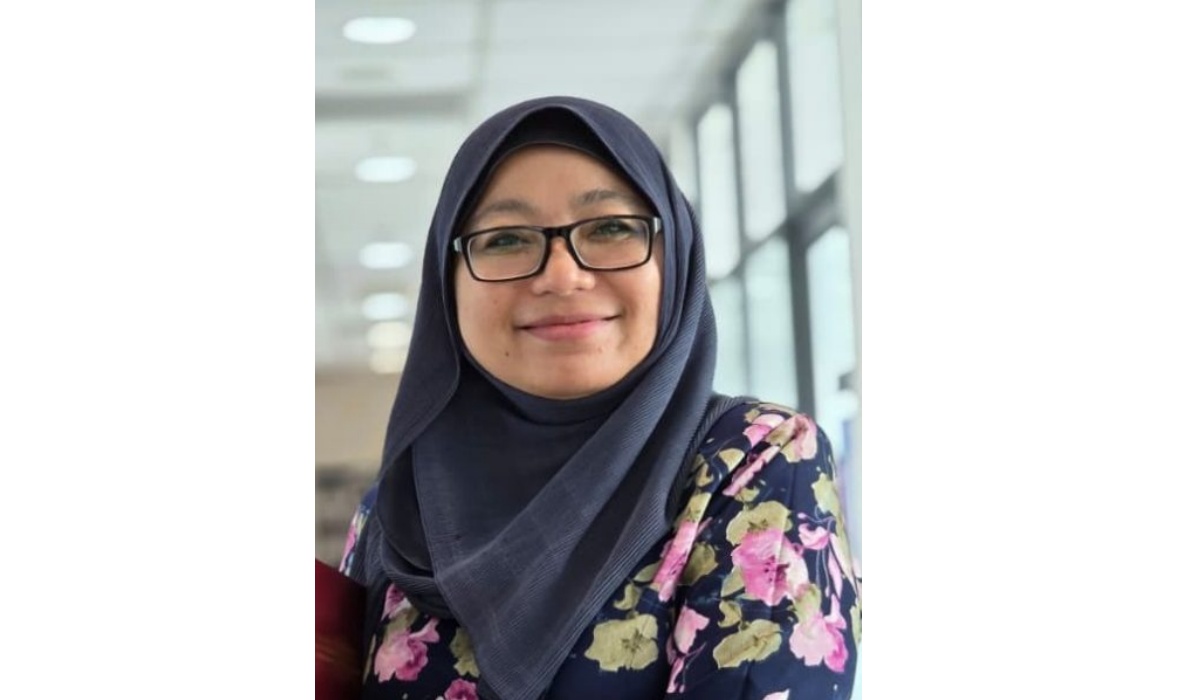
Political analyst Dr Hafizan Mohd Naim, a senior lecturer at the Faculty of Social Sciences and Humanities, Universiti Malaysia Sarawak (UNIMAS), said the decision to field five women candidates, all from Parti Pesaka Bumiputera Bersatu (PBB), raised questions about whether gender inclusivity was truly a coalition-wide agenda or largely an initiative of individual component parties.
She said while GPS’ move to provide greater opportunities for women was encouraging, the concentration of female candidates within PBB suggested that more needed to be done to ensure equal opportunities across the coalition.
“Gender representation should not be the responsibility of PBB alone. If gender inclusivity is part of GPS’ broader leadership rejuvenation agenda, the question is how this agenda is being translated across its component parties,” she said.
Hafizan noted that neither Parti Rakyat Sarawak (PRS) nor Parti Demokratik Progresif (PDP) would be represented by a woman candidate, while the Sarawak United Peoples’ Party (SUPP) had not fielded a female candidate in a state election since 2006.
PRS, she added, had never fielded a woman in a state election since its establishment in 2004.
She said the latest candidate announcement also suggested that GPS was prioritising professional qualifications, experience, leadership capabilities and electoral considerations rather than relying solely on gender quotas.
“Viewed positively, GPS is incorporating women into its broader talent recruitment strategy rather than treating gender representation as a separate agenda,” he said.
However, she stressed that the nomination pattern exposed uneven opportunities for women seeking to enter electoral politics within the coalition.
While PBB’s larger allocation of 47 seats, compared with SUPP’s 18, PRS’ 11 and PDP’s six, could partly explain the numerical distribution, he said the complete absence of women candidates from the other three parties remained a concern.
Hafizan suggested that following the state election, GPS should place greater emphasis on embedding women’s representation into its coalition-wide leadership rejuvenation agenda.
She expressed hope that both the next state and parliamentary elections would see a substantial improvement in the number of women candidates.
She also pointed out that the under-representation of women was not confined to GPS, but was evident among opposition parties as well.
DAP, for instance, had announced only two women among its 12 candidates, representing 16.7 per cent, while Parti Bansa Dayak Sarawak (PBDS) had named just one woman among its 26 candidates, or 3.8 per cent.
The situation reflects a wider challenge in Sarawak politics, where women’s participation in electoral contests remains relatively low.
In the 2021 Sarawak state election, only 45 of the 359 candidates were women, accounting for 12.9 per cent of the total.
Hafizan said these figures underscored the need for greater efforts by political parties across the political divide to encourage and facilitate women’s participation in electoral politics.
She said improving women’s representation should go beyond fielding a handful of female candidates, requiring a sustained commitment to developing women leaders and providing them with meaningful opportunities to contest and assume political leadership.