“Caring for patients requires caring about patients.”
– Dr Abraham Verghese, physician and author
I have always admired doctors.
Their commitment to healing, their long hours, their ability to make life-and-death decisions under pressure – it has always commanded deep respect from me.
That admiration still stands today, but it now comes with greater understanding and, admittedly, a few difficult lessons.
Not long ago, I gave birth at Sarawak General Hospital (SGH), our state’s largest and busiest public hospital.
It was my first time giving birth, and I went in filled with the usual mix of anxiety, anticipation, and hope.
Like many new mothers, I placed my trust in the healthcare system – and in the people in white coats.
While providing medical services to the public is its main priority, SGH also plays a vital role in training junior doctors, or housemen, to become competent medical professionals in the future.
I knew this going in.
I welcomed the idea that my experience, in some small way, might contribute to their learning.
But nothing quite prepares you for how vulnerable you feel when that learning curve touches your own body and your child.
I must acknowledge that I encountered a number of housemen who exhibited politeness, earnestness, and a genuine effort in their work.
They moved through the wards quietly, scribbling notes, checking charts, trying to remain professional despite obvious signs of fatigue.
Some were refreshingly honest – I remember one who apologised softly while trying to locate a vein for my IV line.
That sort of humility does not go unnoticed.
But it wasn’t all positive.
In the labour room, two housemen attempted to insert an IV line for pain relief.
It took them more than four tries before they called a senior staff member for assistance.
Their attempts left me with deep bruises and soreness that lingered for days.
I understand that venepuncture is a technical skill that requires practice, and every doctor has to start somewhere.
But the process lacked humane communication and gentleness that would have made it more bearable.
I wasn’t expecting perfection, but I had hoped for some reassurance, some pause to ask, “Are you okay?” or at least an acknowledgement of discomfort.
Then there was one houseman who confidently told me that my newborn’s blood type was B.
That immediately raised alarms, since both my husband and I are type O.
As anyone with basic genetics knowledge knows, two O-type parents cannot produce a child with a B blood type.
I questioned it and voiced my concern, but the information was delivered with such certainty that I began to doubt myself.
For a moment, panic set in – I even wondered if they had mistakenly given me someone else’s baby in the maternity ward.
It took a senior staff member to clarify the mix-up – a small but significant error that caused unnecessary emotional stress in those already fragile early hours of motherhood.
Perhaps the most frustrating moment of all was during active labour.
After hours of enduring contractions that grew stronger and closer together, I was told by a houseman that I was still only 3cm dilated.
I felt crushed.
Eight hours of pain, and no progress?
It felt like defeat.
Thankfully, a midwife arrived soon after and calmly performed another check – revealing that I was nearing full dilation.
She quickly called for the doctor and other nurses to my room.
That contrast – between uncertainty and confidence – spoke volumes.
These weren’t malicious mistakes.
They weren’t made out of carelessness.
They were made, I believe, by individuals under pressure in an overburdened system, doing their best with the tools and time they had.
But they also pointed to a bigger issue. While our young doctors are being trained in clinical knowledge, many still lack the people skills and professionalism that are essential in medicine.
I don’t blame the housemen entirely.
Their schedules are gruelling.
They are expected to absorb, perform, adapt, and survive – all in a system that sometimes forgets they are human too.
But if we want to shape great doctors, we must teach them that medical excellence is not just about diagnostics and procedures.
It is about compassion, clarity, and the ability to make patients feel seen and heard – even when they are number 37 or 156 on a long ward list.
Patients are not just cases.
We are not entries on a clipboard or vitals on a screen.
We are people – scared, hopeful, often in pain, and placing enormous trust in the system.
I share this not to discredit anyone, but because I believe constructive criticism is a necessary part of growth – both for individuals and institutions.
SGH is filled with hardworking and dedicated staff – I have seen that firsthand.
But the learning environment must also prioritise the development of soft skills, emotional intelligence, and bedside manner.
I still hold deep respect for the housemen I met, even those who made mistakes.
Many of them will grow into outstanding doctors.
I hope that along the way, they are guided not only by textbooks and tests, but also by mentors who remind them of the human element of their profession.
To the hospital administrators and senior doctors: your role in shaping this next generation is critical.
Encourage empathy, reward professionalism and teach by example.
To the public: be patient, but also don’t be afraid to speak up.
Our voices, shared respectfully, are part of the process too.
And to the housemen – thank you for your effort, your courage, and your willingness to learn.
But please, remember: every patient you meet is someone’s mother, father, or child.
In the rush of your rounds, don’t lose sight of the reason you chose this path in the first place – to care.
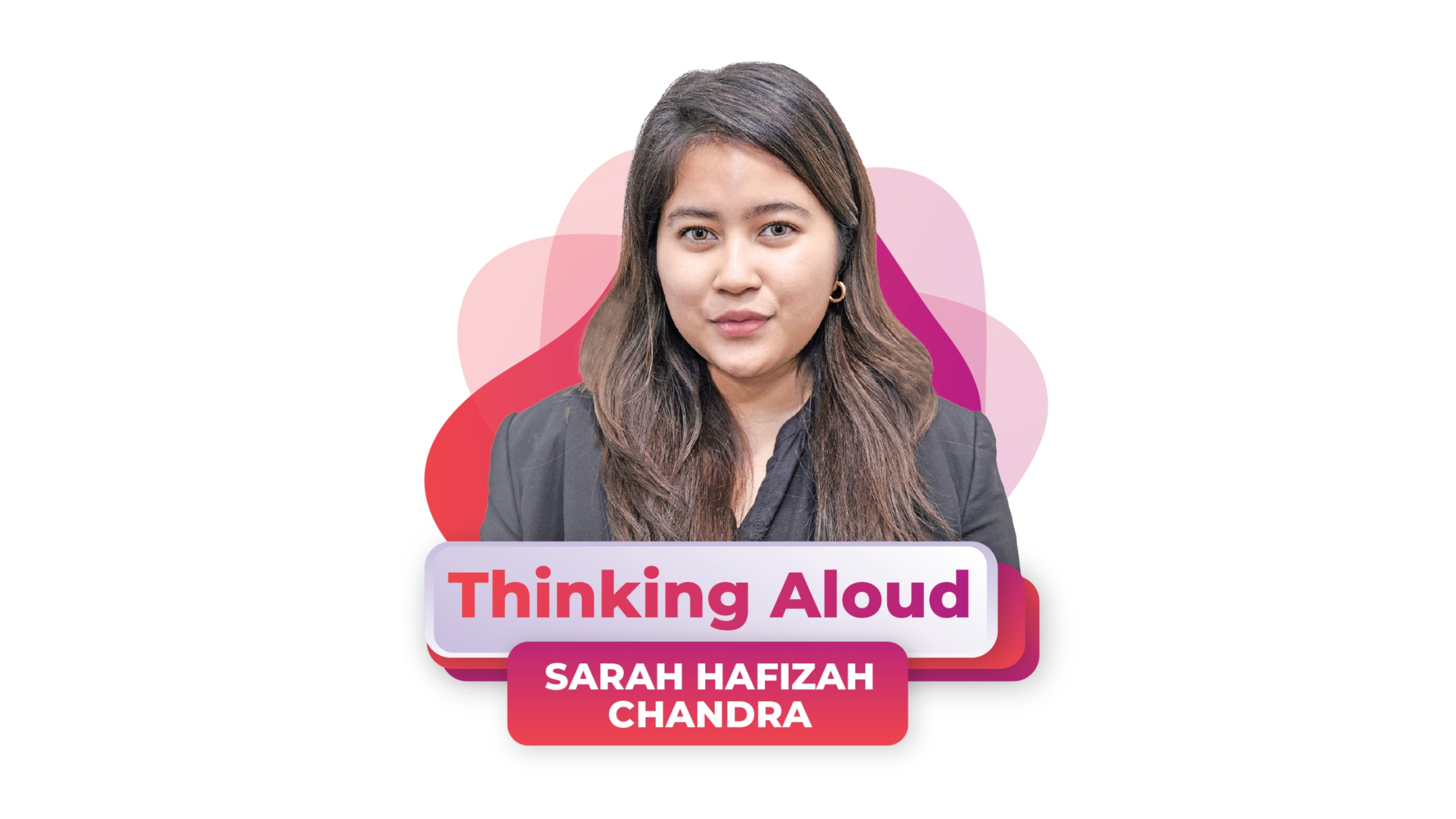
The views expressed here are those of the writer and do not necessarily represent the views of Sarawak Tribune. The writer can be reached at sarahhafizahchandra@gmail.com.